
Shiny Suit Suitability Checker
Is Your Shiny Suit Expensive or Cheap?
Answer these questions to see if your shiny suit will look sophisticated or tacky. Based on article findings about fabric quality and context.
Ever put on a suit that caught the light like a disco ball and wondered if you looked like a budget wedding guest or a failed sci-fi villain? Shiny suits aren’t new. But in 2026, with more men than ever mixing streetwear and formal styles, the question isn’t just about taste-it’s about perception. Do shiny suits look cheap? The answer isn’t yes or no. It’s way more complicated.
Why Shiny Suits Get a Bad Rap
Let’s be honest: the first thing most people think of when they see a shiny suit is a 1980s power suit, a bad nightclub outfit, or a cheap rental from a discount tailoring shop. And that’s not wrong. A lot of glossy fabrics-especially those made from polyester blends or cheap rayon-are thin, plasticky, and wrinkle like crumpled foil. They reflect light unevenly, making you look like you’re under a strobe light instead of a chandelier.
But here’s the thing: not all shiny is the same. There’s a huge difference between a suit made from 100% polyester with a high-gloss finish and one woven from high-twist wool with a subtle luster. The latter doesn’t scream "cheap"-it whispers "expensive."
The Fabric Matters More Than the Shine
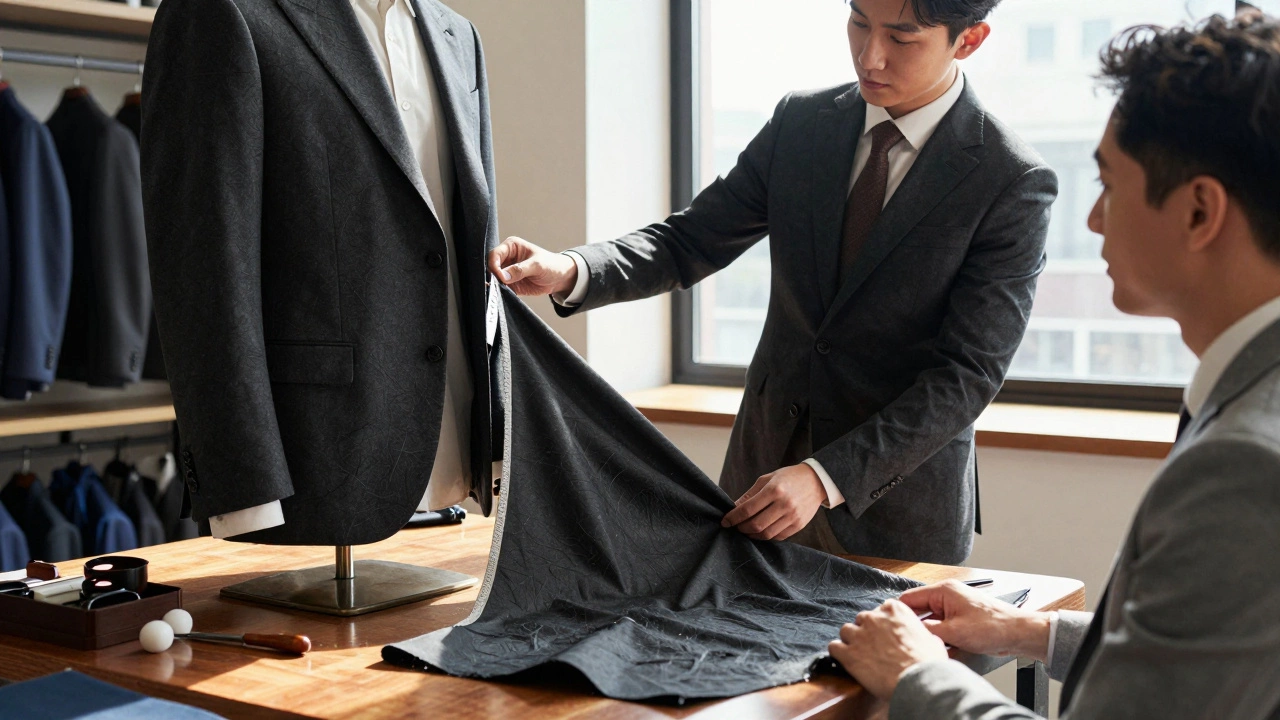
Here’s what most people miss: shine comes from the fiber, not the dye or the finish. Wool, especially high-grade wool like Super 130s or 150s, has a natural sheen because of how the fibers reflect light. It’s subtle, soft, and moves with you. You’ll see it on suits from Brioni, Kiton, or even well-made options from Zara’s premium line. That shine? It’s elegant. It’s classic.
On the flip side, polyester and acetate have a hard, plastic-like gloss. They don’t breathe. They don’t drape. And they catch every smudge and seam. If you’re wearing a shiny suit made from synthetic fiber, you’re not just risking looking cheap-you’re risking looking uncomfortable. And no one wants to look like they’re sweating through a disco suit at a funeral.
Here’s a simple test: pinch the fabric. If it springs back slowly and leaves a crease that stays, it’s low quality. If it snaps back fast and the crease fades almost instantly, it’s good wool. Shine alone doesn’t tell you anything. Texture and movement do.
When Shiny Suits Actually Work
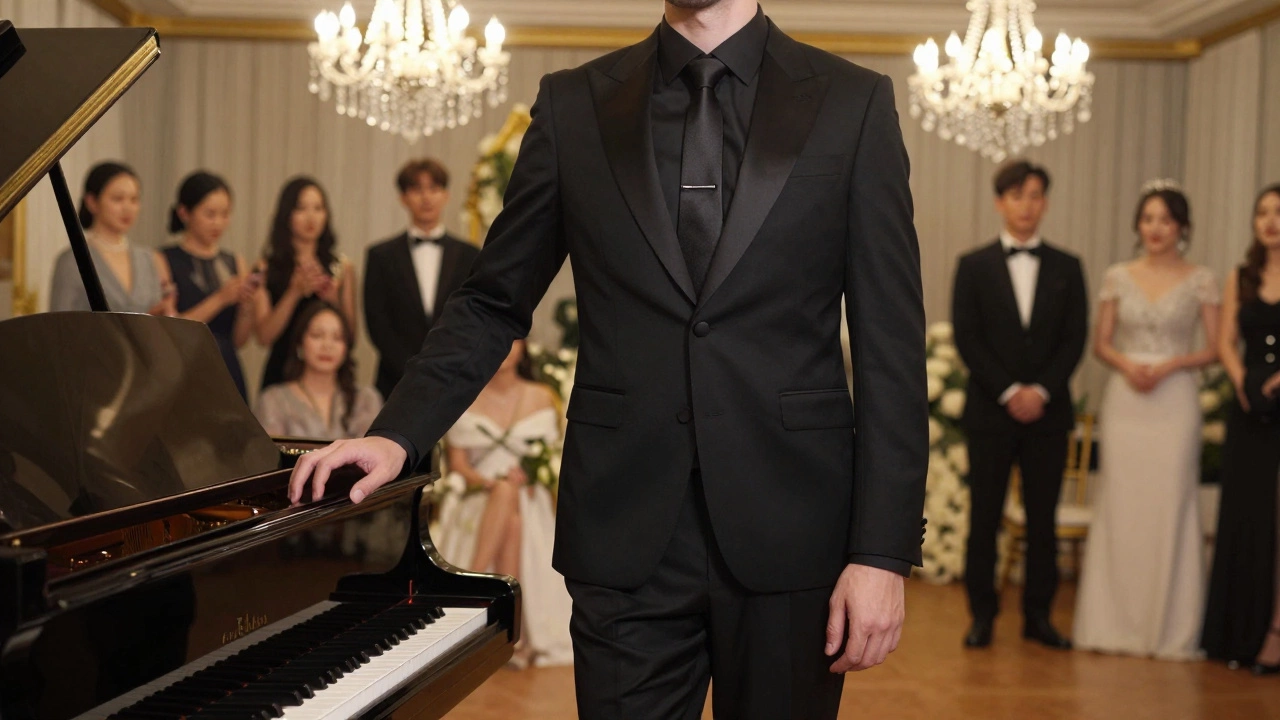
There are real moments where a shiny suit isn’t just acceptable-it’s intentional. Think: a black-tie event with a satin lapel. That’s not cheap. That’s tradition. Or a midnight blue suit with a slight metallic twist, worn to a modern art gallery opening. That’s not tacky. That’s style.
Some designers-like Tom Ford, Gucci, and even J.W. Anderson-have used metallic weaves in runway collections. These aren’t polyester. They’re often wool blended with a tiny percentage of lurex thread, woven so finely you can’t feel it. The shine is controlled. The cut is sharp. The fit is tailored. That’s not "cheap shine." That’s high fashion.
Even in New Zealand, where formalwear is usually understated, you’ll see men in Wellington’s CBD wearing charcoal suits with a whisper of luster to them. It’s not flashy. It’s refined. It’s the difference between a suit that looks like it came from a catalog and one that looks like it was made for you.
How to Wear a Shiny Suit Without Looking Like a Mistake
If you’re going to wear a suit with shine, follow three rules:
- Go for subtlety. A 5% sheen is classy. A 50% sheen is a costume.
- Match the occasion. Don’t wear a glossy suit to a job interview. Save it for evening events, gallery openings, or weddings where dress codes are flexible.
- Keep everything else muted. Pair a shiny suit with a matte white shirt, a silk tie with no pattern, and plain black oxfords. Let the suit be the statement-not the whole outfit.
And never, ever wear shiny pants with a matte jacket. That mismatch screams "I bought this online without trying it on."
The Real Cost of Cheap-Looking Suits
It’s not just about how you look-it’s about how you feel. A cheap shiny suit feels stiff, itchy, and hot. It wrinkles in five minutes. It pills after two wears. It doesn’t age well. You’ll hate wearing it after the first time.
On the other hand, a high-quality wool suit with a natural sheen will last ten years. It breathes. It drapes. It looks better the more you wear it. It’s not expensive because it’s shiny. It’s expensive because it’s made right.
Here’s a number most people don’t know: a well-made wool suit costs between $800 and $2,000. A polyester shiny suit from a fast-fashion brand? $150. And here’s the kicker: the polyester suit will look worse after six months. The wool suit will still look sharp. That’s not just durability-it’s value.
What to Look for When Buying
Before you buy any suit with shine, check these three things:
- Fiber content: Look for "100% wool" or "wool blend with less than 10% synthetic." Anything over 20% synthetic is risky.
- Weave: Twill and hopsack weaves have a soft sheen. Smooth, plain weaves with high thread counts can look glossy without being flashy.
- Label: Brands like Canali, Zegna, and Hickey Freeman don’t hide their fabric. They list it. If the label says "polyester," walk away.
Try the suit on in natural light. Walk around. Sit down. Look at it from the side. If it looks like it’s glowing under a lamp, it’s too much. If it looks like it’s catching the sun just right? You’ve found it.
Shiny Suits Aren’t the Problem-Bad Choices Are
Shiny suits don’t look cheap because they’re shiny. They look cheap because they’re made wrong. The fabric’s bad. The cut’s sloppy. The fit’s off. The shine is the only thing you notice because everything else is failing.
There’s nothing wrong with a little luster. In fact, the best suits ever made-by Savile Row tailors or Italian masters-have always had a natural sheen. It’s part of what makes wool beautiful. The problem isn’t the shine. It’s the lack of substance behind it.
If you want to wear a shiny suit, don’t chase the flash. Chase the quality. A suit that looks expensive doesn’t need to scream. It just needs to feel right.
Do shiny suits look cheap at job interviews?
Yes, almost always. Job interviews call for conservative, professional attire. A shiny suit-even if it’s high quality-can distract from your credibility. Stick to solid navy, charcoal, or black wool with a matte finish. Save the shine for evenings, events, or creative industries where personal style is part of the brand.
Can you wear a shiny suit to a wedding?
It depends. For a black-tie or evening wedding, a subtle metallic or silk-blend suit can be perfect-especially if the invitation says "formal" or "elegant." For a daytime or beach wedding, avoid it. Too much shine can look out of place. When in doubt, ask the couple or check the dress code.
Is a satin lapel the same as a shiny suit?
No. A satin lapel is a small, intentional detail on an otherwise matte suit. It’s traditional, refined, and often seen on tuxedos or formal dinner jackets. A shiny suit means the entire fabric is glossy. That’s a much bolder choice and should be handled with care. Satin lapels are safe. Full glossy suits? Only if you know what you’re doing.
Are there any colors that work better with shiny suits?
Dark colors like midnight blue, charcoal, and deep burgundy handle shine best. They don’t reflect light as harshly. Light colors like silver, cream, or pale gray with high gloss can look dated or costume-like. Stick to darker tones if you’re new to shiny fabrics.
Can you tailor a shiny suit?
Yes, but not all tailors handle glossy fabrics well. Shiny materials can show seam lines and pin marks more easily. Find a tailor experienced with fine wool or silk blends. They’ll know how to adjust the fit without leaving marks or distorting the fabric’s natural drape.