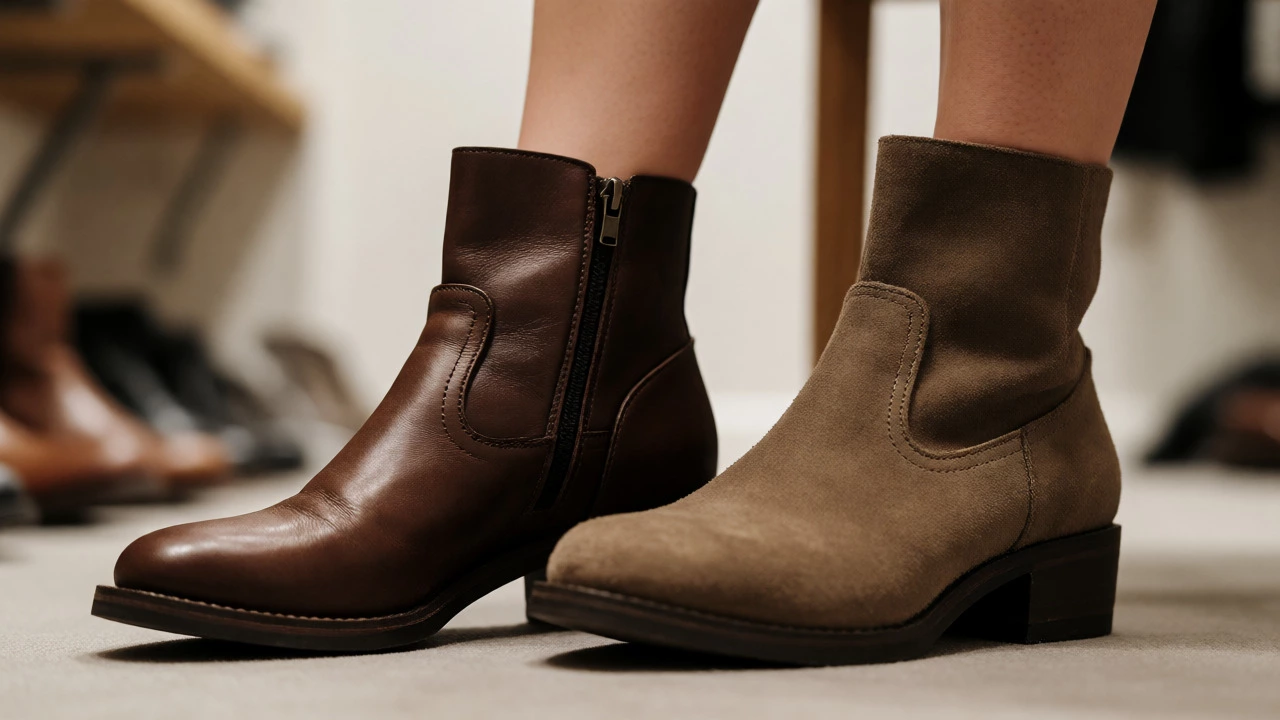
Women's Boot Fit Calculator
Enter your measurements and preferences below to find the recommended US Women's boot size.
Recommended Size:
You’re standing in the fitting room, one foot in a size 8, the other in an 8.5. Your toes wiggle in one, but your heel slips out of the other. It feels like splitting hairs, right? But ask any podiatrist or experienced fitter, and they’ll tell you: that tiny gap between sizes is often the difference between a day of blissful walking and a night spent nursing blisters. Shoe sizing isn’t just about length; it’s about volume, width, and how your foot interacts with the structure of the shoe.
When we talk about women’s boots specifically, this half-size dilemma gets even trickier. Unlike sneakers, which have flexible mesh uppers that forgive minor discrepancies, boots are structured. They have stiff leather, rigid shanks, and fixed toe boxes. So, does that 0.5 size matter? Absolutely. Here is why that small increment changes everything.
The Physics of Fit: Why Half Sizes Exist
Let’s get technical for a second, but keep it simple. In standard US sizing, a full size represents a difference of about 1/3 inch (roughly 8.46 millimeters) in length. A half-size, therefore, is roughly 4.23 millimeters. That sounds negligible-less than half a centimeter. But inside a shoe, those few millimeters dictate where your metatarsals sit relative to the sole’s flex point.
If your boot is too short by even a quarter-inch, your toes hit the front wall every time you step down. This causes pressure points, black toenails, and numbness. If it’s too long, your foot slides forward on inclines, jamming your toes into the cap, while your heel lifts off the insole with every stride. That friction is what creates hot spots, which turn into blisters within hours. The half-size adjustment aligns your foot’s natural pivot points with the shoe’s design.
Boots Are Not Sneakers: The Structural Constraint
Here is the biggest misconception: people treat all shoes the same. You might wear a size 9 sneaker because the knit upper stretches. But if you try that same size in a leather ankle boot, it might feel tight around the instep. Conversely, a suede boot might stretch out after two wears, becoming sloppy.
Women’s boots come in various constructions, from soft pull-ons to lace-up combat styles. Each handles fit differently:
- Rigid Leather: Minimal stretch. Precision is key. A half-size error here is permanent until broken in, and even then, it may not fix length issues.
- Suede/Nubuck: Moderate stretch. These can accommodate slightly tighter fits initially, molding to your foot over time.
- Fabric/Lined: High stretch. More forgiving, but prone to losing shape.
Because boots enclose more of the foot (the ankle and sometimes the calf), they rely less on laces for security and more on internal volume. A half-size larger doesn’t just add length; it adds vertical space. For many women with high arches or wide feet, moving up a half-size provides the necessary "room" without making the shoe look clownish.
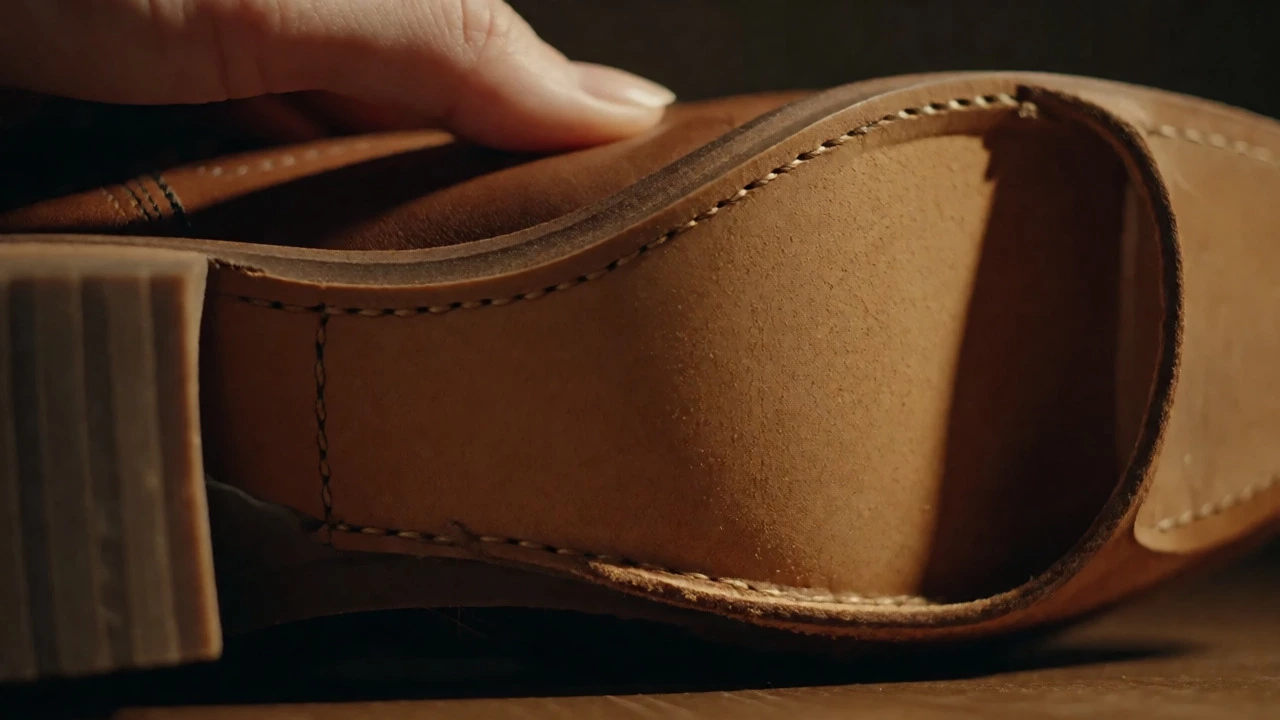
How to Test for the Perfect Half-Size
Don’t just trust the number on the box. Your feet swell during the day, so always try boots on in the afternoon. Wear the socks you plan to use with them-thick wool socks change the game entirely compared to thin cotton ones.
Follow this three-step check to decide between sizes:
- The Thumb Test: With the boot unlaced (or unzipped), push your foot all the way forward so your toes touch the front. Slide your index finger behind your heel. If you can barely squeeze it in, the boot is likely too short. If there’s a huge gap, it’s too big. The sweet spot? Snug but comfortable.
- The Flex Point Check: Walk around. Does the sole bend exactly where your foot bends? If the crease in the sole is ahead of your ball of the foot, the shoe is too long. If it’s behind, it’s too short. This misalignment causes fatigue faster than any other factor.
- The Heel Lock: Lace or zip the boot snugly. Jump lightly. Does your heel lift significantly? If yes, you need a smaller size or a different width. If your toes pinch when you stand still, you need a larger size.
Width vs. Length: The Hidden Variable
Often, what feels like a length issue is actually a width problem. Standard shoe widths are labeled as B (medium) for women. Many women actually have C or D widths. If a boot feels too short, it might be because your foot is too wide for the narrow toe box, forcing your toes to curl upward (hammer toe risk).
In these cases, going up a half-size increases both length and width slightly. It’s a common hack: buy the half-size up to gain width. However, this can make the shoe too long. The better solution? Look for brands offering wide options. But if you’re stuck with standard widths, the half-size jump is your best friend.
| Sizing Error | Immediate Sensation | Long-Term Consequence | Best Fix |
|---|---|---|---|
| Too Small (by 0.5) | Toes touch front; pressure on pinky toe | Bunions, neuromas, black toenails | Stretching spray or return |
| Just Right | Snug hold; slight movement allowed | No pain; healthy gait | Maintain with proper care |
| Too Large (by 0.5) | Heel slip; foot slides forward | Blistering, shin splints, tripping | Insoles or heel grips |
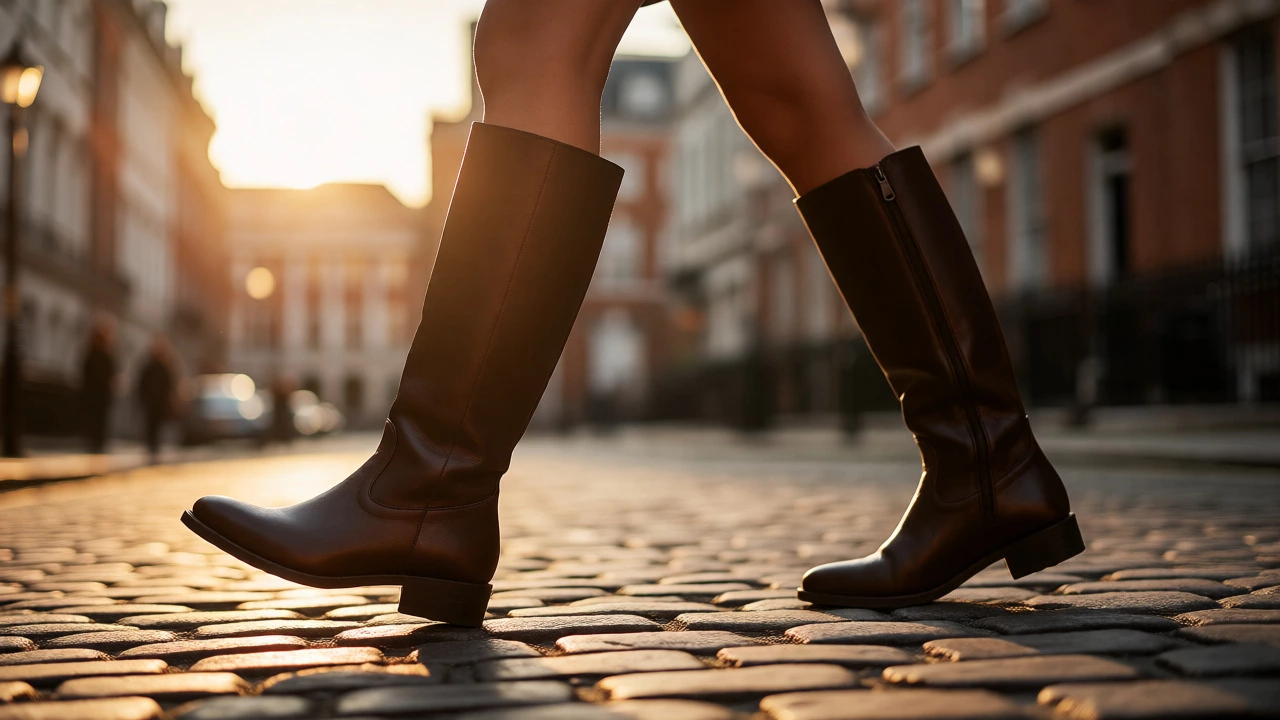
Material Matters: Will It Stretch?
This is where experience saves you money. Natural materials breathe and mold. Synthetic materials do not. If you are buying genuine leather boots, manufacturers often recommend sizing down a half-size because the leather will relax and expand by up to 10% after break-in. If you buy a synthetic vegan leather boot, stick to your true size. It won’t give you that extra wiggle room later.
Consider the lining too. Fleece-lined winter boots take up significant internal volume. If you usually wear a size 8 in summer boots, you might need an 8.5 or even a 9 in fleece-lined versions. Ignoring this leads to compressed circulation, which makes your feet cold faster. Warm feet need blood flow; tight boots restrict it.
When to Ignore the Rule
Are there times when 0.5 doesn’t matter? Yes. Slip-on mules and sandals have open heels, so heel slippage is part of the design. In these cases, focus only on toe clearance and strap security. Also, some brands run large or small consistently. Always check specific brand reviews. For example, certain Italian designer boots run narrow and long, while American casual brands tend to run wide and short. Knowing the brand’s bias helps you predict whether you need that half-size adjustment.
Ultimately, your body knows best. If a size 8 feels good but leaves zero room, and an 8.5 feels loose but safe, choose the 8.5. You can always add an insole to fill dead space. You cannot shrink a shoe that crushes your toes. Prioritize health over aesthetics, especially with boots you plan to wear for work or travel.
Should I size up or down for tall boots?
For tall boots, consider both calf circumference and foot length. Often, if you have wider calves, you might need to go up a half-size to accommodate the shaft width, even if the footbed fits perfectly in your usual size. Conversely, if you have very slim calves, a smaller size might prevent gaping at the top, provided the foot length remains adequate.
Do boots stretch enough to fix a half-size error?
Leather boots can stretch about a half-size in width and a quarter-size in length with proper conditioning and wear. However, they rarely stretch enough to correct a full-size error in length. Synthetic materials generally do not stretch significantly. If the boot is too short, stretching is unlikely to provide lasting relief.
Is it better to have slightly loose or tight boots?
Slightly loose is almost always better than tight. Tight boots cause irreversible damage like bunions and nerve pain. Loose boots can be adjusted with thicker socks, insoles, or heel pads. Tight boots cannot be easily made bigger without damaging the structure or causing discomfort.
How does sock thickness affect boot sizing?
Thick wool or thermal socks can reduce internal volume by up to a full size. If you plan to wear heavy socks with your boots, try them on with those specific socks. You may find you need to go up a half-size to maintain comfort and circulation.
Why do my feet feel different in boots than in sneakers?
Boots have stiffer soles and higher ankle support, which changes your gait mechanics. Sneakers often have flexible uppers that adapt to foot swelling throughout the day. Boots require a more precise initial fit because their structure limits natural expansion. This structural rigidity makes small sizing errors more noticeable and painful.