Down Jacket Fit Evaluator
Use this tool to diagnose your jacket's fit. Select your current feeling or run through the physical checkpoints to find your "Sweet Spot."
Feels Tight
Sausage-like, snug, or restricts breathing
Low Loft RiskFeels Relaxed
Room for a sweater, comfortable movement
Optimal LoftFeels Baggy
Like a tent, gaps at neck or waist
Convection RiskOptimal Fit
Your jacket is in the sweet spot! You have enough loft to trap heat without allowing a wind tunnel effect.
Quick Summary: The Golden Rule of Fit
- Avoid Tight Fits: Compression kills the "loft," which is what actually keeps you warm.
- Avoid Overly Baggy: Too much room allows cold air to circulate and escape (the chimney effect).
- The Sweet Spot: A "relaxed" fit that allows one medium layer underneath without pulling at the chest or armpits.
- Key Test: You should be able to hug yourself comfortably without the fabric straining.
The Science of Loft and Warmth
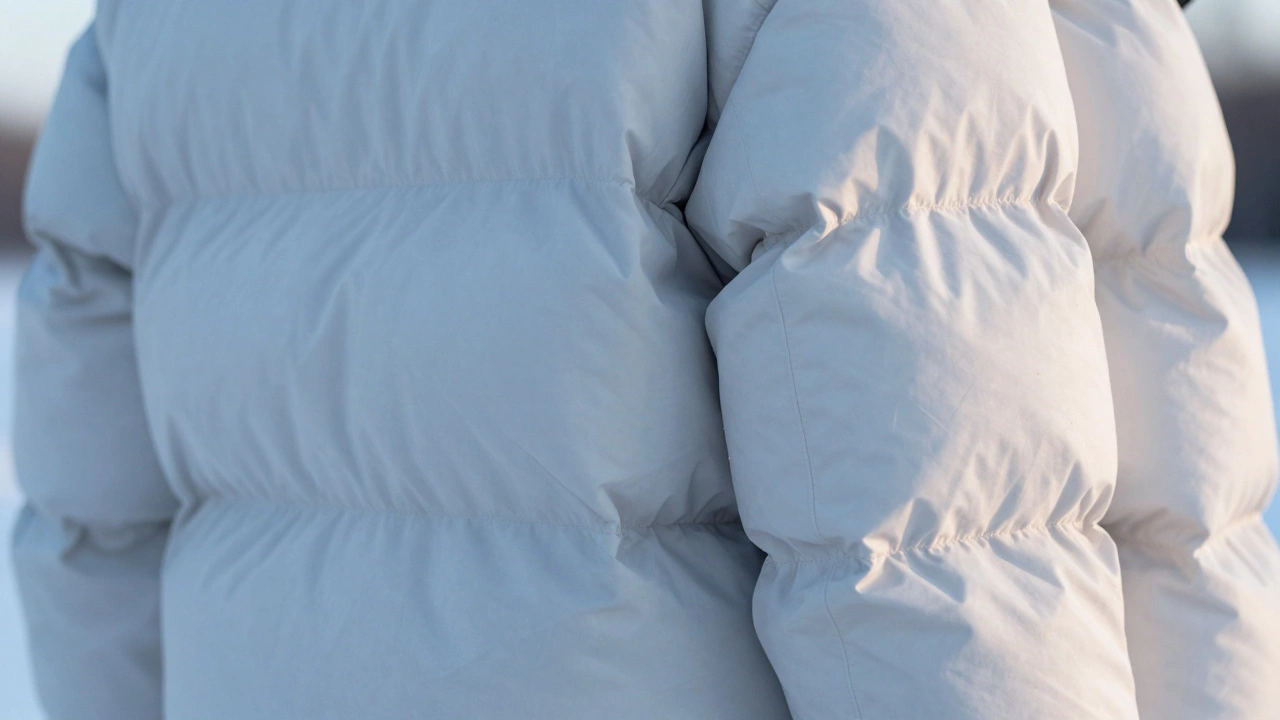
To understand why a tight jacket is a cold jacket, we have to talk about down jacket fit is tied to the ability of down clusters to trap still air, creating a thermal barrier between your body and the outside world. This phenomenon is called loft. When you wear a jacket that is too tight, you compress the Down (the fluffy undercoat of geese or ducks). Down is a natural insulator consisting of plumules that create air pockets. If those pockets are squashed, the air escapes, and the heat from your body leaks out. It's like trying to sleep under a flattened pillow-it just doesn't work.
A loose fit ensures the down can expand fully. This creates a thick layer of dead air. Since air is a poor conductor of heat, your body heat stays trapped. If the jacket is too tight across the shoulders or chest, you're essentially creating "cold spots" where the insulation is too thin to do its job.
The Danger of the "Too Loose" Look
While compression is the enemy, going overboard with a baggy fit creates a different problem: the wind tunnel effect. If there is a massive gap between your torso and the jacket wall, the Convection (the movement caused within a fluid-in this case, air) takes over. Cold air will rush in through the neck or hem and circulate around your body, stripping away the thin layer of warmth you've managed to generate.
If you can fit a whole second jacket under your puffer, you're likely wasting the jacket's potential. The goal is a tailored but roomy silhouette. You want the jacket to follow the lines of your body without clinging to them. If the jacket feels like a tent, you'll find yourself constantly adjusting it, and you'll likely feel a draft every time the wind shifts.
Layering and the "One-Sweater" Rule
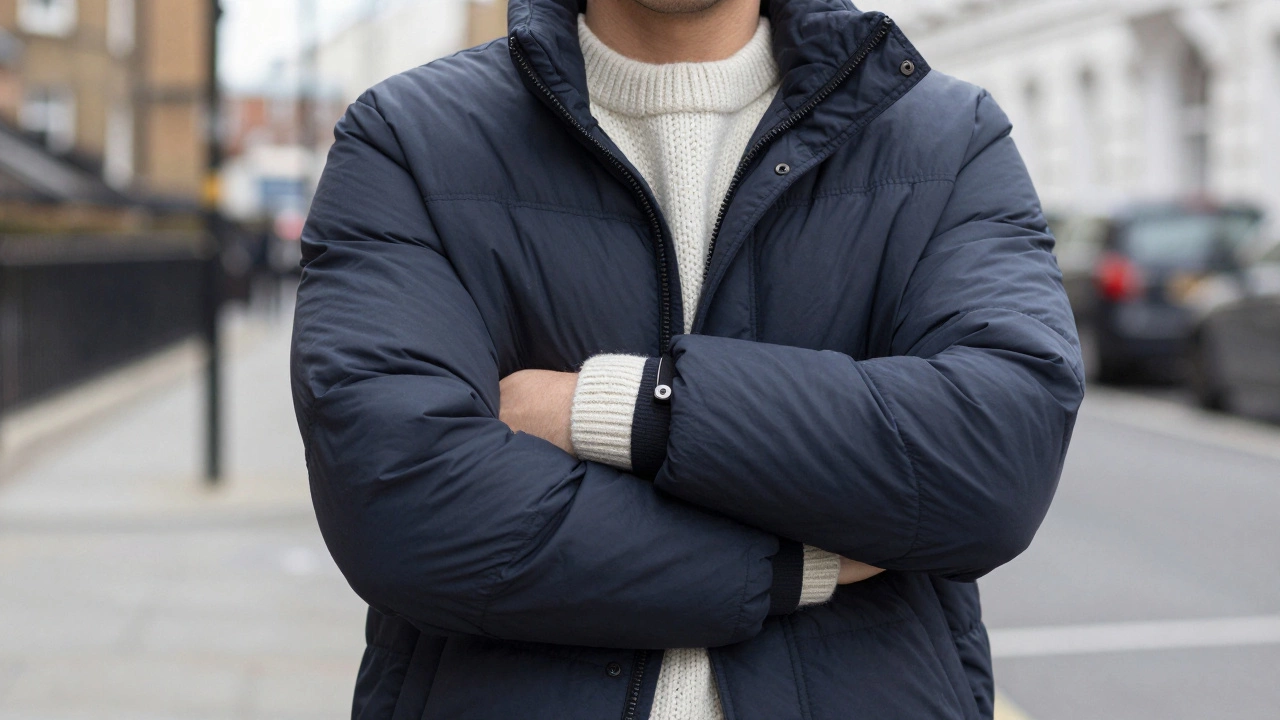
When trying on a jacket in a store, most people make the mistake of wearing just a t-shirt. This is a recipe for disaster. To find the perfect fit, you need to consider your Layering System, which is the practice of wearing multiple garments of different materials to manage moisture and heat. A good rule of thumb is the "one-sweater" rule: the jacket should fit comfortably over a mid-weight fleece or a wool sweater.
Check the armpits specifically. If you lift your arms and the hem of the jacket rises up past your waist, it's too tight. You want enough room to move your arms freely without feeling like you're wearing a straitjacket. If you plan on wearing heavy hoodies or chunky knits, you might need to size up, but ensure the sleeves aren't so long that they swallow your hands.
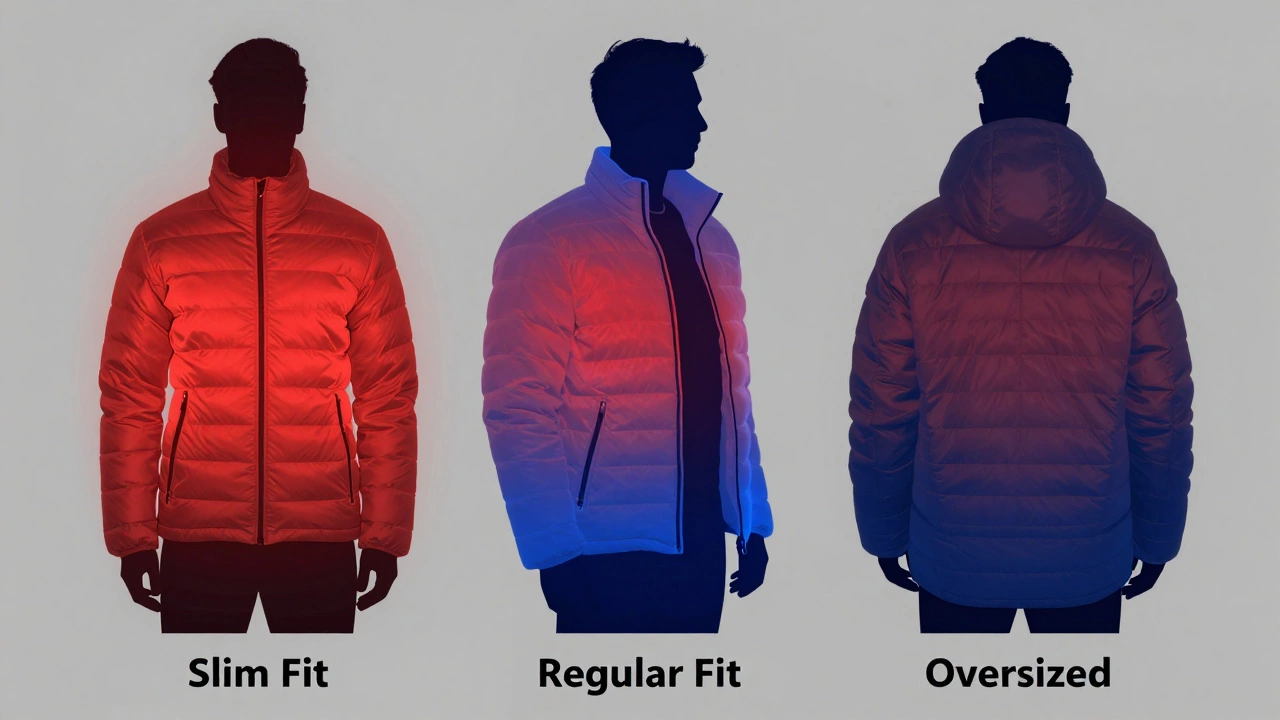
Comparing Fit Styles: Slim vs. Regular vs. Oversized
| Fit Style | Best For | Warmth Level | Mobility | Risk Factor |
|---|---|---|---|---|
| Slim Fit | City wear / Spring | Moderate (Low loft) | Restricted | Compression cold spots |
| Regular Fit | Daily winter use | High (Optimal loft) | Good | Balanced |
| Oversized | Streetwear / Extreme layering | Variable (Airy) | Excellent | Heat loss via convection |
Critical Fit Checkpoints
When you're standing in front of the mirror, run through this checklist to ensure you aren't sacrificing warmth for fashion:
- The Shoulder Seam: The seam should sit right at the edge of your shoulder. If it's pulling inward, the jacket is too small.
- The Chest Press: Zip the jacket up all the way. If the fabric pulls tight across your chest or you can't take a full deep breath, you need a larger size.
- The Cuff Seal: Check the wrists. They should be snug enough to keep wind out but not so tight that they restrict blood flow to your hands.
- The Hem Length: The jacket should end at a point that keeps your hips covered without hitting your mid-thigh (unless it's a parka), preventing the "chimney effect" where heat escapes from the bottom.
Special Considerations for Different Activities
Your needs change based on what you're actually doing. If you're using a down jacket for Hiking, where you are engaging in aerobic activity in variable terrain, you might prefer a slightly looser fit to allow for better ventilation. You don't want to overheat and sweat; moisture is the enemy of down. Once down gets wet, it clumps, loses its loft, and stops insulating entirely.
For urban commuting, a slightly slimmer (but not tight) profile is often preferred for aesthetics and ease of movement in crowded spaces like buses or trains. However, remember that the "fashion fit" often compromises the "thermal fit." If you live in a place with brutal winters, prioritize the loft over the silhouette. A slightly bulkier look is a small price to pay for not freezing during a commute.
Common Fit Mistakes to Avoid
One frequent error is ignoring the weight of the down. A jacket with a high Fill Power-which is a measure of the fluffiness or loft of the down, usually rated from 500 to 900-will look bulkier even if it's a "slim" fit. Don't be fooled into buying a smaller size just because a high-fill jacket looks oversized. That bulk is exactly what provides the warmth.
Another mistake is over-reliance on the waist cinch. While some jackets have drawstrings at the bottom to seal in heat, these shouldn't be used to make a too-large jacket fit. If you're pulling the drawstring so tight that it bunches the fabric awkwardly, the jacket is simply too big. The cinch is for sealing gaps, not resizing the garment.