Vintage Jacket Age Estimator
Select the features found on your jacket below to generate an estimated production era.
Estimated Production Era
You find a leather bomber or a wool peacoat at a thrift store in Wellington. The tags are gone, the fabric feels substantial, and the price is suspiciously low. You want to buy it, but you have no idea if it’s from the 1950s or just a high-quality reproduction from the early 2000s. Knowing how old is a vintage jacket isn't just about bragging rights; it dictates how much you should pay and whether it will survive another decade of wear.
Dating clothing isn't magic. It’s detective work. You look for specific clues: labels, zippers, seams, and fabric types. If you know what to look for, you can pinpoint the era within a five-year window most of the time. Here is exactly how to do it.
Start With the Labels
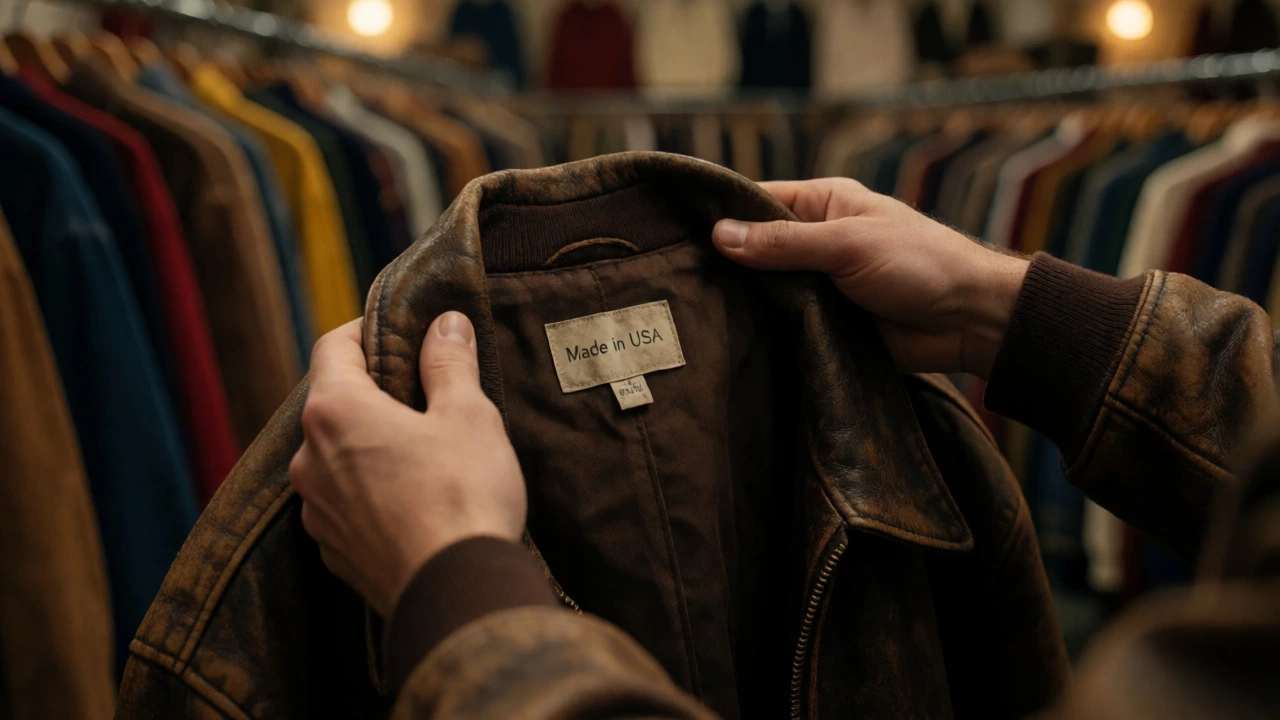
The label is your first line of defense. But don't just look at the brand name. Look at the text on the back of the neck tag and any side seam tags. Before 1971, the United States required country-of-origin labeling on imported goods. If your jacket says "Made in USA" without a year, it could be anywhere from the 1940s to today. However, if it says "Made in Japan," "Made in Korea," or "Made in China," you can narrow it down significantly based on when those countries became major exporters of apparel.
For example, "Made in Japan" jackets peaked in quality and volume between the late 1960s and the 1980s. After that, production shifted to Southeast Asia. If you see "Made in Vietnam" or "Made in Bangladesh," you are likely looking at post-1990s manufacturing. Check for copyright dates too. Some brands print a © date on the inner lining or care tag. This is often the actual production year, not just the design year.
Decode the Zipper Hardware
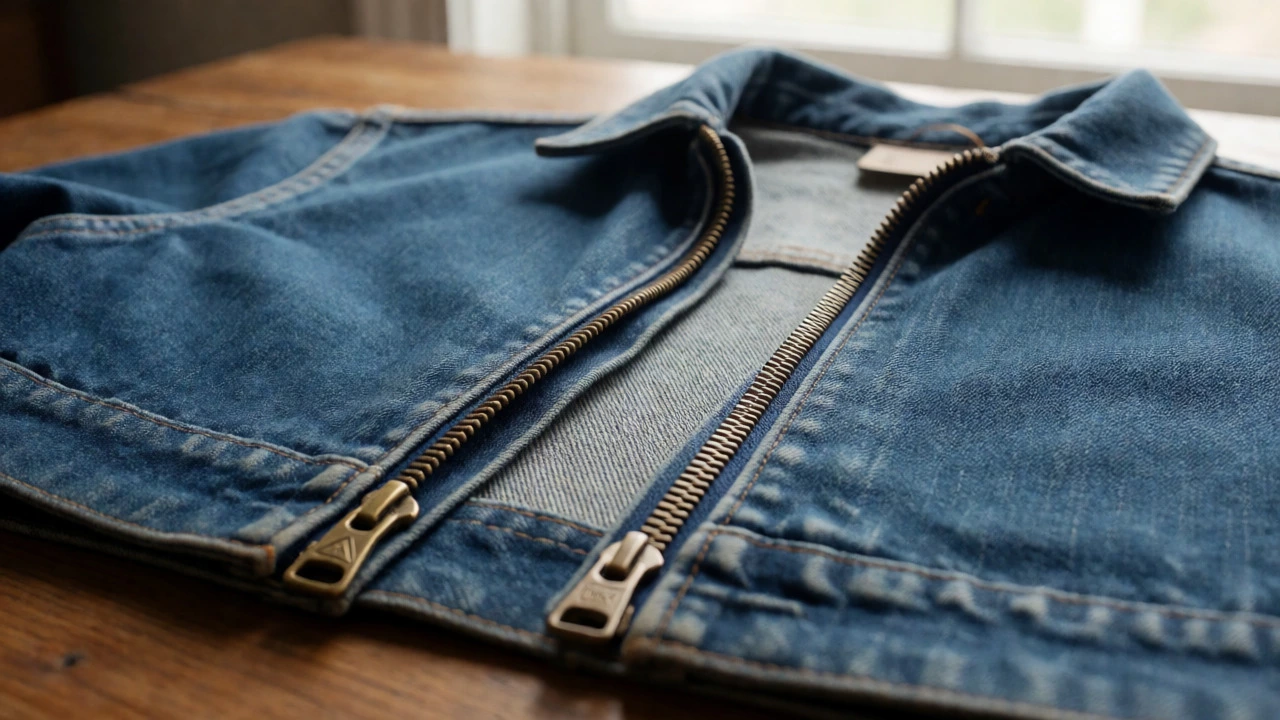
Zippers are one of the most reliable indicators of age because manufacturers changed their designs frequently. Look closely at the zipper pull and the tape. Does it say "Talon," "Conmar," or "YKK"?
- Talon: These were dominant in American military and civilian jackets until the mid-1950s. If you see a Talon zipper with a triangle logo, you are likely looking at pre-1955 gear.
- Conmar: Popular in the 1930s and 1940s. They often have a distinct curved shape.
- YKK: Yoshida Kogyo Kabushikikaisha started dominating globally in the 1970s. If you see YKK, it’s almost certainly post-1970.
- Zipper Tape Material: Early zippers used cotton or linen tape. Synthetic nylon tape became common in the late 1950s and 1960s. If the zipper tape feels like plastic, it’s later than you think.
Also, check the zipper teeth. Metal teeth (brass or aluminum) are typical of older, heavier-duty jackets like flight jackets. Plastic molded teeth appeared in the 1960s and became standard by the 1980s. If you’re holding a denim trucker jacket with metal teeth, it’s likely a reproduction unless it’s a very high-end heritage brand.
Examine the Seams and Construction
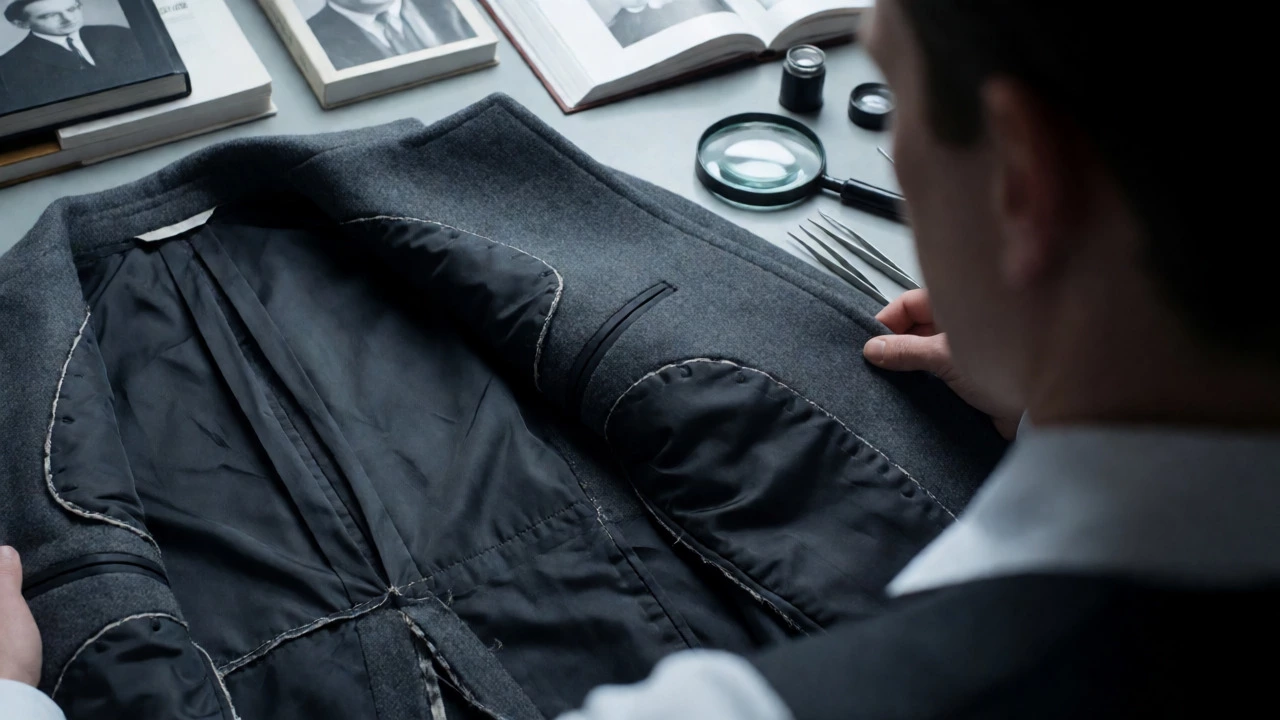
Look inside the jacket. How was it put together? Older garments, especially pre-1960s, often feature single-stitch construction on the hems and cuffs. This means there is only one row of thread along the edge. Double-stitching became standard in the 1960s and 1970s for durability. If you see double stitching everywhere, it’s likely from the 1970s onward.
Check the shoulder seams. In many older coats, the shoulders are constructed with raglan sleeves or specific set-in sleeve patterns that require more labor. Modern mass-produced jackets use simpler cut-and-sew methods. Also, look for serged edges (overlocked seams). Sergers weren’t widely used in garment factories until the 1950s. If the inside seams are raw (fraying slightly) and finished with bias tape, you might have something from the 1940s or earlier.
Fabric and Lining Clues
Fabric tells a story through its feel and composition. Pre-synthetic eras relied heavily on natural fibers. Wool, cotton, silk, and linen dominate pre-1950s outerwear. If you touch a jacket and it feels purely synthetic-like polyester or acrylic-you are looking at post-1960s tech. Nylon entered the market in the late 1930s but didn’t become common in everyday jackets until after World War II.
Check the lining. Rayon linings were popular in the 1940s and 1950s. They feel smooth but can degrade over time, turning brittle. Acetate linings replaced rayon in the 1960s. Polyester linings are ubiquitous from the 1970s to today. If the lining has a distinct floral pattern or bold geometric print, match it to textile trends. For instance, large abstract florals suggest the 1960s, while paisley points to the 1970s.
| Era | Key Features | Common Fabrics | Hardware |
|---|---|---|---|
| 1940s-1950s | Single stitch, boxy fit, minimal branding | Wool, Cotton Twill, Leather | Metal Zippers (Talon), Bakelite Buttons |
| 1960s | Nylon introduction, brighter colors | Nylon, Polyester Blends, Corduroy | Plastic/Metal Mix, YKK emerging |
| 1970s | Double stitch, synthetic dominance | Polyester, Acrylic, Denim | Plastic Molded Teeth, YKK Standard |
| 1980s-1990s | Oversized fits, heavy branding | Gore-Tex, Fleece, Heavy Cotton | Branded Pulls (e.g., Nike, Adidas) |
Style Silhouette and Fit
Silhouette changes every decade. In the 1940s, jackets had broad shoulders and nipped waists, reflecting military tailoring. The 1950s saw a return to softer shoulders and shorter lengths for casual wear. The 1960s introduced mod cuts-slimmer, cleaner lines. By the 1970s, lapels got wider, and jackets became longer. The 1980s were all about excess: padded shoulders, oversized fits, and loud logos.
If you have a denim jacket with a slim fit and short body length, it’s likely a modern reproduction of a 1950s style. Original 1950s denim jackets were boxier and sat higher on the waist. Compare the pocket placement. Older jackets often have lower chest pockets or different flap shapes. Study reference photos from museums or archives. The National Museum of Australia and similar institutions often have digitized collections that show exact cuts by year.
Brand History and Logos
Logos change. Research the brand’s history. Levi’s, for instance, has well-documented tag variations. Red tab vs. orange tab matters. A red tab with a lowercase "e" indicates pre-1971. An uppercase "E" suggests post-1971. Other brands like Carhartt, Barbour, and Schott NYC also have specific logo evolutions.
Check for discontinued brand names. Some companies merged or went bankrupt. If you see a brand that hasn’t existed since 1985, your jacket is definitely older than that. Use resources like the Vintage Fashion Guild or specialized forums where collectors share label databases. Sometimes, a small typo in the brand name or a specific font style can pinpoint the exact year range.
Condition and Wear Patterns
Authenticity shows in wear. Real vintage jackets have consistent fading. Elbows, collars, and pocket corners should show natural wear. If the fading looks artificial-too uniform or painted on-it’s likely distressed new stock. Check the buttons. Natural materials like bone, horn, or shell were common before the 1960s. Plastic buttons took over later. If you see a mix of button types, it might mean the jacket was repaired or rebuttoned, which complicates dating but doesn’t necessarily make it fake.
Smell matters too. Old clothes have a distinct scent-mildew, cedar, or aged fabric. New reproductions smell like factory chemicals. If it smells like a new car, it’s probably new.
When in Doubt, Ask Experts
If you still can’t figure it out, take clear photos of the labels, zippers, and seams. Post them in online communities dedicated to vintage clothing. Collectors love solving these puzzles. Be ready to provide measurements and details about where you bought it. Provenance helps. If you bought it from an estate sale in Wellington, ask the seller about the original owner’s age and profession. A mechanic’s jacket from the 1950s will differ from a student’s parka from the same era.
Dating a jacket takes practice. Start with obvious markers like zippers and labels. Move to subtler cues like stitching and fabric weight. Over time, you’ll develop an intuition. You’ll pick up a jacket and instantly know it’s from the late 1970s because of the zipper type and the polyester sheen. That skill saves money and ensures you build a wardrobe with genuine character.
What is the difference between vintage and retro?
Vintage refers to items made during the period they represent, typically 20 years or older. Retro describes new items designed to mimic the style of a past era. A 1980s jacket is vintage; a 2020s jacket styled like the 1980s is retro.
Can I date a jacket without a label?
Yes. Focus on hardware like zippers and buttons, construction techniques like single vs. double stitching, and fabric types. These physical attributes remain even when labels fade or are removed.
Are YKK zippers always modern?
Mostly yes. YKK became the global standard in the 1970s. While they existed earlier, finding a YKK zipper on a jacket claimed to be from the 1950s is a red flag for authenticity.
How does 'Made in USA' affect dating?
It narrows the origin but not the year. US manufacturing declined sharply after 1990. A 'Made in USA' jacket is likely pre-1990, but could be from the 1950s or 1980s. Use other clues like zippers to refine the date.
Do all old jackets have single stitching?
No. Single stitching was common in denim and some casual wear pre-1960s, but tailored coats often used double stitching for durability. Always check multiple areas of the garment.