School Uniform Savings Calculator
Enter your current spending habits and school requirements to see how much you could save annually.
Your Current Situation
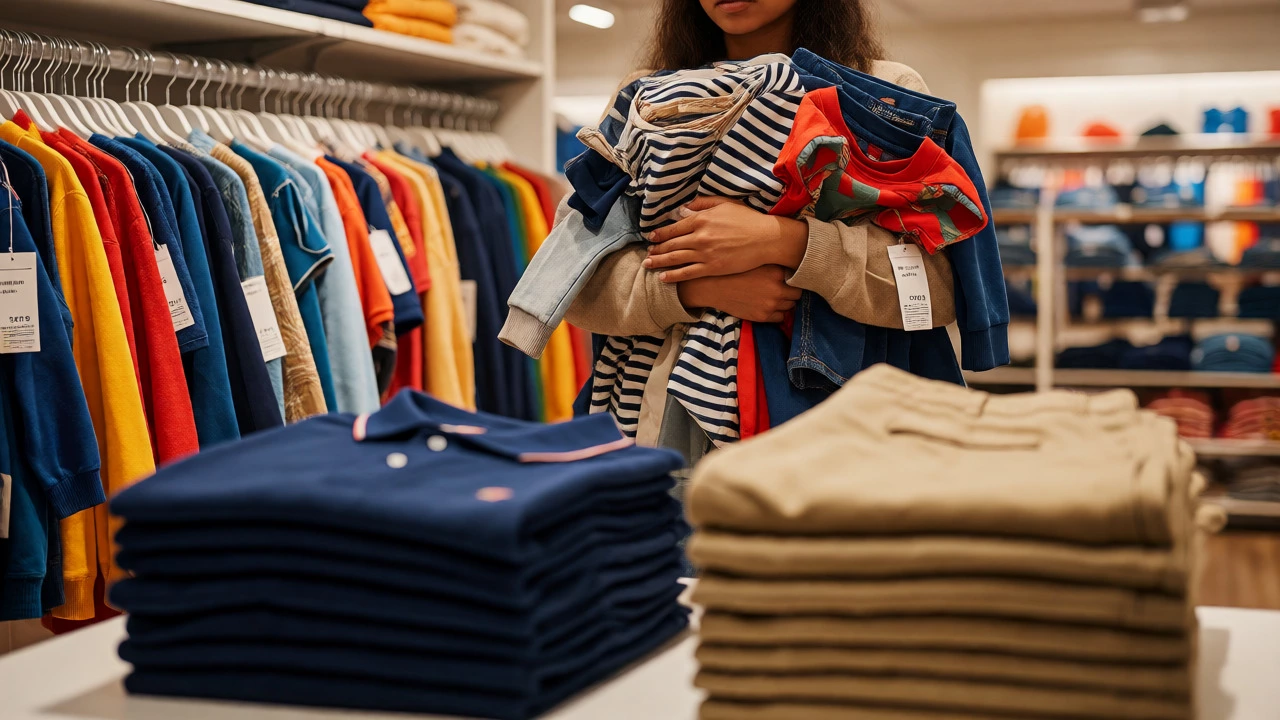
You’re standing in the checkout line at a big-box store, holding three pairs of jeans and two branded t-shirts for your ten-year-old. The total hits $85. You feel that familiar pinch in your wallet. Now imagine if those items were replaced by two identical polo shirts and one pair of khakis from a bulk pack. The price drops to $30. This isn’t just hypothetical math; it’s the daily reality for families who switch to school uniforms. While many parents dread the idea of their kids looking like clones, the financial argument for uniforms is surprisingly strong. But does it actually hold up when you factor in laundry, replacement costs, and the hidden fees? Let’s break down exactly how switching to a uniform policy can keep more cash in your pocket.
The "Decision Fatigue" Tax on Your Wallet
Most people underestimate the cost of choice. When kids pick out their own clothes every morning, they often gravitate toward trendy brands or specific styles that come with a premium price tag. This is what economists call decision fatigue, but for parents, it’s just "the Nike tax." If your child insists on wearing only name-brand sneakers or graphic tees, you are paying for marketing, not durability. Uniforms strip away this variable. They standardize the wardrobe, forcing purchases into a narrow, predictable category where competition drives prices down.
Think about the sheer volume of clothing a non-uniform student needs. To avoid repetition complaints, you might buy seven distinct outfits per week. With uniforms, you need maybe three or four interchangeable sets. Why? Because nobody notices if Johnny wears the same blue polo on Tuesday as he did on Monday. The social pressure to be unique vanishes, allowing you to rotate fewer items more frequently. This reduction in quantity directly lowers your annual spend. Instead of buying fifteen new items a semester, you might buy five.
Bulk Buying vs. Retail Markups
Here is where the real savings happen. Most schools partner with specific vendors or allow generic equivalents. These vendors operate on high-volume models. They aren’t trying to sell you a lifestyle; they are selling fabric. Consequently, the markup is significantly lower than what you find at fashion retailers like Gap, Old Navy, or Target’s clothing section.
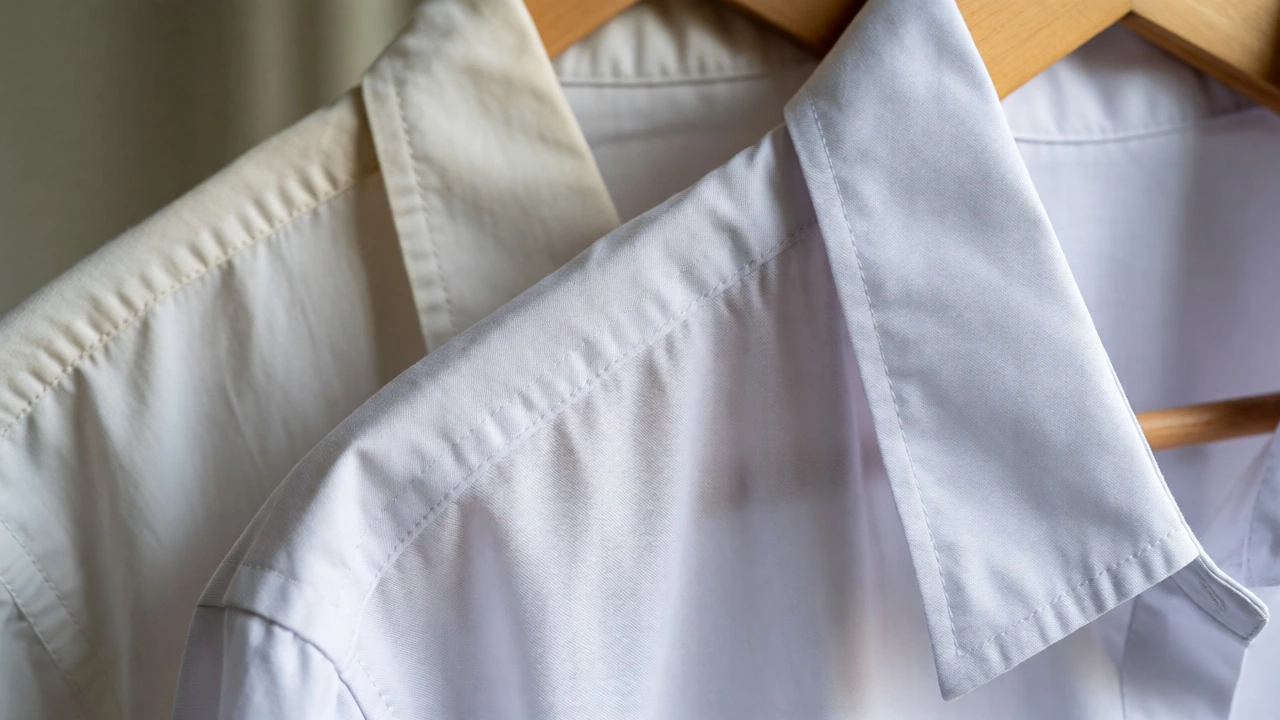
Consider the unit economics. A single white button-down shirt at a department store might cost $18.99. That same shirt, bought in a 6-pack from a uniform supplier, might cost $14.99 per shirt, but you get six for $89.94. Wait, that looks similar, right? Not quite. The department store shirt is thin, prone to yellowing, and likely won’t survive fifty wash cycles. The uniform shirt is industrial-grade cotton-poly blend, designed to last an entire school year without fading. When you calculate cost-per-wear, the uniform wins by a landslide. You stop replacing clothes because they look worn out; you replace them only when they physically fall apart or when your kid grows out of them.
| Item Category | Non-Uniform Avg Cost | Uniform Avg Cost | Savings Factor |
|---|---|---|---|
| Tops (Polos/Shirts) | $220 (10 items @ $22) | $120 (6 items @ $20) | -45% |
| Bottoms (Pants/Skirts) | $180 (6 items @ $30) | $90 (3 items @ $30) | -50% |
| Outerwear | $80 (1 jacket) | $45 (1 blazer/sweater) | -44% |
| Total Annual Spend | $480+ | $255 | ~47% Savings |
The Hidden Costs of Fast Fashion
Let’s talk about quality. Cheap fast-fashion items, like H&M or Primark basics, seem affordable upfront. But they fail quickly. Seams split after two washes. Colors fade to pastel ghosts of their original shade. This leads to a cycle of constant replacement known as the "Vimes Boots Theory"-poor quality means you buy more often, costing more in the long run. Uniform manufacturers know this. Their reputation depends on garments surviving the rigors of a playground. They use reinforced stitching and color-fast dyes. You aren’t just buying a shirt; you’re buying durability insurance.
Furthermore, there is the psychological cost of "outfit anxiety." For many students, especially in middle school, choosing clothes is a source of stress. This stress translates into time spent shopping for approval. Parents end up buying extra clothes just to ensure their child has something "acceptable" to wear. Uniforms eliminate this ambiguity. There is no debate over whether a ripped knee is cool or inappropriate. The rule is simple: if it’s part of the uniform, it’s acceptable. This clarity reduces impulse buys driven by social pressure.
Resale and Hand-Me-Down Efficiency
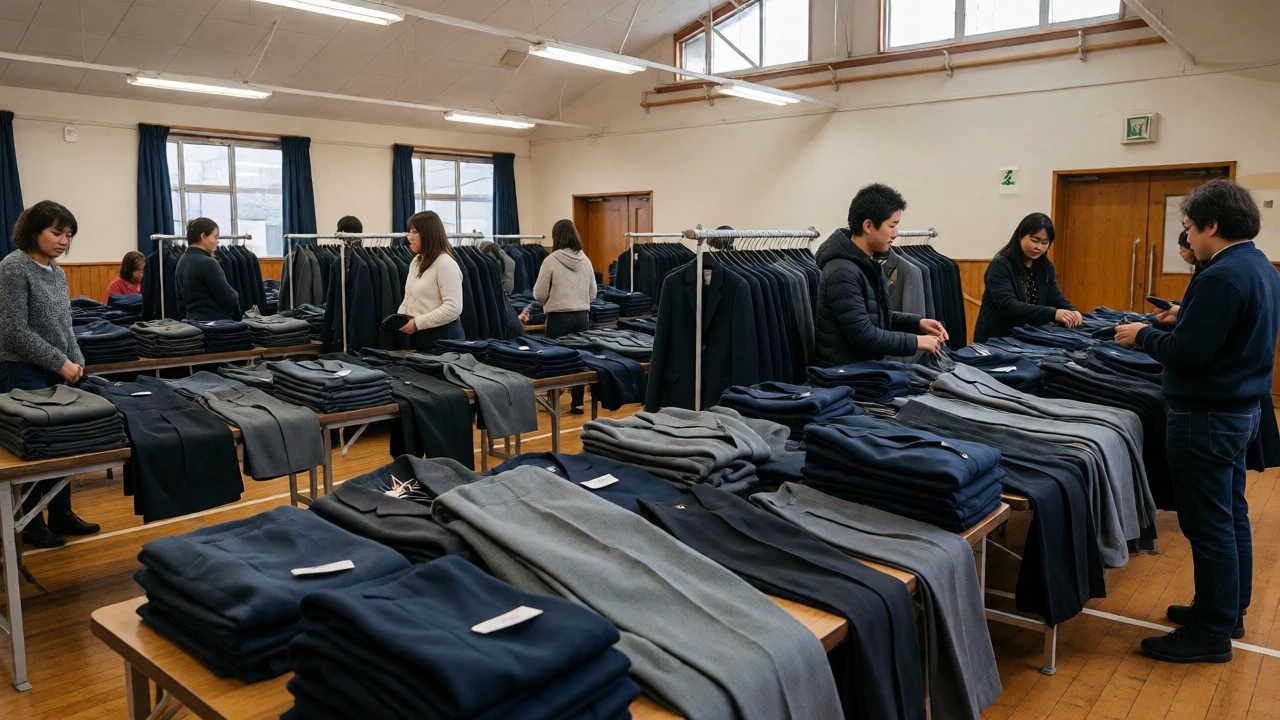
One of the biggest financial perks of uniforms is the resale market. Because styles rarely change drastically, a navy blazer from 2024 still fits the dress code in 2026. This longevity creates a robust second-hand market. Many schools host swap meets or have online groups where parents sell gently used uniforms. You can often buy a full set of pants, skirts, and sweaters for 50% off retail price.
Try doing that with trendy streetwear. A pair of limited-edition Yeezys or a Supreme hoodie loses value the moment the season changes. But a plain grey sweatshirt? It stays relevant forever. This makes hand-me-downs easier too. If your older child wore a uniform for three years, the younger sibling can wear the exact same items. With regular clothes, style differences between siblings (or even between grades) make passing things down difficult. Uniforms create a standardized inventory within your household, maximizing the utility of every dollar spent.
Laundry and Maintenance Savings
It sounds minor, but laundry habits change dramatically with uniforms. Regular clothes require sorting, special detergents for darks, and careful washing to preserve prints. Uniforms are generally machine-washable and tumble-dry safe. You can throw everything in hot water without worrying about shrinking a favorite vintage tee or bleeding dye onto whites.
This simplicity saves time, which is money if you hire help or value your leisure hours. More importantly, it extends garment life. Harsh chemicals and delicate cycles degrade fabrics faster. By treating uniforms like work clothes-wash, dry, repeat-you maintain their appearance longer. You don’t need expensive stain removers for grass stains on khakis because the fabric is treated to resist them. Over a school year, these small efficiencies add up to less frequent replacements and lower utility bills.
Pitfalls: When Uniforms Don’t Save Money
Is it always cheaper? No. Here is where you need to be smart. Some private schools mandate exclusive suppliers with monopolistic pricing. If the school requires a specific embroidered blazer that only one vendor sells for $150, your savings evaporate. Always check if the school allows generic equivalents. If they do, buy from Amazon or Walmart instead of the official portal. You can often find the same navy polo for half the price.
Another trap is sizing. Kids grow fast. If you buy a uniform that is two sizes too big to "grow into," you might pay for alterations or buy multiple sizes annually. Buy for current fit, then plan for growth spurts mid-year. Also, consider climate. In hot regions, you need more breathable, lightweight uniforms, which can sometimes carry a premium. Do your homework before committing to a specific vendor.
Practical Tips for Maximizing Savings
- Buy Off-Season: Purchase spring uniforms in late winter and fall uniforms in late summer. Vendors discount old stock heavily.
- Check Generic Rules: Ask the school PTA if solid-color polos and khakis from any brand are acceptable. Usually, they are.
- Label Everything: Use iron-on labels. Lost uniforms are expensive to replace. Recovery rates increase by 80% with names visible.
- Join Swap Groups: Look for local Facebook groups dedicated to your school district’s uniform exchange.
- Mix and Match: If allowed, buy core pieces (blazers, vests) new for durability, and basic shirts/pants used or from discount retailers.
Frequently Asked Questions
Do school uniforms really cost less than regular clothes?
Generally, yes. While the initial purchase might seem comparable to buying a few nice outfits, the reduced quantity needed and higher durability lead to significant annual savings. Studies suggest families save between 20% and 50% on clothing budgets when switching to uniforms, primarily by eliminating the need for trend-driven purchases and reducing replacement frequency.
Can I buy school uniforms anywhere?
It depends on the school's policy. Many public schools allow generic equivalents, meaning you can buy solid-colored polos and khakis from mass-market retailers like Target or Amazon. Private schools often require specific logos or cuts, restricting you to authorized vendors. Always check the handbook for "generic allowance" clauses before assuming you must use the official supplier.
What happens if my child grows out of their uniform mid-year?
This is a common concern. To mitigate costs, buy slightly larger sizes at the start of the year if possible, or utilize school swap programs. Many schools have lending closets for emergency size changes. Additionally, because uniform styles are consistent, you can resell the smaller items easily or pass them to younger siblings, ensuring the investment isn't wasted.
Are uniforms better for the environment?
Yes, indirectly. By reducing the total number of garments purchased per child, uniforms lower the demand for textile production. High-quality uniforms also last longer, reducing waste sent to landfills compared to disposable fast-fashion items. The emphasis on durability and reusability aligns with sustainable consumption principles.
How much should I budget for school uniforms?
For a typical K-12 student, budget between $150 and $300 per year if utilizing generic options and sales. If your school requires branded items from a single vendor, expect to pay closer to $300-$500. Buying second-hand or during clearance events can cut these figures in half. Always include a buffer for unexpected losses or rapid growth.