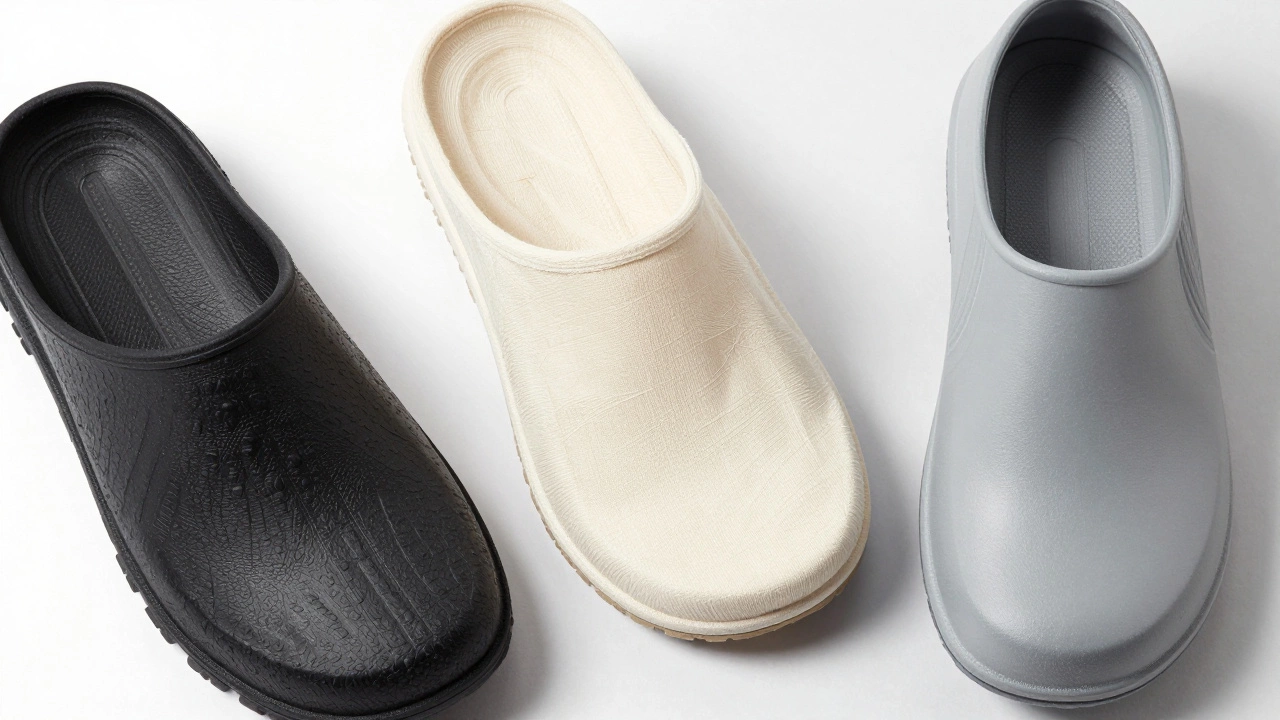
Slipper Selection Guide
Answer a few questions to find the ideal slipper specifications for your home and feet.
Select your options and click the button to see your recommendation.
- Match the sole material to your floor type (rubber for tile, soft for carpet).
- Prioritize arch support if you spend hours standing at home.
- Choose breathable materials like wool or cotton to avoid sweaty feet.
- Check the fit-slippers should be snug but never pinch your toes.
Understanding Your Flooring and Sole Needs
Before you look at colors or brands, look at your floors. If you live in a place with polished marble or slick ceramic tiles, you need a Rubber Sole. A hard rubber base provides the friction necessary to prevent slips, especially if you're rushing to answer the door or carrying a laundry basket. In contrast, if your home is mostly plush carpeting, a soft fabric or foam sole is often more comfortable and keeps the carpet from getting marked.
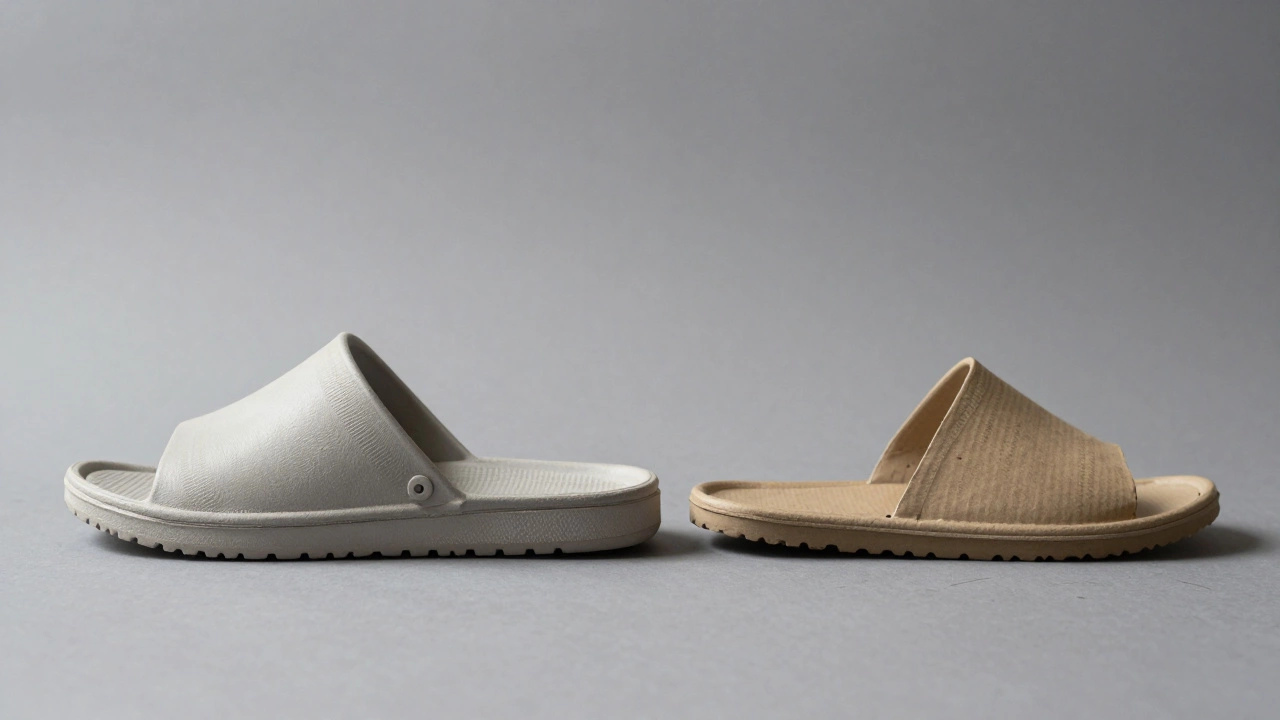
Then there's the "outdoor-indoor" hybrid. If you frequently step out onto a patio or porch to grab the mail, look for a EVA (Ethylene Vinyl Acetate) sole. This material is lightweight, waterproof, and much tougher than standard indoor foam. It prevents the internal cushioning from soaking up water the moment you hit a damp driveway. If you buy a soft-bottomed slipper and use it outside, the fabric will shred within weeks because it isn't designed to handle abrasive concrete.
| Floor Type | Recommended Sole | Best Attribute | Downside |
|---|---|---|---|
| Hardwood/Tile | Rubber / TPR | High Grip | Heavier weight |
| Wall-to-Wall Carpet | Foam / Fabric | Maximum Softness | No outdoor use |
| Mixed (Indoor/Outdoor) | EVA / Hard Rubber | Water Resistance | Less breathable |
Picking the Right Materials for Comfort and Breathability
Your feet have thousands of sweat glands, and the wrong material can turn your slippers into a swamp. This is where Merino Wool shines. Unlike synthetic fleece, which traps heat and moisture, wool is naturally thermoregulating. It keeps you warm when it's freezing but lets your skin breathe so you don't wake up with damp socks. It's a great choice for people who struggle with temperature swings.
If you prefer something lighter, Cotton or linen blends are the way to go. These are ideal for summer months or warmer climates. However, cotton doesn't provide much insulation, so if you can feel the chill of the floor through the sole, cotton won't be enough. For those who want a "cloud-like" feel, Memory Foam is the gold standard. It contours to the shape of your foot, reducing pressure points. Just be careful-too much foam without a structured base can actually lead to foot fatigue over time.
Do You Actually Need Arch Support?
Most cheap slippers are essentially flat pillows. While they feel great for the first ten minutes, they offer zero support for the Plantar Fascia-the thick band of tissue that runs across the bottom of your foot. If you have flat feet or suffer from Plantar Fasciitis, a flat slipper can actually worsen your pain. You should look for find good slippers that feature a contoured footbed.
Look for slippers described as Orthopedic or those with built-in arch support. A good rule of thumb is to press your thumb into the center of the sole; if it collapses completely with no resistance, it's not providing support. A supportive slipper should have a firm core that maintains its shape, pushing back slightly against your arch. This helps distribute your weight evenly across the foot, which is vital if you spend a lot of time standing in the kitchen or working from a home office.
Comparing Slipper Styles: Which One Fits Your Life?
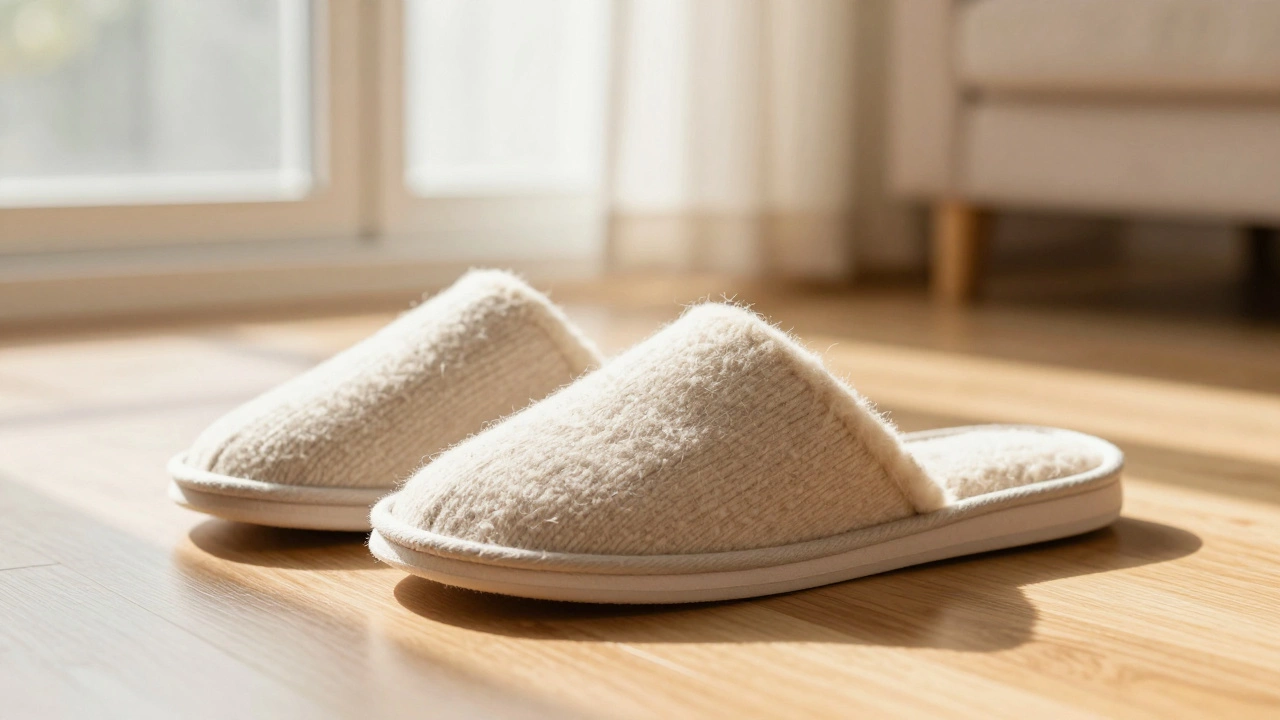
The style you choose affects how often you'll actually wear them. Mules (open-back slippers) are the easiest to slip on and off. They're perfect for quick trips to the bathroom or the fridge. However, they provide very little stability. If you're walking quickly or climbing stairs, your heel can slide out, which is a recipe for a twisted ankle.
Bootie Slippers are the opposite. They wrap around the ankle, trapping heat and providing a secure fit. These are a lifesaver in mid-winter, but they can feel claustrophobic and hot in the spring. Then there are Slipper Socks-socks with rubber grippers on the bottom. They're the most breathable option and great for lounging, but they offer zero impact protection. If you drop a Lego brick while wearing slipper socks, you're going to feel every single corner of it.
How to Tell if a Slipper Fits Correctly
Sizing for slippers is trickier than for sneakers because you have to account for socks. If you always wear thick wool socks in the winter, buy a size up. If you prefer going barefoot inside the slipper, stick to your true size. The most common mistake is buying a pair that is too loose. When a slipper is too big, your toes will instinctively "claw" the bottom of the shoe to keep it from sliding off. Doing this for hours a day can lead to toe cramping and fatigue.
Check the toe box. Your toes should have plenty of room to wiggle, but there shouldn't be more than a thumb's width of empty space at the front. Also, check the heel. If it's a closed-back style, ensure the heel doesn't rub against your Achilles tendon. A small amount of friction during a 10-minute walk is fine, but over an entire evening, that friction becomes a blister.
Maintenance and When to Toss Them
Slippers are essentially magnets for dust, hair, and skin cells. Because we wear them in the areas where we relax, they get dirty faster than we realize. If your slippers are machine washable, use a gentle cycle and always air-dry them. Putting memory foam or wool in a high-heat dryer is a quick way to shrink your shoes or melt the glue holding the sole together.
How do you know when it's time for a new pair? Check the tread. If the rubber soles are smooth in the heel or ball of the foot, you've lost your grip and are now a slipping hazard. More importantly, feel the cushioning. Once the foam has compressed and no longer "springs back," the support is gone. Wearing worn-out slippers is like walking on a thin piece of cardboard; it puts unnecessary stress on your joints and can lead to lower back pain.
Can I wear slippers all day?
Yes, provided they have adequate support. If you are wearing flat, thin slippers for 12 hours a day, you might experience heel pain. For all-day wear, choose a pair with a structured sole and arch support to avoid fatigue.
Are memory foam slippers actually good for your feet?
Memory foam is excellent for immediate comfort and pressure relief. However, it lacks long-term structural support. If you have medical foot conditions, look for memory foam that is paired with a firm orthopedic base rather than just a soft sponge.
How often should I replace my house shoes?
Typically every 6 to 12 months, depending on how much you use them. Replace them immediately if the sole wears thin, the internal lining develops holes, or they no longer provide cushioning.
Should I wear socks with slippers?
It depends on the material. With wool slippers, socks are often unnecessary as the wool handles moisture and warmth. With synthetic or faux-fur slippers, socks can prevent your feet from sweating and sliding around inside the shoe.
What is the most durable material for a slipper sole?
TPR (Thermoplastic Rubber) and EVA are the most durable. They resist abrasion and water much better than foam or fabric, making them the best choice for anyone who steps outside frequently.
Next Steps for Your Search
If you've identified that you need arch support, your next step is to look for brands that specialize in podiatry-approved footwear. If you're primarily worried about cold feet, start by comparing the warmth ratings of Merino wool versus synthetic fleece. For those with a variety of floor types, try a "hybrid" slipper with a reinforced rubber sole. Once you find a pair that fits your foot shape and your home environment, remember to check the care label-knowing whether to hand-wash or machine-wash will double the lifespan of your investment.