Suit Quality Checker
Check each feature you observe in the suit.
Category Breakdown
Walking into a store or scrolling through an online shop, it’s easy to get dazzled by a sharp-looking suit. But the price tag doesn’t always match the quality inside. A cheap suit might look perfect in the mirror for ten minutes, but after one wash or a few hours of wear, the flaws start showing. The good news? You can spot these red flags with your own eyes and hands if you know what to look for.
You don’t need to be a tailor to identify poor craftsmanship. It’s about checking specific details that manufacturers cut corners on to save money. From the way the buttons are attached to the type of fabric used, every part of the suit tells a story. Here is how to decode that story before you hand over your cash.
The Fabric Test: Touch and Look
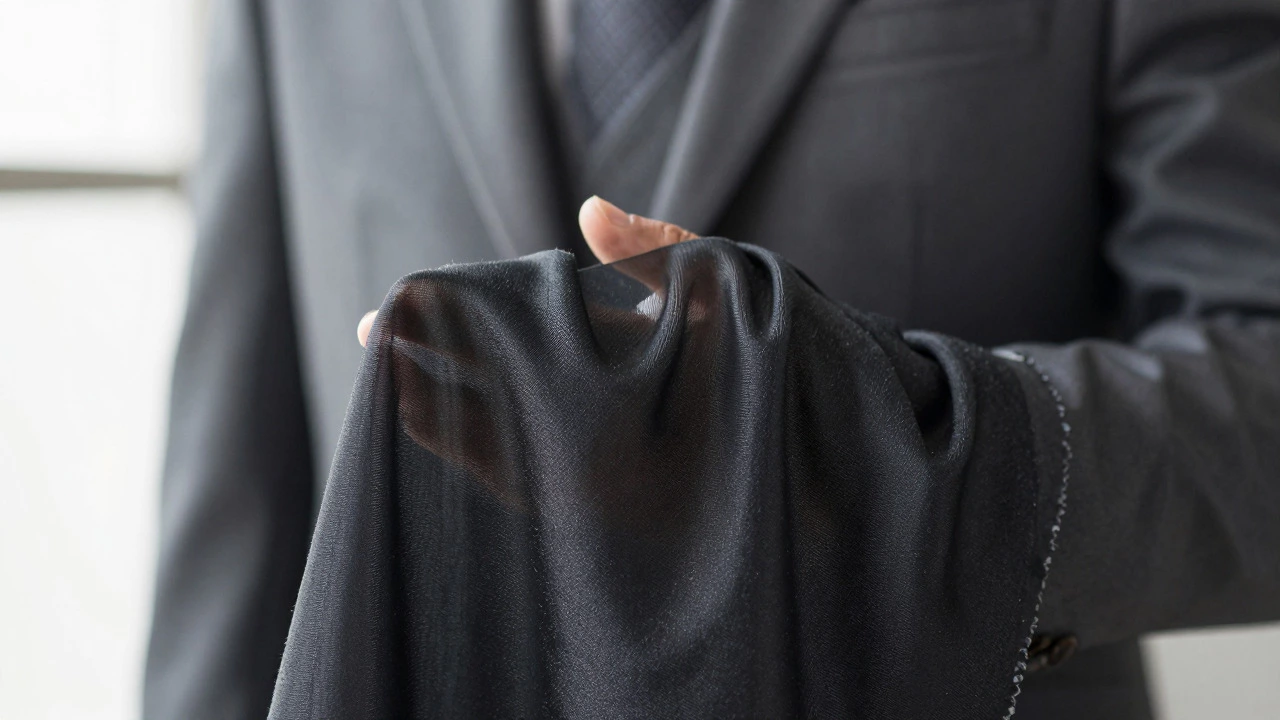
Fabric is the skin of your suit. If this is wrong, nothing else matters. Most cheap suits use synthetic blends like polyester-wool mixes or pure polyester. These materials are durable in a bad way-they resist wrinkles but trap heat and sweat. They also have a shiny, plastic-like sheen that looks unnatural under light. High-quality suiting fabrics, usually wool, have a matte finish and feel cool to the touch.
Run your hand over the material. Does it feel smooth and heavy, or thin and scratchy? Wool has a natural crimp that gives it texture. Polyester feels uniform and slippery. Also, check the weave. Hold the fabric up to the light. If you can see through it easily, it’s likely a low-weight, thin material that will tear at the elbows or knees quickly. A decent suit should have enough body to drape well without being see-through.
Construction: Canvas vs. Fused
This is the most critical technical difference between a cheap suit and a good one. It refers to how the chest lining is attached to the outer fabric.
- Fused Construction: Used in almost all budget suits. The interlining (the stiff layer that keeps the jacket shape) is glued to the back of the fabric using heat-activated adhesive. This is fast and cheap. However, the glue can bubble, crack, or peel off after a few years, especially if the suit gets warm or humid. When this happens, the chest loses its structure and looks baggy.
- Half-Canvas or Full-Canvas: Found in mid-range and high-end suits. The interlining is stitched to the fabric rather than glued. This allows the jacket to breathe and move with your body. It creates a more natural drape and lasts much longer. You can tell by feeling the inside of the jacket. If the chest area feels flat and rigidly stuck together, it’s fused. If there is a slight gap or you can feel separate layers, it’s canvas.
While half-canvas isn’t as expensive as full-canvas, it is still significantly better than fused. If you plan to wear the suit weekly, avoid fully fused jackets unless they are very inexpensive and intended for occasional use only.
Buttons and Buttonholes
Look closely at the buttons. Are they made of horn, shell, or high-quality plastic? Cheap suits often use lightweight, hollow plastic buttons that feel flimsy. More importantly, check how they are attached. In a well-made suit, buttons are sewn with a shank-a loop of thread between the button and the fabric. This allows the button to hang freely, reducing stress on the holes and preventing them from tearing out when you put on or take off the jacket. If the buttons are stitched directly flat against the fabric with no shank, the strain will eventually pull the threads loose.
Next, examine the buttonholes. Are they hand-stitched or machine-stitched? Hand-stitched buttonholes have a distinct, slightly irregular pattern where the thread crosses over itself. Machine-stitched ones look perfectly straight and uniform. While machine stitching isn’t necessarily bad, it is a common cost-saving measure in mass-produced clothing. Hand stitching takes time and skill, which adds to the price but ensures durability.
Lining and Interior Details
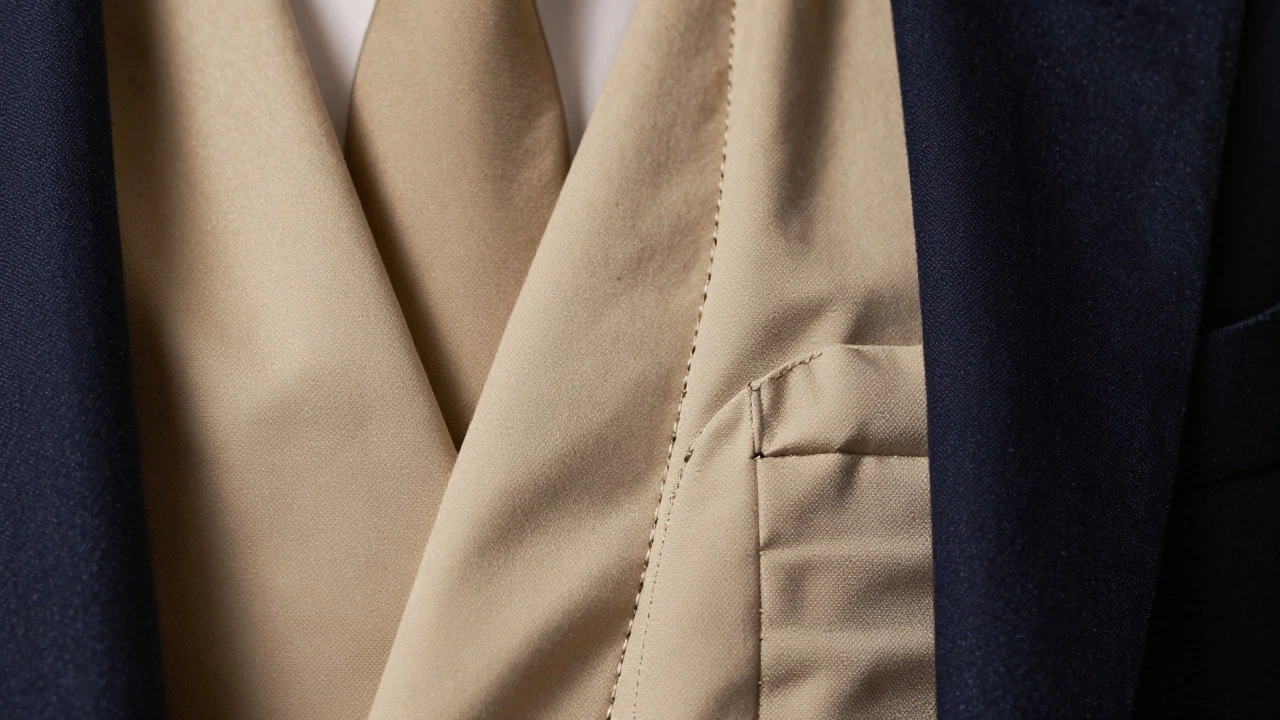
Flip the jacket inside out. The lining is the first thing you notice when you open the jacket. Cheap suits often use polyester linings that stick to your shirt when you sit down. They can also pill or snag easily. Better suits use viscose or cupro linings, which are smoother, cooler, and less likely to cling. Even in mid-range suits, you should find a lining that feels pleasant against your skin.
Check the interior pockets. Are they lined? Do they have reinforced edges? Sloppy interior finishing is a huge giveaway of a cheap garment. If the seams inside the pocket are fraying or the fabric is uneven, the exterior probably has similar issues hidden away.
Seams and Finishing
Turn the jacket inside out again and inspect the seams. In a cheap suit, you might see exposed raw edges, loose threads, or uneven stitching. The seams should be flat and clean. Look at the side vents (the slits at the back of the jacket). Are they neatly finished? In lower-quality suits, the vent edges might be unfinished or poorly aligned. Also, check the shoulder pads. Are they inserted cleanly? If you can see the outline of the pad bulging awkwardly through the fabric, the padding is either too thick or poorly integrated.
Pants offer another clue. Check the inseam. Is it stitched straight? Look at the waistband. Is it properly secured? Cheap trousers often have elastic waistbands or weak stitching that lets the pants sag after a few wears. The fly zipper should glide smoothly without catching. If it sticks or makes noise, replace it immediately-it’s a sign of poor hardware.

Fit and Drape
A cheap suit rarely fits well because it is produced in standard sizes without much attention to individual proportions. Try it on. The shoulders should end exactly where your arm meets your torso. If you need to adjust the shoulders, the suit was not tailored for your frame. The sleeves should hit just above your wrist bone. If they’re too long or short, alterations are needed, which adds cost.
Move around. Raise your arms. Sit down. Does the fabric pull across the chest or back? A good suit moves with you. A cheap one restricts movement or bunches up uncomfortably. The drape-the way the fabric falls-should be smooth and elegant. If it looks stiff or boxy, the fabric weight or construction is likely inadequate.
Common Pitfalls to Avoid
Don’t let the brand name fool you. Many big brands produce entry-level lines that use fused construction and synthetic fabrics. Always check the label or ask the salesperson about the construction method. Also, be wary of "suit separates" sold as a package. Sometimes the jacket is decent, but the trousers are made from completely different, cheaper materials. Inspect both pieces independently.
Sales are another trap. A 50% discount on a $100 suit means you’re paying $50 for something that was never worth $100. Instead of looking for discounts on cheap items, invest in a mid-range suit with proper construction. It will last longer and fit better, saving you money in the long run.
Frequently Asked Questions
Can you tell if a suit is cheap just by looking at it?
Not always. Some cheap suits are well-finished on the outside. However, looking for signs like shiny fabric, loose threads, and rigid shoulders can give you strong clues. To be sure, you need to feel the fabric and check the interior construction.
What is the minimum price for a decent suit?
Prices vary by region and brand, but generally, a suit under $200-$300 USD is likely to be fused and synthetic. For a half-canvas suit with better fabric, expect to spend between $400 and $800. This range offers a good balance of quality and affordability.
Is polyester really that bad for suits?
Pure polyester is problematic because it traps heat and has a shiny appearance. However, small percentages of polyester blended with wool can add durability without ruining the look. Avoid suits that are 50% or more polyester.
How do I check if a suit is canvas-lined?
Open the jacket and look at the chest area inside. If you can see a separate layer of fabric stitched to the main cloth, it’s canvas. If the lining appears glued flat against the back of the jacket with no visible separation, it’s fused. You can also press your finger against the chest; canvas will feel slightly springy, while fused will feel rigid.
Are cheap suits worth buying for weddings or interviews?
For a one-time event, a cheap suit might be acceptable if it fits well. However, photos can reveal flaws like shiny fabric or poor draping. If possible, rent a suit or buy a mid-range option that will hold up better under lights and pressure.