Leather Shoe Quality Inspector
Select the features present in the shoes you are evaluating to calculate their quality score.
Quality Score
Detected Features:
- None selected
Walk into any shoe store or browse online, and you will see a pair of leather shoes priced at $80 sitting right next to another pair for $400. Both look polished. Both smell like leather. So, how do you know which one will last five years and which one will fall apart in six months? It is not about the brand name on the box. It is about what you can see, touch, and smell before you hand over your credit card.
I have spent years testing footwear in Wellington’s unpredictable weather-rain, wind, and mud are daily companions here. I have learned that cheap leather shoes cost more in the long run because they need replacing constantly. High-quality leather shoes are an investment, but only if you know what to look for. Let’s break down exactly how to spot the real deal.
The Leather Test: Grain vs. Finish
The first thing you check is the material itself. Not all leather is created equal. In fact, most mass-market shoes use "genuine leather," which is often just a thin layer of split leather covered in plastic-like coating. This looks uniform but cracks easily. You want full-grain leather or top-grain leather. Full-grain keeps the natural grain of the hide, including small scars and pores. These aren’t flaws; they are proof it is real animal skin that breathes and ages beautifully.
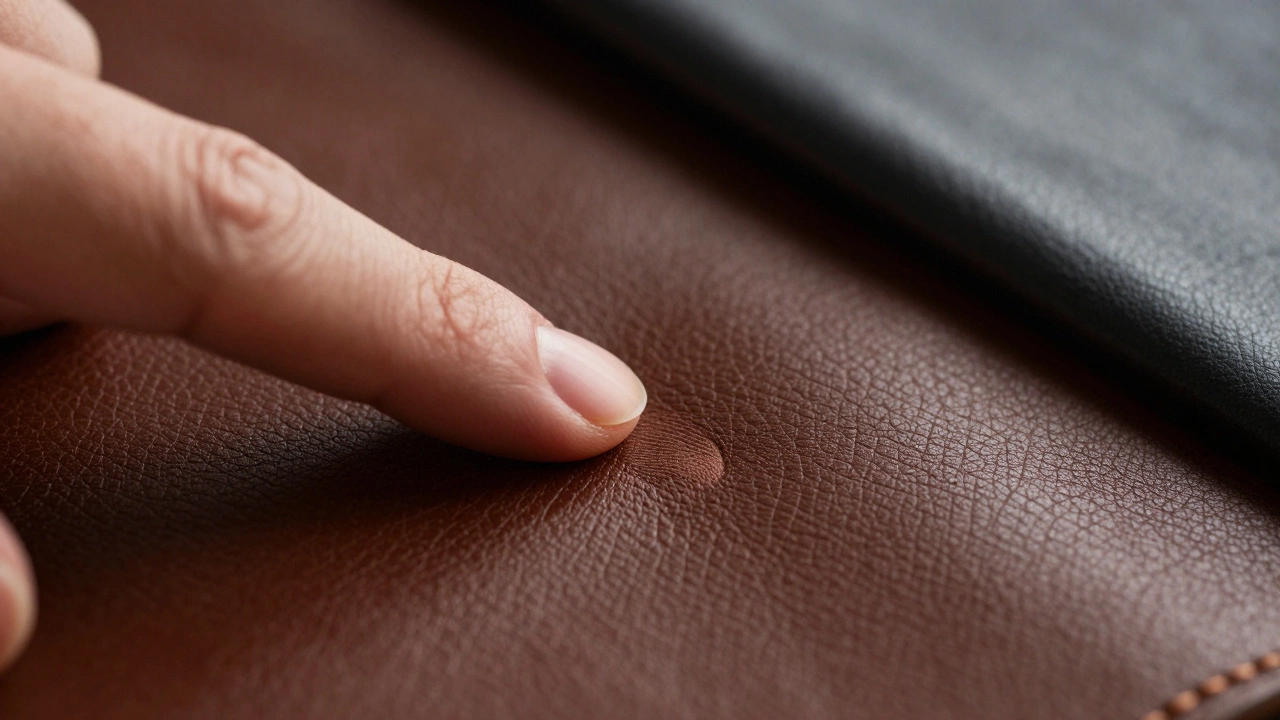
Run your fingers over the surface. Real high-quality leather feels slightly uneven, warm, and soft yet firm. If it feels perfectly smooth, cold, or plasticky, walk away. Look closely at the texture under good light. You should see a unique pattern, not a repeating stamp. Press your thumb into the leather. High-quality leather will crease naturally around your fingerprint. Cheap bonded leather or PU (polyurethane) leather will just dent or show no reaction at all.
Smell is another dead giveaway. Authentic leather has a distinct, earthy, rich scent. If the shoes smell like chemicals, glue, or nothing at all, they are likely synthetic or heavily treated with low-grade finishes. That chemical odor fades, but the structural integrity of the material does not improve.
Construction Methods: The Soul of the Shoe
You can have the best leather in the world, but if it is glued together poorly, the shoe will fail. Construction is where the price gap widens. There are three main types of construction you need to know:
- Cemented (Glued): Common in budget shoes. The upper is glued to the sole. It is lightweight and cheap to make, but once the glue fails, the shoe is trash. You cannot resole these effectively.
- Blake Stitch: A single stitch connects the upper directly to the sole. It creates a sleek, flexible shoe, often used in dress shoes. It is durable but offers less water resistance than welting.
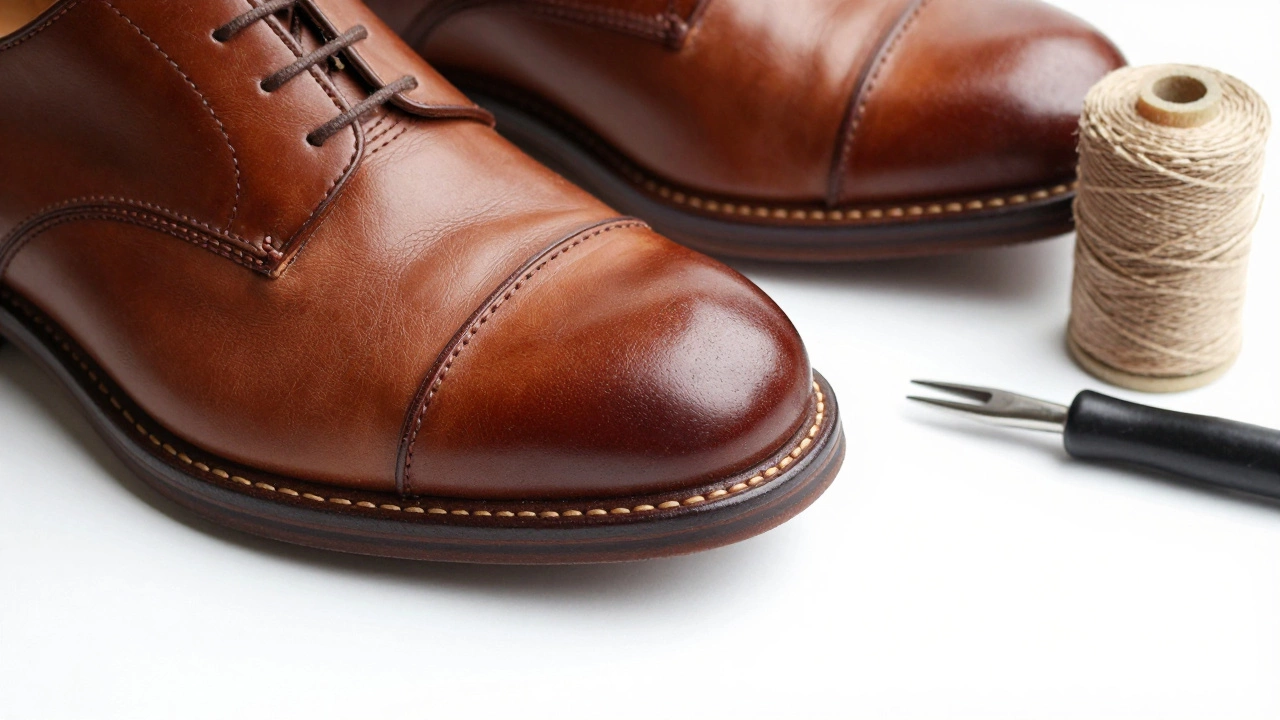
- Goodyear Welt: This is the hallmark of premium footwear. A strip of leather (the welt) is stitched to the upper and the insole. The outsole is then stitched to the welt. This method makes the shoe waterproof, incredibly durable, and fully repairable. You can replace the soles multiple times, extending the life of the shoe by decades.
To check for a Goodyear welt, look at the side of the shoe near the bottom. You should see a visible ridge of leather running horizontally around the shoe, with stitching above and below it. If you see only a clean line where the upper meets the sole, it is likely cemented. For a true investment piece, prioritize Blake stitch or Goodyear welt construction.
The Sole: Rubber, Leather, or Something Else?
The sole dictates comfort and longevity. Pure leather soles look elegant and allow the foot to breathe, but they wear down quickly on rough pavement and offer little grip when wet. They are best for indoor use or dry climates.
For everyday wear, especially in places like New Zealand where rain is frequent, look for high-density rubber soles. Brands like Vibram are industry standards. Check the thickness of the rubber. Thin rubber wears through in months. Thick, textured rubber lasts years. Some high-end shoes combine a leather midsole for comfort with a rubber outsole for traction. This hybrid approach gives you the best of both worlds.
Inspect the edge of the sole. Is it neatly finished? Rough, frayed edges indicate poor manufacturing. The transition from the upper to the sole should be seamless. If there are gaps or excess glue oozing out, the craftsmanship is lacking.
Stitching and Details: Where Quality Shows
Zoom in on the stitching. High-quality shoes use waxed polyester or nylon thread that is strong and resistant to fraying. The stitches should be even, tight, and consistent in length. Loose threads or skipped stitches are red flags. On premium shoes, you might see double stitching in high-stress areas like the toe cap and heel counter. This reinforces the structure.
Check the lining. A fully lined shoe with calfskin or suede interior wicks moisture away from your feet, preventing odor and breakdown of the inner structure. Unlined shoes feel cheaper and degrade faster because sweat sits against the leather upper. The lining should be taut, without wrinkles or bubbles.
Look at the eyelets (where the laces go). Metal eyelets reinforced with leather grommets hold up better than simple punched holes that tear over time. The heel counter-the stiff part at the back of the shoe-should feel rigid. Squeeze it. If it collapses easily, the shoe won’t support your ankle properly, leading to discomfort and premature wear.
Fit and Comfort: The Immediate Test
Even the highest quality leather needs to fit correctly. Leather stretches, but only slightly. When you try them on, there should be a thumb’s width of space between your longest toe and the end of the shoe. Your heel should not slip more than a millimeter. If it pinches now, it will hurt later. Break-in period is normal for stiff leather, but pain is not. High-quality shoes mold to your foot shape over weeks, creating a custom fit. Cheap shoes never really fit; they just get loose.
| Feature | High Quality | Low Quality |
|---|---|---|
| Leather Type | Full-grain or Top-grain | Genuine leather, Split leather, PU |
| Construction | Goodyear Welt, Blake Stitch | Cemented (Glued) |
| Sole Material | Dense Rubber, Leather, Hybrid | Thin EVA, Hard Plastic |
| Stitching | Even, Waxed Thread, Double Stitched | Uneven, Synthetic Thread, Single Stitch |
| Lining | Full Leather/Suede Lining | Fabric, Mesh, or Unlined |
| Repairability | Resoleable | Disposable |
Maintenance Matters: Keeping Them Alive
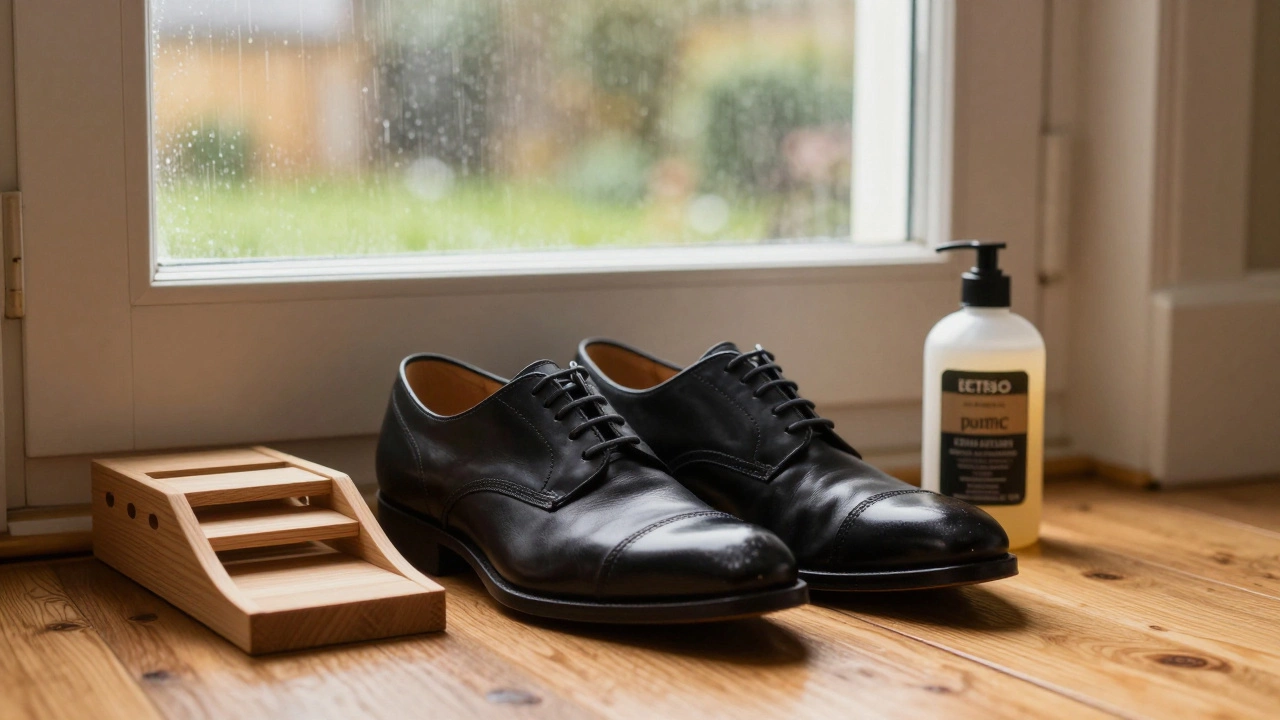
Buying high-quality shoes is only half the battle. You must care for them. Leather dries out and cracks if neglected. Use a conditioner every few months to keep the fibers supple. Store them with shoe trees made of cedar. Cedar absorbs moisture and odors while maintaining the shoe’s shape. Never leave shoes in direct sunlight or near heat sources, as this dries out the leather and causes shrinking.
If you live in a rainy area, apply a waterproofing spray designed for leather. Even Goodyear welted shoes can suffer if water seeps into the stitching repeatedly. Rotate your shoes. Do not wear the same pair two days in a row. Leather needs 24 hours to dry out completely after a day of wear. This simple habit doubles the lifespan of your footwear.
Price vs. Value: Making the Right Choice
Does high quality mean spending thousands? Not necessarily. You can find excellent Blake-stitched shoes in the $200-$300 range. Goodyear welted options start around $300-$500 from reputable brands. Anything under $100 is almost certainly cemented and made with lower-grade leather. View the price per wear. A $400 pair worn for ten years costs $40 a year. A $100 pair replaced every year costs $100 a year. The math favors quality.
Support brands that disclose their materials and construction methods. Transparency is a sign of confidence. Avoid vague terms like "premium leather" without specifying the type. Ask questions. Good retailers will tell you exactly how the shoe was made.
Is full-grain leather better than top-grain leather?
Yes, generally. Full-grain leather retains the entire grain layer of the hide, making it stronger and more breathable. Top-grain leather has the outer layer sanded off to remove imperfections, making it softer initially but less durable over time. Both are far superior to genuine or bonded leather.
Can I resole cemented leather shoes?
Technically yes, but it is difficult and often not cost-effective. Because the upper is glued directly to the sole, removing the old sole risks damaging the shoe. Welts like Goodyear or Blake are designed specifically for easy and safe resoling.
Why do my new leather shoes squeak?
Squeaking usually comes from friction between the insole and the footbed, or moisture trapped inside. Sprinkle talcum powder inside to reduce friction. If it persists, it may indicate a manufacturing defect or excessive moisture absorption due to poor ventilation.
How long should high-quality leather shoes last?
With proper care and rotation, a well-constructed leather shoe can last 10 to 20 years. The upper may need occasional repairs, but the structure remains intact. Cheap shoes typically last 1 to 2 years with regular wear.
Are leather soles worth it in rainy climates?
Not for daily outdoor use. Leather soles absorb water, become slippery, and wear down fast on wet concrete. Choose rubber-soled versions or add sticky rubber topys (half-soles) to protect the leather during wet seasons.