Hoodie Style Selector
Answer these three questions to find out which hoodie style fits your life best.
Why this works for you:
Key Features:
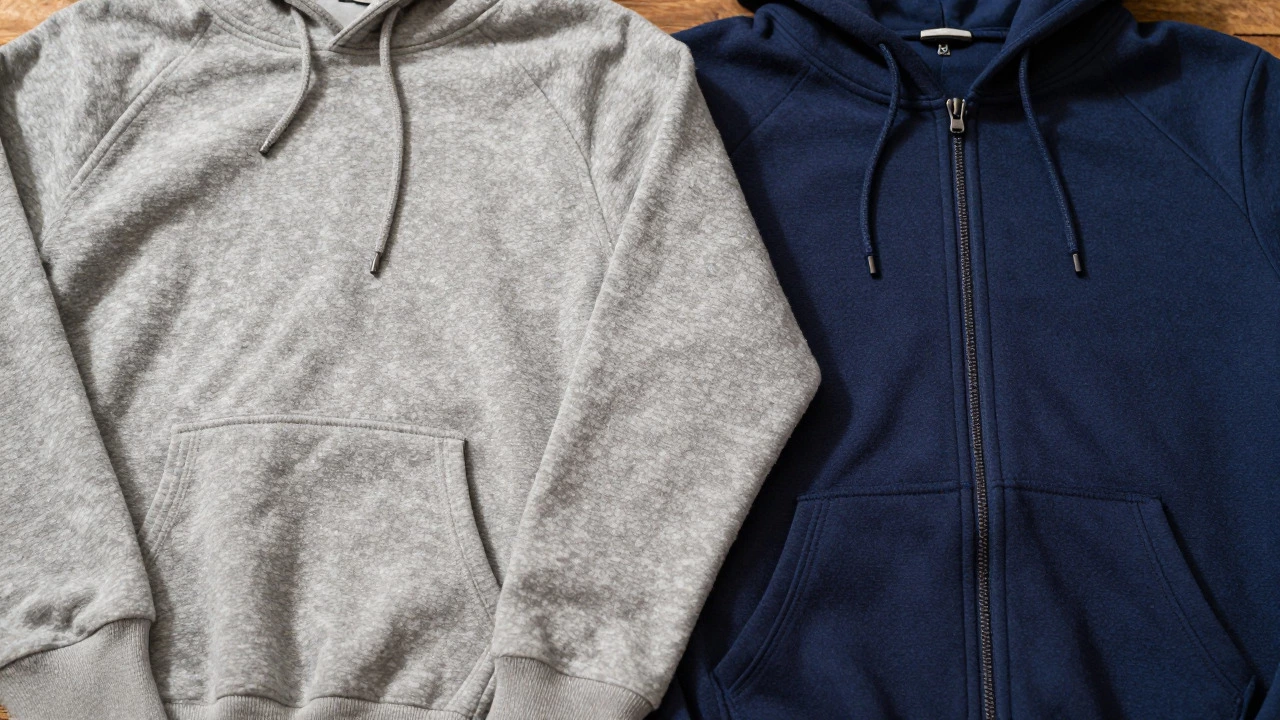
Grab your favorite cozy top with a hood. Now, look at the front. Is there a zipper running down the middle? If yes, you are wearing a zip-up hoodie. If no, it’s a pullover hoodie. But here is the million-dollar question that has sparked endless debates in group chats and fitting rooms alike: Is it still a hoodie if it has a zipper?
The short answer is yes. Absolutely. A zip-up is not an impostor; it is simply one of the two main branches of the hoodie family tree. However, understanding why this confusion exists-and what actually defines a hoodie-requires looking past the zipper and into the history, construction, and culture of this garment.
What Actually Defines a Hoodie?
To settle the argument, we need to define the core components of a hoodie. At its most basic level, a hoodie is a type of sweatshirt that features an attached hood. That is the non-negotiable requirement. Without the hood, it is just a sweatshirt or a crewneck. With the hood, it enters the hoodie category.
Beyond the hood, traditional hoodies share several other key attributes:
- Fabric: Typically made from cotton fleece, French terry, or a cotton-polyester blend. This fabric provides warmth and comfort without being overly heavy.
- Kangaroo Pocket: The large pouch pocket across the lower front is iconic. While some modern variations skip it, the classic hoodie almost always includes it.
- Ribbed Trim: You will usually find ribbed cuffs at the wrists and a ribbed band at the bottom hem to keep the wind out and the heat in.
Whether the front is closed by a zipper or left open as a pullover does not change these fundamental characteristics. Therefore, both styles meet the definition. The zipper is merely a functional addition, not a disqualifier.
The History: How the Zip-Up Became a Thing
The hoodie didn't start as a fashion statement; it started as workwear. In the 1930s, the Knickerbocker Knitting Company (which would later become Champion) began producing hooded sweatshirts for laborers in upstate New York. These workers needed protection against the cold, so they added hoods to their existing sweatshirts. These early versions were strictly pullovers because zippers were expensive, prone to breaking, and unnecessary for manual labor.
The shift toward zip-ups happened gradually. As athletic wear evolved, athletes needed garments that were easier to put on and take off quickly, especially when layering over jerseys. Adding a zipper solved this problem. By the 1970s and 80s, the zip-up hoodie had become a staple in track suits and gym bags. It wasn't replacing the pullover; it was expanding the utility of the hoodie for active lifestyles.
This historical context proves that the zip-up isn't a new invention trying to borrow credibility from the original pullover. It is an evolution designed for convenience. Both styles have coexisted for decades, each serving slightly different needs.

Pullover vs. Zip-Up: What’s the Real Difference?
If both are hoodies, why do people feel so strongly about the distinction? The difference comes down to aesthetics, functionality, and subculture signaling. Let's break down how they compare in real-world use.
| Feature | Pullover Hoodie | Zip-Up Hoodie |
|---|---|---|
| Closure Type | None (pulls over head) | Full-length metal or plastic zipper |
| Ventilation Control | Low (harder to adjust temperature) | High (can unzip partially or fully) |
| Layering Ease | Difficult (must remove to take off) | Easy (can be worn over/under other layers) |
| Aesthetic Vibe | Casual, relaxed, "lived-in" | Structured, sporty, utilitarian |
| Durability Concerns | Minimal (no moving parts) | Moderate (zippers can jam or break) |
The pullover offers a cleaner, uninterrupted chest area, which makes it ideal for graphic prints and logos. It feels more like a second skin. The zip-up, on the other hand, introduces a vertical line that breaks up the silhouette. This makes it better for branding on the upper chest or sleeves, but less ideal for large central graphics.
Functionally, the zip-up wins on versatility. You can wear it open like a jacket over a t-shirt, half-zipped for a casual look, or fully zipped for maximum warmth. The pullover forces a binary choice: you are either fully covered or you have taken the whole thing off.
The Cultural Divide: Why Some People Argue
Despite the logical definition, there is a persistent cultural bias against zip-ups. In certain circles, particularly within skateboarding, hip-hop, and minimalist fashion communities, the pullover is seen as the "authentic" hoodie. The zip-up is sometimes dismissed as too sporty, too corporate, or too "dad-like."
This stigma likely stems from the 1990s and 2000s, when zip-up tracksuits became associated with specific youth subcultures that mainstream media often portrayed negatively. Additionally, the rise of tech-wear and athleisure has pushed zip-ups into the realm of performance gear, making them feel less like casual loungewear and more like equipment.
However, fashion is cyclical. Today, high-end designers like Rick Owens and Off-White frequently feature zip-up hoodies in their collections. Streetwear brands treat both styles as equally valid canvases for expression. The idea that a zipper disqualifies a garment from being a hoodie is increasingly viewed as an outdated gatekeeping tactic rather than a factual distinction.

When to Choose Which Style
Since both are hoodies, the decision shouldn't be about legitimacy-it should be about utility. Here is how to decide which one fits your needs:
Choose a Pullover If:
- You prioritize comfort and a soft, unstructured feel.
- You want to display a large graphic or logo on the front.
- You live in a consistently cold climate where you rarely need to vent heat.
- You prefer a minimalist aesthetic without visible hardware.
Choose a Zip-Up If:
- You live in a variable climate (like Wellington, NZ) where temperatures shift throughout the day.
- You plan to layer the hoodie over shirts or under jackets.
- You need quick access to pockets or devices without removing the garment.
- You prefer a more tailored, structured look.
The Verdict: Yes, It’s Still a Hoodie
So, is it a hoodie if it has a zipper? Yes. The zipper does not strip the garment of its identity any more than adding buttons to a shirt turns it into a vest. Both pullovers and zip-ups share the same DNA: a hood, warm fabric, and a focus on comfort. They are siblings, not strangers.
The next time someone questions whether your zip-up counts, you can confidently point to the hood. That’s the defining feature. Everything else is just preference. Whether you’re dressing for a hike, a commute, or a night in, both styles have earned their place in the wardrobe. Wear what works for you, and let the debate fade into the background noise of fast-fashion trends.
Why do some people say zip-ups aren't real hoodies?
This belief usually stems from subcultural preferences rather than factual definitions. In some streetwear and skate communities, the pullover hoodie is viewed as more authentic because it lacks the "sporty" association of the zip-up. However, historically and functionally, both styles originated from the same sweatshirt base and serve similar purposes. The zipper is just a functional addition for ease of wear.
What is the difference between a hoodie and a sweatshirt?
The primary difference is the hood. A sweatshirt is a loose-fitting, long-sleeved shirt made of thick cotton or synthetic material, typically with a crew neck. A hoodie is a specific type of sweatshirt that includes an attached hood. All hoodies are sweatshirts, but not all sweatshirts are hoodies.
Are zip-up hoodies warmer than pullovers?
Generally, pullover hoodies are slightly warmer because they have no gaps around the zipper. However, zip-ups offer better temperature regulation. You can unzip them to release heat if you get too warm, whereas a pullover traps body heat consistently. For extreme cold, a high-quality pullover might be marginally superior, but for variable weather, the zip-up is more versatile.
Can you wear a zip-up hoodie formally?
While hoodies are inherently casual, zip-ups can be styled more smartly than pullovers. Because they have a structured front and can be worn open like a light jacket, they pair well with chinos, button-down shirts, or even blazers in a "smart-casual" setting. Look for slim-fit designs in neutral colors like black, navy, or grey to achieve a more polished look.
What fabric is best for a durable hoodie?
For durability and comfort, look for heavyweight cotton fleece or a cotton-polyester blend. Pure cotton is breathable and soft but may shrink if not cared for properly. Blends with polyester tend to hold their shape better, resist wrinkles, and dry faster. French terry is another excellent option, offering a lighter weight with a looped interior texture that is highly breathable.
Do zip-up hoodies go out of style?
No, zip-up hoodies are a timeless staple. While specific design details (like logo placement or color trends) may fluctuate, the basic zip-up hoodie remains a consistent part of global fashion. Its practicality ensures it never truly disappears from wardrobes, making it a safe investment regardless of current trends.