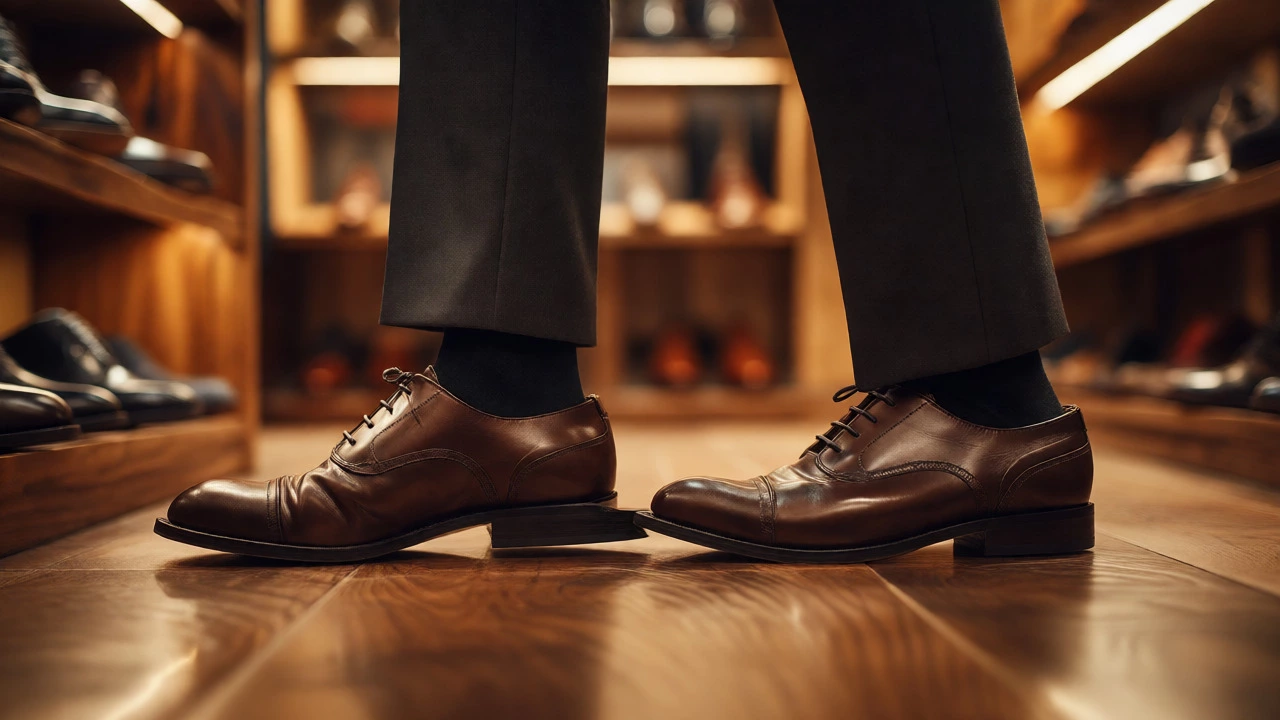
Leather Shoe Fit Diagnostic Tool
Slide each slider to match how your shoe feels right now. Remember: Leather stretches. A little snugness is often good; pain is bad.
Recommended Action:
Adjust the sliders on the left and click "Analyze" to see if your leather shoes need breaking in, resizing, or are perfect.
You just bought a pair of leather shoes. They look incredible on the shelf, but when you slide your foot in, something feels off. Maybe they pinch your toes, or maybe your heel slips with every step. You are standing in front of the mirror, wondering if you should have gone up a size or down. This is the classic dilemma for anyone investing in quality footwear.
Here is the truth that most salespeople won’t tell you clearly: leather is alive. It stretches. It molds. It reacts to heat and moisture. Because of this biological material property, the rules for fitting leather shoes are completely different from synthetic sneakers or canvas flats. Getting it wrong means either painful blisters today or a shapeless, sloppy shoe in six months. Let’s figure out exactly where the sweet spot lies.
The Myth of Perfect Comfort at First Wear
If you walk out of the store feeling like you’re walking on clouds, you probably made a mistake. Leather shoes require a break-in period. Genuine leather fibers need time to relax and expand under the pressure of your foot’s unique geometry. If the shoe is already perfectly comfortable without any resistance, there is no room for expansion. That means once the leather gives way-which it will-the shoe becomes too big. Your foot will slide forward, causing toe jamming against the front wall, and your heel will lift excessively, leading to friction blisters on the back of your ankle.
Think of it like a new baseball glove. You don’t catch a fast pitch with a brand-new mitt right away; you soften it first. The same logic applies here. A slight snugness is not a defect; it is a feature. It ensures that as the leather stretches, it eventually hugs your foot precisely rather than swallowing it.
Why "Tight" Is Usually Better Than "Loose"
In the world of high-quality footwear, the consensus among cobblers and shoemakers leans heavily toward buying slightly tight rather than loose. Why? Because leather stretches outward, but it rarely shrinks back to its original state significantly after being stretched by body heat and weight.
- Stretching Potential: Leather can stretch up to half a size over time. If you buy a shoe that is already loose, it will become even looser, potentially becoming unwearable.
- Shrinkage Limitations: While leather can shrink slightly if exposed to water and then dried improperly, this process is unpredictable and often damages the finish. You cannot reliably tighten a loose leather shoe.
- Structural Integrity: A tight shoe supports the arch and heel counter correctly during the break-in phase. A loose shoe allows the foot to move inside the casing, which distorts the shoe’s shape before it has set.
However, "tight" does not mean "painful." There is a critical distinction between discomfort that fades and pain that signals damage. If you feel sharp pinching, numbness, or throbbing that doesn’t subside after ten minutes of wear, the shoe is too small, not just tight. Numbness indicates nerve compression, which leather cannot fix by stretching enough to relieve pressure without destroying the shoe’s structure.
Anatomy of the Perfect Fit: Where Should It Be Snug?
To determine if your shoe is appropriately tight, you need to check specific zones. Not all parts of the shoe should feel the same way.
| Zone | Ideal Sensation | Signs of Poor Fit |
|---|---|---|
| Heel Counter | Firm hold, minimal slip (1-2mm) | Heel lifts completely with each step (too loose) or digs into Achilles tendon (too tight) |
| Midfoot/Vamp | Snug across the instep, no gaping | Lacing gaps widely open (too large) or pressing hard on top of foot (too small) |
| Toes | Wiggle room, no touching front | Cramped toes (too small) or excessive sliding forward (too large) |
| Balls of Feet | Aligned with widest part of shoe | Pain on sides (too narrow) or foot sliding sideways (too wide) |
The most important area is the heel. Your heel should be locked in place. When you walk, your heel should not lift more than a millimeter or two. If it pops out, the shoe is too long or the volume is too high. Conversely, if the heel cup presses so hard that it leaves red marks immediately, it might be too narrow. Remember, width rarely stretches as much as length. If a shoe is too narrow, no amount of breaking in will make it comfortable.
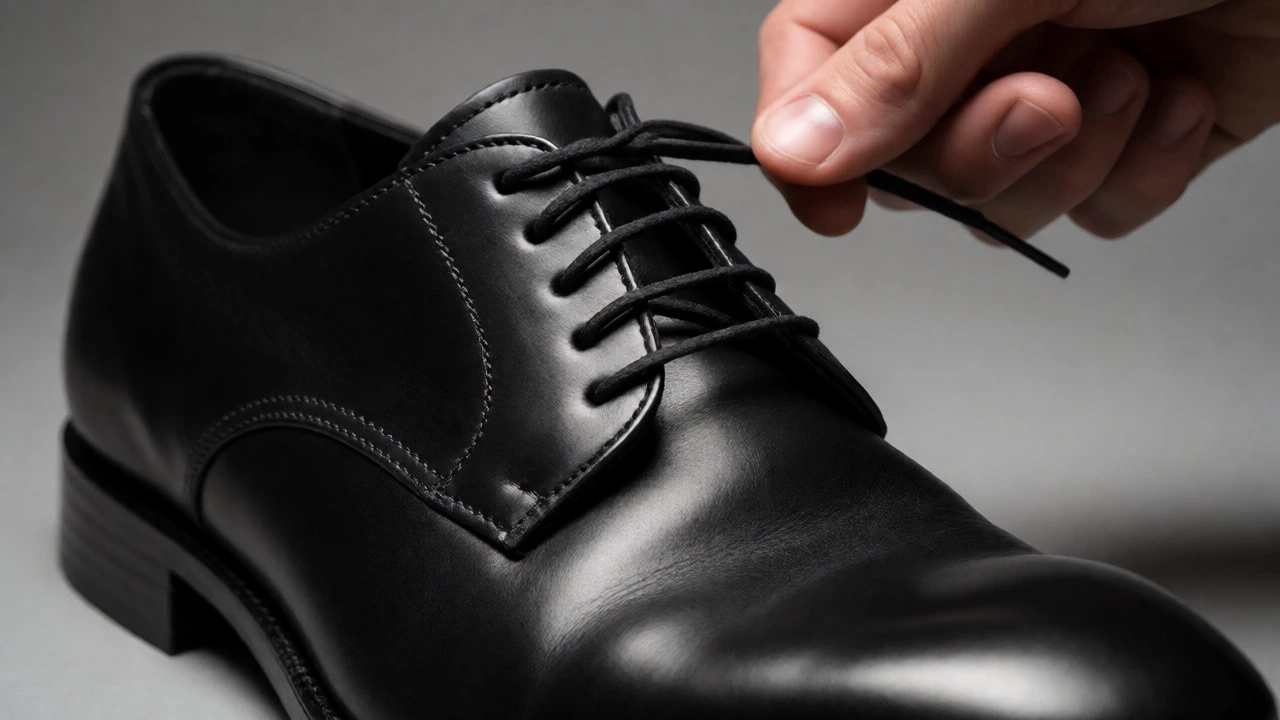
The Break-In Strategy: How to Manage Tight Shoes
So, you’ve accepted that a little tightness is good. Now what? You don’t want to suffer through a week of agony. Here is how professionals handle the transition.
Start by wearing your new oxfords or derbies around the house for short periods. Thirty minutes in the morning, thirty in the evening. This warms up the leather without exposing it to the full stress of outdoor terrain. Use thick socks during these initial sessions to gently stretch the interior volume.
Another effective trick involves using a hairdryer. Put on your thickest wool socks, lace up the shoes tightly, and warm the tight areas with a hairdryer on medium heat for about 30 seconds per section. Keep moving your toes and flexing your feet while the leather is warm. Once cooled, the leather retains a slightly expanded shape. Repeat this process a few times if needed. This method accelerates the molding process without damaging the upper material.
Avoid the common mistake of soaking leather shoes in alcohol or water to speed up stretching. While this works, it strips natural oils from the hide. If you do use a liquid stretcher, always condition the leather afterward with a high-quality cream to prevent cracking.
When Loose Becomes a Dealbreaker
Is there ever a case for buying loose? Yes, but it is rare. If you have very high arches or unusually shaped feet, a standard last might dig into your instep regardless of size. In this scenario, buying a larger size and adding an orthotic insert or tongue pad can customize the fit. However, this is a workaround, not the norm.
For most people, a loose shoe is a failed purchase. Unlike fabric sneakers, which can be tightened with laces, leather dress shoes rely on their internal structure for support. A loose shoe forces your foot to grip harder to stay in place, leading to cramping and fatigue. Over time, the lack of proper alignment causes the sole to wear unevenly, ruining the aesthetic and structural balance of the shoe.
Material Matters: Not All Leather Behaves the Same
Your decision depends partly on the type of leather. Full-grain leather is dense and tough. It takes longer to break in but holds its shape well once molded. It requires patience. Expect significant stiffness for the first two weeks.
Suede, on the other hand, is more forgiving. The nap (the fuzzy surface) compresses easily, allowing suede shoes to feel comfortable almost immediately. Suede also stretches more uniformly than polished calfskin. If you are sensitive to pressure points, starting with suede reduces the risk of buying a shoe that remains painfully tight forever.
Exotic leathers like cordovan behave differently again. Shell cordovan is incredibly durable and resists creasing, but it does not stretch nearly as much as cowhide. With cordovan, accuracy is paramount. Do not count on it expanding half a size. Buy it as close to perfect as possible.
Practical Checklist Before You Buy
Next time you are in the fitting room, run through this list. It saves returns and headaches.
- Time of Day: Try shoes on in the afternoon or evening. Feet swell throughout the day. A shoe that fits at 9 AM might be tight by 5 PM.
- Sock Simulation: Wear the exact socks you plan to use with the shoes. Dress socks are thin; wool hiking socks are thick. The difference matters.
- The Thumb Test: Stand up. Press your thumb against the heel counter. You should feel firm contact. If you can slide your finger between your heel and the shoe, it’s too big.
- The Toe Box Check: Ensure your longest toe (often the second one, not the big toe) has about a thumbnail’s width of space from the end of the shoe. This accounts for forward slide when walking downhill.
- Walk on Hard Surfaces: Don’t just stand on carpet. Walk on wood or tile. Carpet masks slippage; hard floors reveal it.
Remember, your feet change shape over time. Age, weight fluctuation, and pregnancy can alter foot volume. What fit five years ago might not fit now. Always prioritize current comfort over past habits.
Caring for the Fit: Maintenance Tips
Once you have achieved the perfect fit, keep it there. Leather dries out. Dry leather becomes brittle and cracks instead of stretching gracefully. Apply a conditioner every three to four months, depending on climate. In Wellington, where humidity varies, monitor your shoes closely. Too much moisture can cause leather to stretch uncontrollably; too little makes it stiff.
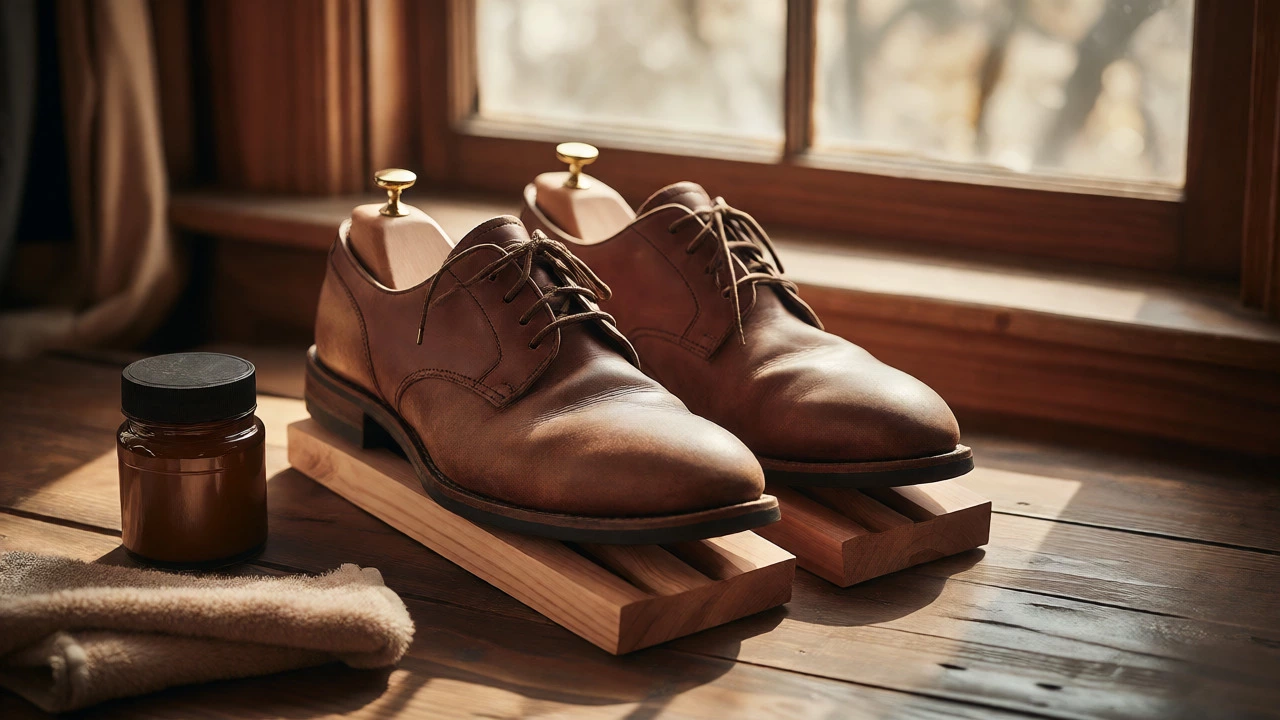
Use shoe trees. Cedar shoe trees absorb moisture and maintain the original shape of the upper. Without them, wet leather dries in the distorted shape of your foot’s movement, leading to permanent deformation. Inserting shoe trees immediately after taking off your shoes preserves the fit you worked so hard to achieve.
How long does it take to break in leather shoes?
Typically, it takes between 20 to 40 hours of wear time to fully break in a pair of high-quality leather shoes. This usually translates to two to four weeks of regular use. Full-grain leather takes longer than suede or corrected grain leather. Patience is key; rushing the process by wearing them all day initially can lead to blisters and improper shaping.
Can I stretch leather shoes that are too small?
Yes, leather shoes can be stretched by up to half a size using professional stretching services or home methods like thick socks and heat. However, stretching only increases volume; it does not change the length significantly. If the shoes are too short in length, stretching will likely result in uncomfortable toe cramping despite relieving pressure on the sides. Width issues are easier to resolve than length issues.
Should leather shoes be tight or loose on the toes?
Toes should never feel tight. There must be enough room to wiggle your toes freely. If your toes touch the front of the shoe when standing, the shoe is too small. Leather stretches primarily in width and height, not length. Therefore, you need adequate toe box space from day one to prevent toenail damage and discomfort during long walks.
What happens if I buy leather shoes that are too loose?
If leather shoes are too loose, they will become even looser as the material stretches further with use. This leads to excessive heel slip, which causes blisters and poor posture compensation. Unlike fabric shoes, you cannot effectively shrink leather back to size without risking damage to the finish and structure. It is generally better to return them than to try to fix a loose fit.
Does the weather affect leather shoe fit?
Yes, humidity and temperature impact leather. In humid conditions, leather absorbs moisture and expands slightly, making shoes feel tighter. In dry, cold weather, leather contracts and becomes stiffer. This is why trying on shoes in a climate-controlled store may not reflect how they feel outdoors. Acclimatize your feet to the seasonal changes by adjusting sock thickness accordingly.