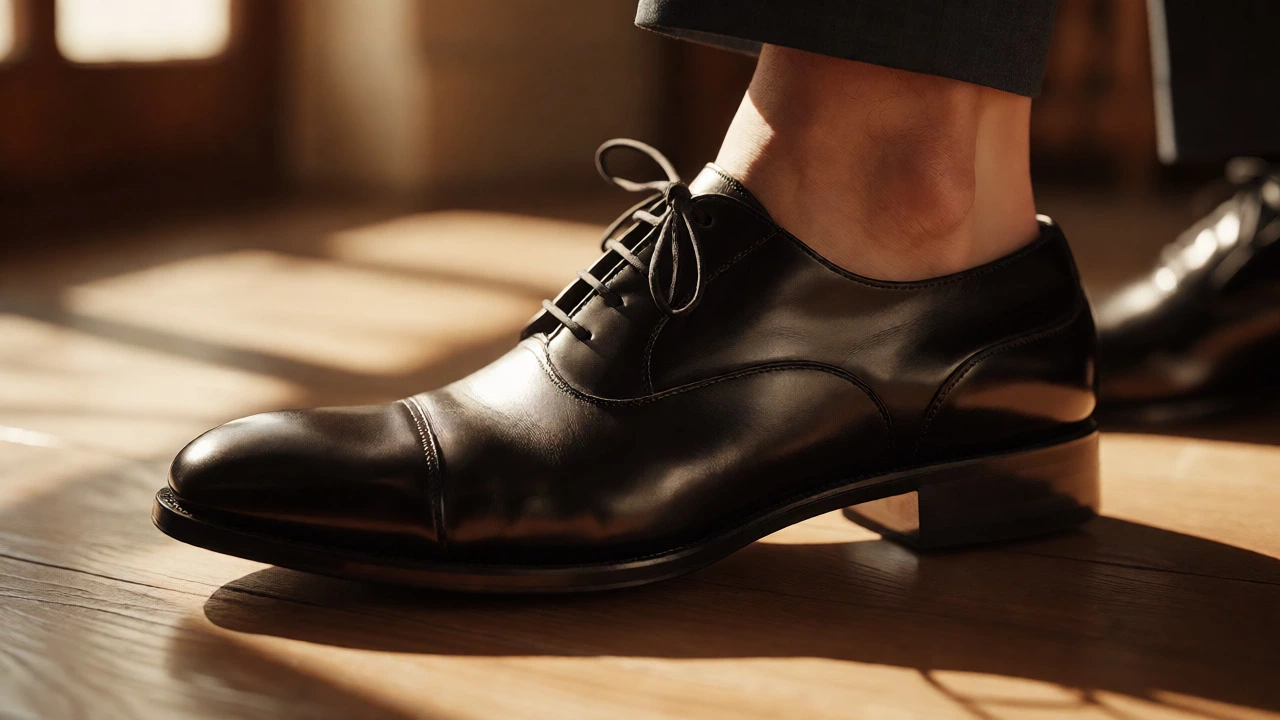
Leather Shoe Fit Diagnostic Tool
Answer the questions below about your current shoe fit to receive a personalized sizing recommendation.
Why this advice?
You’ve spent good money on a pair of leather shoes. They look sharp, the craftsmanship is evident, and you’re ready to wear them. But when you slip your foot in, something feels off. Maybe they pinch at the toes, or perhaps there’s too much heel slip. The panic sets in: did you buy the wrong size? And worse, should you have sized up or down?
This isn’t just about guessing. Leather behaves differently than canvas, synthetic mesh, or rubber. It has memory, it stretches, and it molds. If you treat a pair of oxford dress shoes like a pair of running sneakers, you’ll end up with blisters or loose heels. Here is exactly how to determine if you need to adjust your size for leather footwear.
The Golden Rule: Snug Is Good, Tight Is Bad
Let’s clear up the biggest myth first. Leather shoes are not supposed to feel "roomy" when you first try them on. Unlike athletic shoes, which often require a thumb-width of space at the toe box to accommodate foot swelling during exercise, leather shoes are designed to fit close to the skin from day one.
Why? Because full-grain leather stretches. Specifically, it stretches lengthwise by about half a size and widthwise by a quarter to a half size after roughly 20-30 hours of wear. If you buy a size that feels perfectly comfortable immediately-with no resistance-you will likely find them sloppy and ill-fitting within a month. Your foot will slide forward, causing friction at the heel and potentially leading to bunions or calluses.
The ideal initial fit feels firm. It should hug your instep and hold your heel securely without slipping more than a millimeter or two when you walk. Your toes should touch the front of the shoe lightly but not be crushed against the toe cap. If you can wiggle your toes freely while standing upright, the shoe is likely too big.
When to Size Down
Sizing down is rarely the answer unless you are dealing with specific conditions. Most people err on the side of caution and buy larger sizes because they fear pain. But with high-quality leather, fear of discomfort is often misplaced.
Consider sizing down if:
- You experience significant heel slip: If your heel lifts noticeably with every step, the shoe is too long. This causes friction burns and makes walking inefficient.
- The shoe feels "boat-like": There is excessive empty space around your midfoot. Leather cannot shrink back significantly once stretched, so starting too large means permanent looseness.
- You have narrow feet: Many standard widths (D) are too wide for slender feet. A smaller size might provide the necessary volume reduction, though seeking a narrower width (like C or B) is often a better solution than dropping a full size.
However, never size down if your toes feel cramped or pressed against the front wall. Leather will stretch across the width and slightly along the top, but it will not grow longer enough to relieve pressure on the toes. Toe compression leads to blackened nails and permanent deformities. Always prioritize toe room over overall snugness.
When to Size Up
Sizing up is the safer bet for most buyers, but only under specific circumstances. You generally want to go up if the shoe feels excessively tight in areas that do not stretch well.
Look to size up if:
- There is painful pressure on the little toe: The outer edge of the foot near the pinky toe has very little give. While the upper leather stretches, the sole does not. If the bone is grinding against the hard sole edge, you need more length or width.
- You plan to wear thick socks: Winter boots or formal shoes worn with wool socks require extra volume. Try the shoes on with the thickest socks you intend to wear regularly.
- You have high arches or a high instep: Leather uppers stretch vertically, but if the tongue presses painfully into the top of your foot, you may need a half-size up to accommodate the vertical height of your foot profile.
| Fit Symptom | Likely Cause | Recommended Action |
|---|---|---|
| Heel slips >5mm | Shoe is too long | Size Down or use heel grips |
| Toes touch front firmly | Correct fit (will stretch) | Keep Current Size |
| Pinkies squeeze painfully | Too narrow/too short | Size Up or seek wider width |
| Laces gap widely | Excess volume | Size Down |
| Instep pressure points | Low volume shoe | Size Up or break-in slowly |
Understanding Leather Types and Their Stretch Potential
Not all leather is created equal. The material dictates how much forgiveness you have with your sizing choice. Knowing what you are buying changes the risk assessment.
Full-grain leather is the gold standard. It retains the natural grain and fibers, making it durable but stiff initially. It requires a proper break-in period. Expect it to mold tightly to your unique foot shape. Because it is dense, it offers less immediate comfort but superior longevity. With full-grain, sticking to your true size (or even going slightly tighter) is usually best because it conforms precisely.
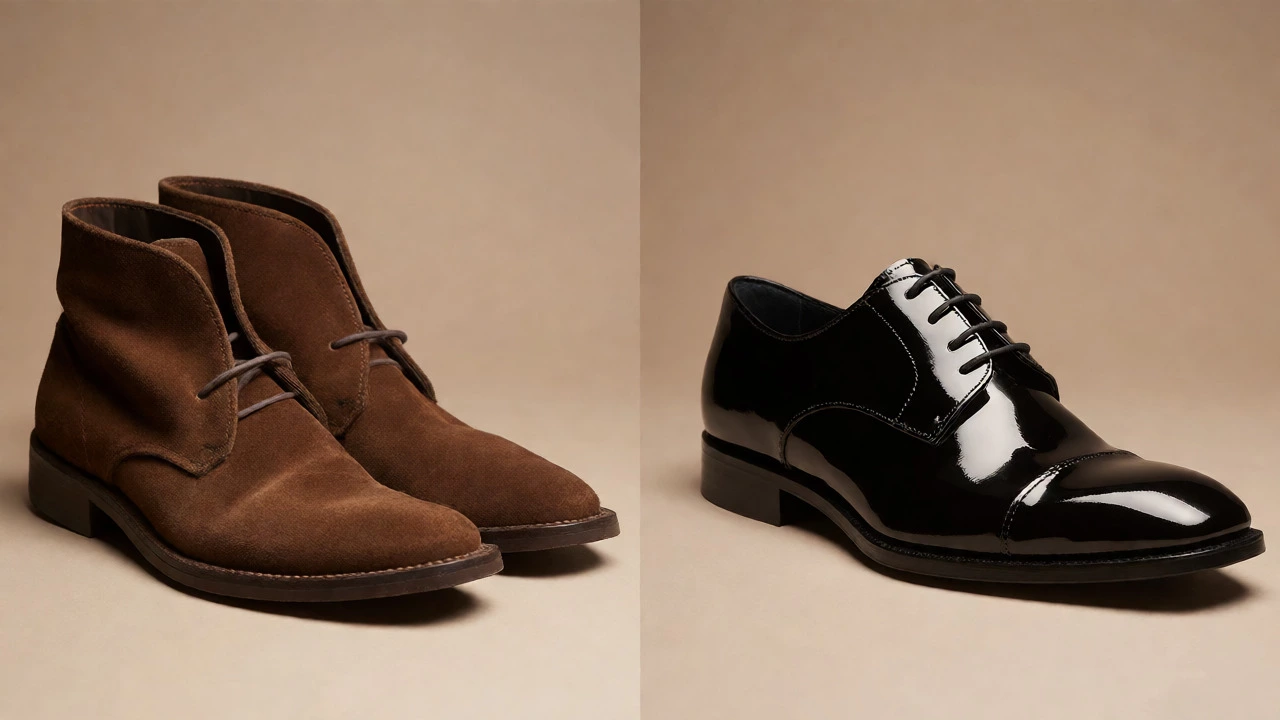
Suede and nubuck are softer and more pliable. They stretch faster and more dramatically than polished leather. If you are buying suede chukkas or loafers, be cautious about sizing up. These materials can become baggy quickly if given too much room initially. A snug fit here is critical.
Conversely, patent leather and heavily finished leathers have a coating that restricts stretching. They behave more like plastic than fabric. If patent leather feels tight, it will stay tight. In these cases, if there is any pinching, you should size up. Do not expect patent shoes to relax significantly.
The Break-In Period: How Long Does It Take?
Newcomers to leather footwear often abandon a great pair of shoes after three days because they hurt. Give it time. The general rule of thumb is 14 to 21 days of intermittent wear. Wear them for two hours, then let them rest. This allows the leather fibers to relax and reset, preventing permanent deformation before the shoe has fully adapted to your gait.
During this phase, minor discomfort is normal. Sharp, localized pain is not. If you feel hot spots developing on your heels or toes, apply moleskin or use a leather softening cream to accelerate the process. Never wear new leather shoes for an entire day of work until they are broken in. You risk damaging both the shoe structure and your feet.
Special Considerations: Width Matters More Than Length
Many men struggle with sizing because they focus solely on length. However, foot volume is determined largely by width. Standard US sizing uses letters to denote width (B is narrow, D is medium, E/EE is wide). If you find yourself constantly sizing up to accommodate width, you are creating excess length, which leads to heel slip.
Instead of jumping from a size 10 Medium to a size 11 Medium, look for a size 10 Wide (E). This adds volume where you need it (across the ball of the foot) without adding unnecessary length at the toe. Brands like Allen Edmonds, Red Wing, and Loake offer multiple width options. Using a width adjustment solves the "too tight vs. too long" dilemma far better than changing numerical sizes.
Troubleshooting Common Fit Issues
If you already own the shoes and realize they don't fit right, you aren't necessarily stuck. Here are quick fixes based on common scenarios.
For Heel Slip: Before returning the shoes, try tightening the laces using a "heel lock" technique. This creates a loop that secures the ankle. If that fails, adhesive heel grips can reduce the internal volume by a few millimeters, effectively taking up half a size.
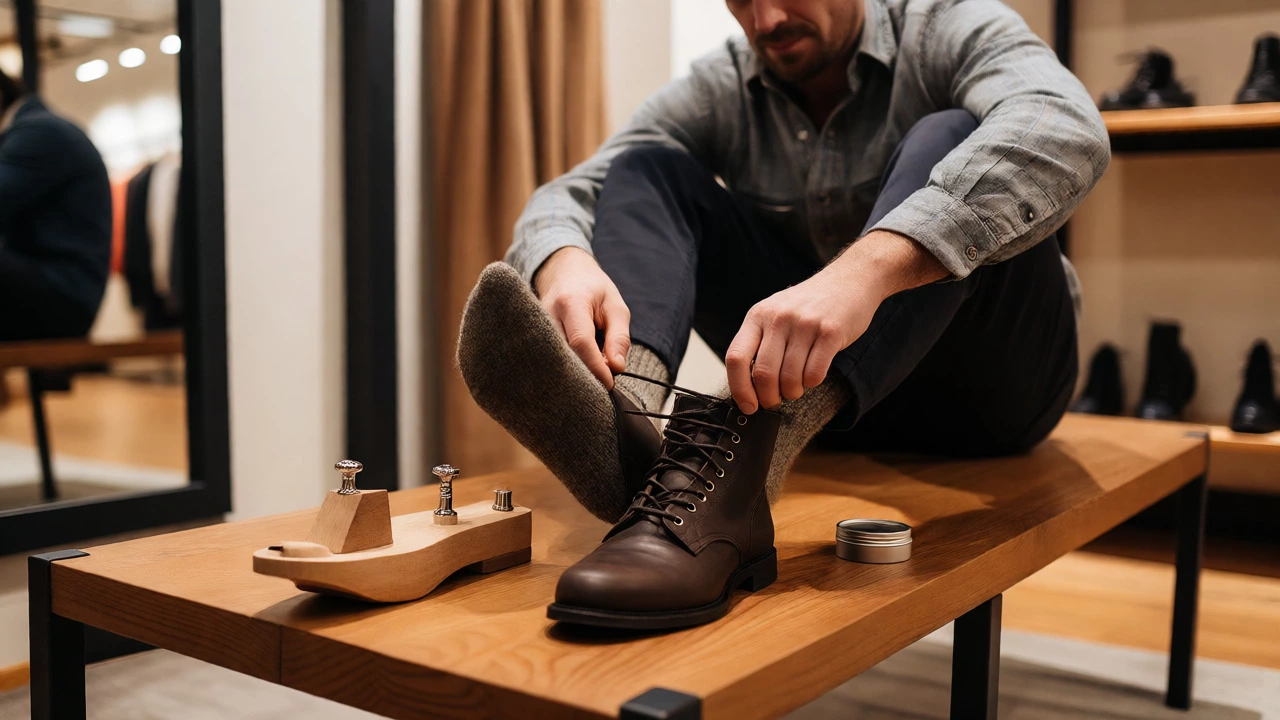
For General Tightness: Use a wooden shoe stretcher. Insert it into the shoe and turn the screw to expand the width or length. Leave it overnight. For stubborn spots, fill a ziplock bag with water, seal it, place it inside the shoe, and put the shoe in the freezer. As the water freezes, it expands, gently stretching the leather.
For Too Loose Shoes: Insoles are your friend. A thin leather or foam insole reduces volume throughout the shoe. It raises your foot slightly, bringing it closer to the upper, which helps eliminate sloppiness without altering the external appearance of the shoe.
Frequently Asked Questions
Do leather shoes stretch more in length or width?
Leather shoes primarily stretch in width and height (volume), typically gaining about a quarter to a half size in width. Lengthwise stretching is minimal, usually less than a quarter size. Therefore, you should always ensure your toes have adequate room initially, as relying on the shoe to grow longer is risky.
Should I wear thick socks when trying on leather shoes?
It depends on the intended use. For dress shoes, wear the same thickness of dress socks you plan to use daily. For boots, especially winter or work boots, wear the thicker socks you will actually use. Trying on shoes barefoot or with thin liner socks often results in buying a pair that becomes uncomfortably tight when paired with regular hosiery.
What if my left and right feet are different sizes?
This is extremely common. Always fit the shoe to your larger foot. The larger foot determines the minimum required size. You can compensate for the smaller foot by wearing slightly thicker socks on that side or using an additional insole. Never buy a shoe that fits the smaller foot perfectly but pinches the larger one; the larger foot will suffer.
Can I shrink leather shoes if they are too big?
Yes, but carefully. Wetting the leather and allowing it to dry naturally can cause slight contraction, but this risks warping the shape or cracking the finish. A safer method is using heat. Wearing thick socks and applying gentle heat from a hair dryer while flexing the foot can help the leather conform tighter. However, shrinking is less predictable than stretching, so prevention through correct sizing is always preferred.
How do I know if a shoe is too small?
If your toes are curled under, pressing hard against the toe box, or if you feel numbness or tingling after ten minutes of wear, the shoe is too small. Also, check for visible bulging of the leather around the pinky toe or the big toe joint. If the leather looks strained or distorted, the shoe is undersized and will likely cause pain regardless of break-in time.