Puerto Rican Footwear Glossary & Quiz
Don't get caught off guard in San Juan. Explore the specific terms Puerto Ricans use for everyday footwear and test your knowledge on when to use them.
Chanclas
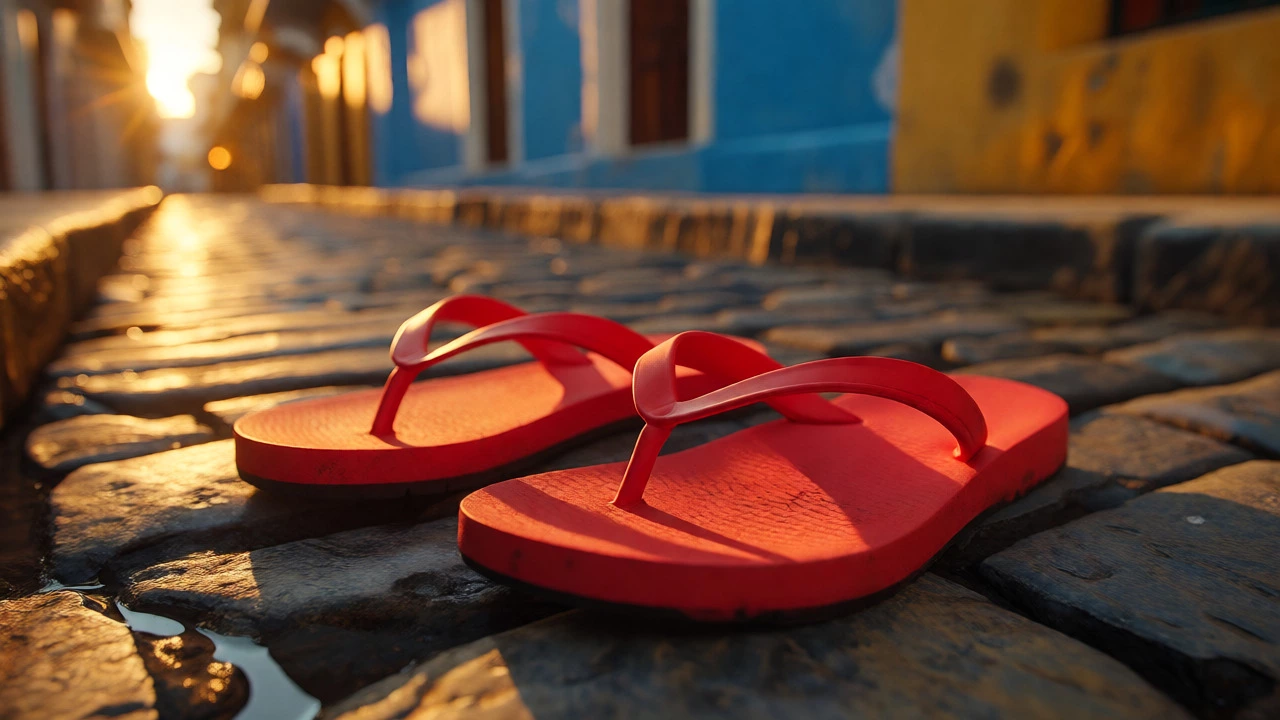
The standard term for casual rubber sandals.
Usage Context:
Everyday wear, beach, pool, corner store. Never formal.
Cultural Note:
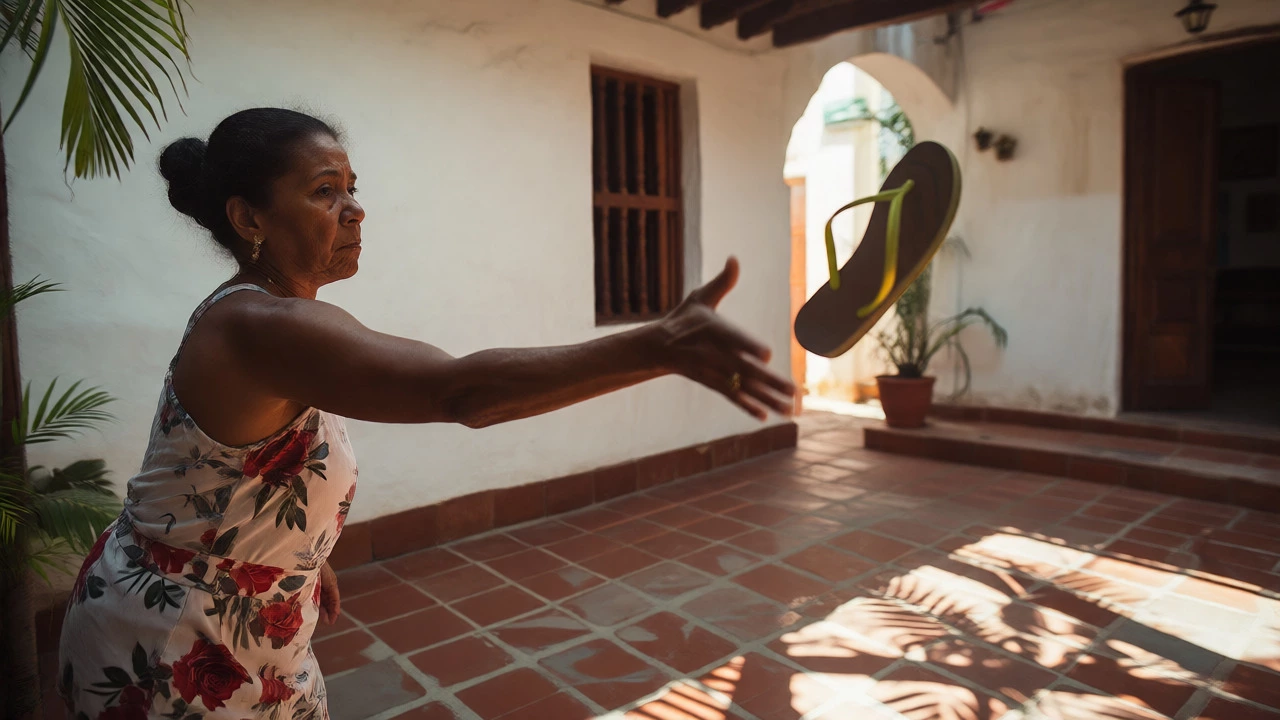
Famous for the "Flying Chancla" disciplinary myth. Always within reach.
Casual Outdoor CommonSandalias
Structured shoes with straps/buckles.
Usage Context:
Nice dinners, Old San Juan walks, semi-formal outings.
Distinction:
If it has heels or multiple buckles, it's a sandalia, not a chancla.
Semi-Formal Leather BucklesPantuflas
Indoor house shoes.
Usage Context:
Inside the home only. Usually closed-toe or fuzzy.
Common Mistake:
Tourists often confuse these with chanclas. Don't wear pantuflas to the beach!
Indoor Comfort PrivateTenis / Zapatillas
Athletic shoes.
Usage Context:
Sports, running, heavy walking.
Note:
Tenis is commonly used for brand-name athletic shoes.
Sporty Brand NameBotas
Rain or work boots.
Usage Context:
Specific weather (rain) or labor situations.
Climate Note:
Rarely worn casually due to tropical heat.
Weather WorkTest Your Knowledge
Loading question...
Quiz Complete!
You scored 0 out of 0.
You walk into a bodega in San Juan, or maybe you’re just hanging out with friends from the island, and someone asks if you have their chanclas. You freeze. Did they say sandals? Slippers? Beach shoes? If you’re expecting "flip-flops," you might look around confusedly until someone points to those rubber-soled thongs on your feet. Here is the straight answer: Puerto Ricans call them chanclas. It’s not slang in the sense of being informal street talk; it’s the standard, everyday word used by everyone from grandmothers to college students across the archipelago.
But why does this matter? Because language is culture. Using the wrong term doesn’t just make you sound like an outsider; it misses the vibe entirely. In Puerto Rico, footwear isn’t just about protection for your feet-it’s part of the social fabric. Knowing that chancla is the word opens a door to understanding how people live, relax, and even discipline (yes, there’s a famous myth about the flying chancla). Let’s break down exactly what this word means, where it comes from, and how it fits into the broader landscape of Caribbean Spanish.
The Linguistic Roots of Chancla
To understand why Puerto Ricans don’t use the English loanword "flip-flop" or the generic Spanish "sandalias," we need to look at history. The word chancla is a type of lightweight slipper or sandal with a sole held to the wearer's foot by straps going over the instep and around the ankle. Its etymology traces back to the Arabic word shankal, which entered Spanish during the Moorish occupation of the Iberian Peninsula centuries ago. When Spanish colonizers arrived in the Americas, they brought this vocabulary with them.
In many parts of Latin America, words evolve differently. In Mexico, you might hear huaraches for traditional leather sandals, but for the rubber beach variety, sandalias is common. In Argentina, they might say ojotas. But in Puerto Rico, chancla stuck. It’s one of those linguistic fossils that survived because it was practical and widely adopted. Unlike terms that shift with fashion trends, basic clothing terms tend to remain stable over generations. This stability is why you’ll hear a seven-year-old and a seventy-year-old both pointing to the same pair of Havaianas and calling them chanclas.
Chancla vs. Sandalia: What’s the Difference?
This is where tourists often get tripped up. In standard European Spanish, sandalia covers almost everything from high-heeled summer shoes to simple rubber thongs. In Puerto Rico, however, there’s a clear distinction. A sandalia usually refers to a more structured shoe-something with multiple straps, perhaps a buckle, or a slight heel. Think of the kind of shoes you’d wear to a nice dinner in Old San Juan.
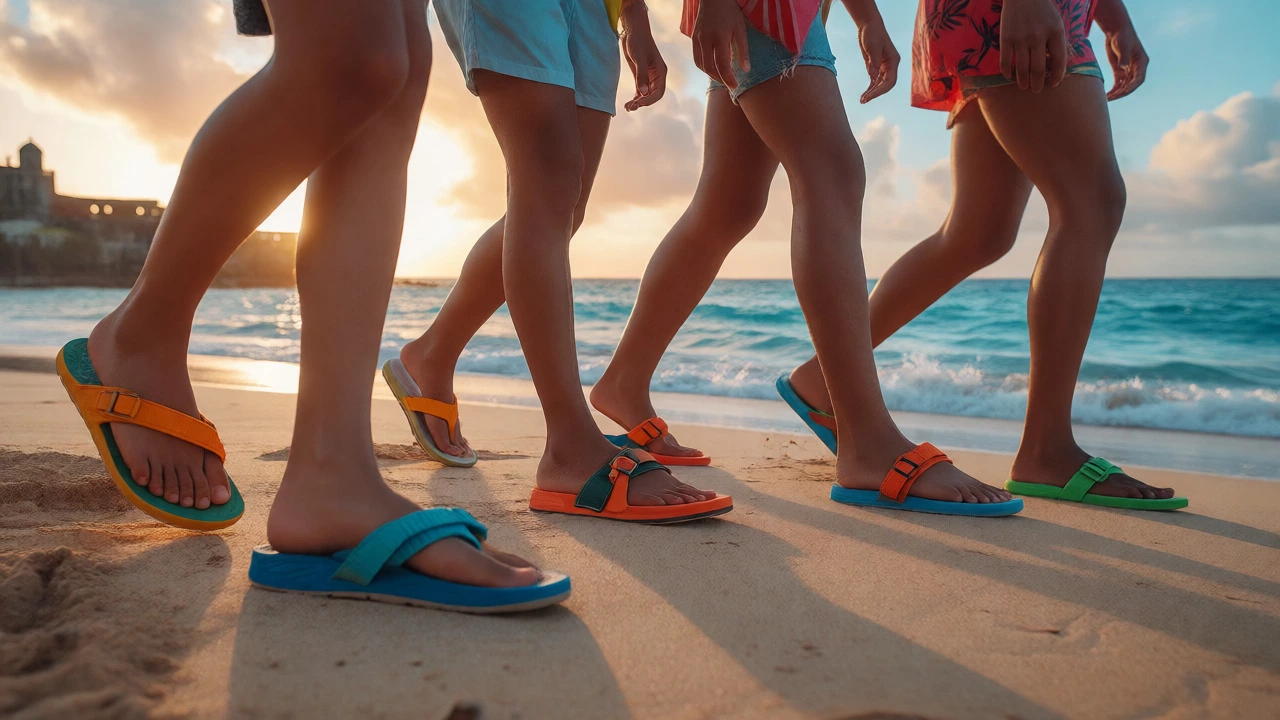
A chancla, on the other hand, is strictly casual. It’s the shoe you wear to the beach, to the pool, or while walking to the corner store for beer and snacks. It’s defined by its simplicity. If it has two straps forming a Y-shape and a flat rubber sole, it’s a chancla. If it looks like something you could accidentally kick off your foot while running for the bus, it’s definitely a chancla. Calling a fancy strappy sandal a chancla might get you a funny look, implying you think it’s cheap or flimsy.
| English Term | Puerto Rican Term | Context & Usage |
|---|---|---|
| Flip-flops / Thongs | Chanclas | Everyday casual wear, beach, home. Made of rubber or foam. |
| Sandals | Sandalias | More formal, leather, buckles, heels. For outings. |
| Sneakers | Zapatillas / Tenis | Athletic shoes. "Tenis" is common for sports brands. |
| Slippers | Pantuflas | Indoor house shoes, usually closed-toe or fuzzy. |
| Boots | Botas | Rain boots or work boots. Rarely worn casually due to heat. |
The Cultural Icon: The Flying Chancla
You can’t talk about chanclas without addressing the elephant in the room: the weaponization of the footwear. In pop culture, memes, and family lore, the chancla is infamous as the ultimate disciplinary tool for Caribbean parents. Is it real? Well, ask anyone who grew up in a traditional Puerto Rican household. The speed and accuracy with which a mother can launch a rubber flip-flop at a misbehaving child is legendary.
This isn’t just a joke. It reflects a cultural attitude toward parenting and respect. The chancla is always within reach because it’s always on your feet. It’s lightweight, aerodynamic enough for a quick toss, and sturdy enough to deliver a sharp, stinging reminder without causing serious injury. While modern parenting styles are shifting, the trope persists because it’s rooted in reality. If you visit a family home in Ponce or Mayagüez, you might still see a pair of well-worn chanclas sitting by the door, ready for action.
Regional Variations Across the Caribbean
Puerto Rico isn’t the only place using this term, but it’s one of the most consistent users. In the Dominican Republic, neighbors also say chanclas. However, if you head to Cuba, you might hear chancletas-a longer variation that sounds similar but is distinct. In Venezuela, they often stick to sandalias or sometimes playeros (from playa, meaning beach).
Why the difference? Geography and migration patterns play a role. Puerto Rico’s close ties with Spain early on preserved certain colonial-era terms. Additionally, the island’s unique blend of Taíno, African, and Spanish influences created a dialect that holds onto specific vocabulary fiercely. When you speak to a Puerto Rican, using chancla shows you’ve done your homework. It signals respect for local norms rather than imposing mainland US or European Spanish standards.
Buying Tips: What to Look For
If you’re shopping for authentic Puerto Rican style, you’re probably looking for durability. The tropical climate is tough on footwear. Humidity breaks down glues, and saltwater eats away at materials. So, when buying chanclas, prioritize quality over brand hype.
- Material: Go for high-density EVA foam or natural rubber. Cheap plastic versions crack after one season of sun exposure.
- Strap Strength: The junction where the strap meets the sole is the weak point. Look for reinforced stitching or molded connections, not just glued inserts.
- Grip: Wet surfaces are slippery. Check for textured footbeds. Smooth soles are dangerous on wet tiles.
- Local Brands: While global brands like Havaianas dominate, look for local designs featuring Boricua flags or tropical prints. These are popular souvenirs and show support for local artisans.
Remember, in Puerto Rico, you wear these everywhere except formal events. Don’t be afraid to wear them to a casual lunch. They’re socially acceptable in 90% of settings. Just avoid wearing them to church services or upscale restaurants unless you know the dress code is relaxed.
Common Mistakes Visitors Make
Tourists often make two mistakes. First, they assume all Spanish speakers use the same words. Saying "flip-flops" with a Spanish accent won’t help. Second, they confuse chanclas with pantuflas. If you tell your host you left your pantuflas at the hotel, they’ll expect cozy slippers, not beach shoes. This mix-up can lead to awkward moments when you’re barefoot trying to find your "slippers" that are actually outside on the patio.
Another pitfall is underestimating the social signal. Wearing dirty, broken chanclas to a clean, air-conditioned mall might mark you as a tourist. Locals keep theirs clean and intact. It’s a small detail, but it matters. Treat your footwear with a bit of care, and you’ll fit in better.
Why Language Matters More Than You Think
At the end of the day, knowing that Puerto Ricans call flip-flops chanclas isn’t just trivia. It’s a key to connection. Language shapes how we interact with our environment. By adopting local terms, you participate in the culture rather than observing it from afar. Next time you’re packing for a trip to the islands, leave the heavy shoes at home. Pack light, pack breathable, and learn the lingo. You’ll find that conversations flow easier when you speak the same language-even if it’s just about what’s on your feet.
Do Puerto Ricans ever use the word "flip-flops"?
Rarely. While younger generations exposed to American media might understand "flip-flops," they almost exclusively use "chanclas" in daily conversation. Using the English term might mark you immediately as a foreigner or someone disconnected from local customs.
Is "chancla" considered offensive?
No, "chancla" is a neutral, standard noun. It is not vulgar or slang. It is the polite and correct term for flip-flops in Puerto Rico and much of the Caribbean. Context determines tone, but the word itself is perfectly safe to use.
What is the difference between chanclas and pantuflas?
Chanclas are open-toed, rubber-soled sandals meant for outdoor or semi-outdoor use like beaches and pools. Pantuflas are indoor slippers, often closed-toe or made of soft fabric, designed for comfort inside the house. They serve completely different functions.
Why is the chancla associated with punishment?
This stems from Caribbean parenting traditions where physical correction was common. Since chanclas were easily accessible footwear, they became improvised tools for discipline. Today, it’s largely a humorous cultural reference, though some older generations may recall actual instances.
Can I wear chanclas to a restaurant in Puerto Rico?
For casual spots, yes. For mid-range or fine dining, it’s risky. Many upscale restaurants in Condado or Dorado enforce a no-sandal policy. Always check the dress code or opt for closed-toe shoes if you want to be safe.