T-Shirt Quality Analyzer
Input T-Shirt Specifications
Enter details from the product label or description
Unknown
--Analysis Breakdown
You’ve probably been there. You buy a t-shirt that feels like butter against your skin. It fits perfectly. The color is exactly what you wanted. Then, after three washes, it shrinks, pills, and looks like it was worn by a giant. It’s frustrating because you assumed "100% cotton" meant quality. But in the world of apparel, not all cotton is created equal. In fact, the type of cotton fiber used makes a massive difference in how long your shirt lasts and how good it feels.
If you are tired of buying cheap shirts that fall apart, you need to understand what actually goes into making high-quality fabric. We aren't just talking about brand names here. We are talking about the raw material itself. From the length of the fiber to the way it is spun, every step determines whether your t-shirt will be a wardrobe staple or landfill trash. Let’s break down exactly which cotton types deserve your money and why.
Why Fiber Length Matters More Than Brand Names
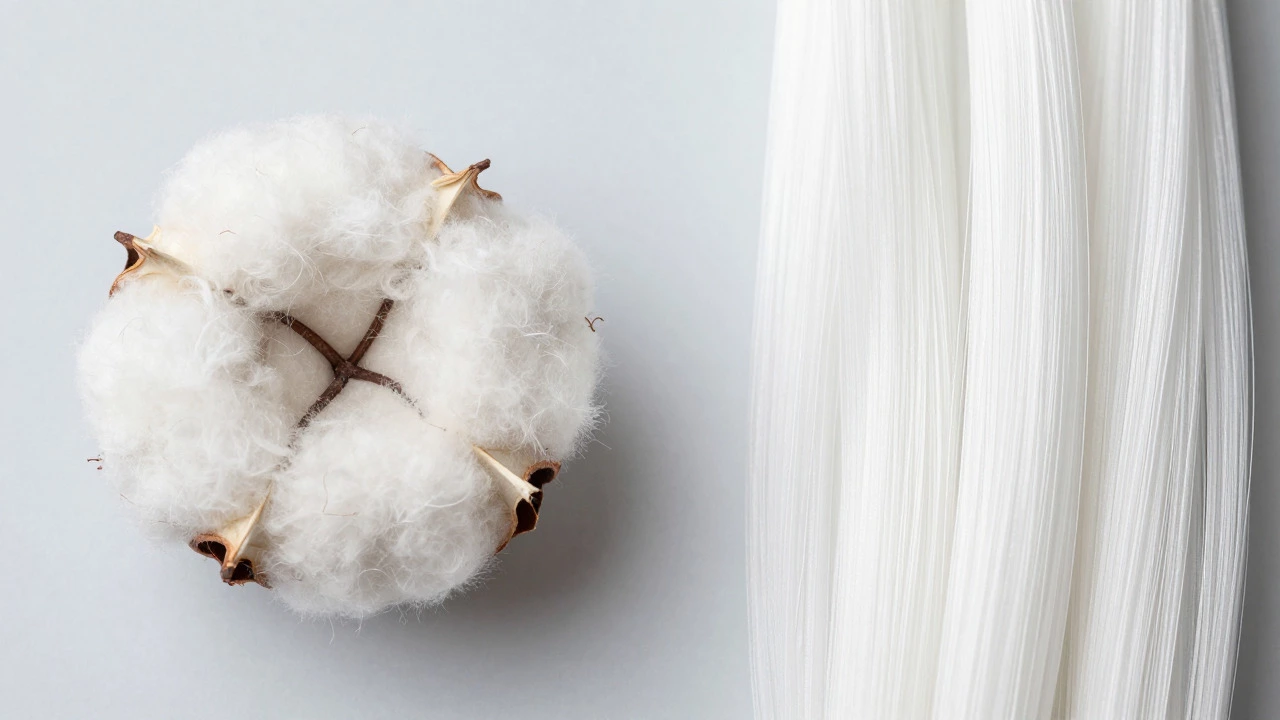
The single most important factor in cotton quality is fiber length. Think of cotton fibers like strands of spaghetti. If you have short, broken strands, they don’t stick together well. When you spin them into yarn, those short ends poke out. This creates fuzziness, pilling, and a rough texture. On the other hand, long, continuous fibers can be spun into smooth, strong yarns that feel soft and resist wear and tear.
In the industry, we measure this in inches. Standard cotton usually has fibers around 1 inch long. High-quality cotton, however, often features fibers that are 1.5 inches or longer. These are called extra-long staple (ELS) cotton varieties known for their superior strength and luster. The longer the fiber, the less friction between strands during spinning, which means a smoother final product. This is why luxury brands charge more-they are paying for these longer fibers that simply don’t exist in standard commodity cotton.
Pima Cotton: The Gold Standard for Softness
When people talk about high-end cotton, they almost always mention Pima cotton a premium extra-long staple cotton grown primarily in the United States, Peru, and Australia. Pima is grown in specific regions with ideal climates, particularly in the southwestern United States. It produces fibers that are significantly longer and stronger than regular upland cotton.
Wearing a Pima cotton t-shirt is a different experience. The fabric feels silkier and drapes better on your body. It doesn’t stand stiffly away from your skin like cheaper tees do. Because the fibers are so long, the fabric is also more durable. It resists pilling-that annoying collection of little balls of lint that form on elbows and underarms-much better than standard cotton. If you want a shirt that feels luxurious right out of the package and stays that way, Pima is your best bet.
Supima Cotton: The Certified Guarantee
You might hear the term Supima cotton a trademarked name for 100% American-grown Pima cotton that meets strict quality standards thrown around a lot. Here is the catch: Supima isn’t a different type of plant. It is a trademark. To use the Supima label, the manufacturer must prove that the fabric contains at least 35% Supima fiber, but most high-quality garments use 100%. More importantly, it guarantees origin and quality control.
Supima cotton is grown exclusively in the United States. This matters because supply chain transparency is huge in fashion today. When you buy a Supima shirt, you know exactly where the cotton came from and that it met rigorous testing for fiber length and strength. It eliminates the guesswork. While generic "Pima" labels can sometimes be diluted with shorter fibers, Supima offers a certification seal that ensures you are getting the real deal. For consumers who value authenticity and consistent quality, Supima is often the safer choice.
Ring-Spun vs. Open-End Spinning
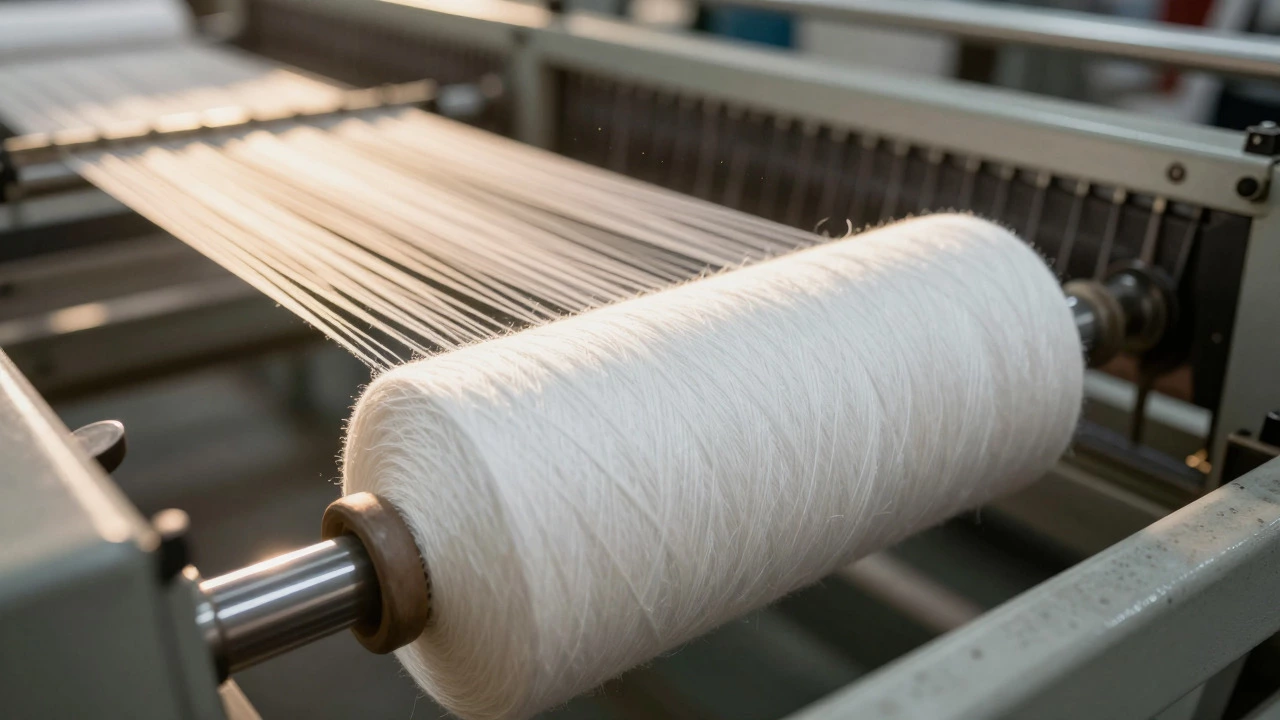
Even if you have the best cotton fibers, the way they are processed changes everything. Most cheap t-shirts use open-end spinning. This method is fast and cheap. Machines twist the fibers together quickly, resulting in a yarn that is coarse and prone to breaking. Now, compare that to ring-spun cotton a yarn production process that twists and thins fibers to create a softer, stronger thread.
In ring-spinning, the fibers are drawn out and twisted tightly as they move around a rotating ring. This process aligns the fibers parallel to each other, creating a much smoother and stronger yarn. Ring-spun cotton feels noticeably softer and has a finer texture. It also holds dye better, meaning your colors stay vibrant longer. If a t-shirt tag says "ring-spun," it is a good sign. It shows the manufacturer invested time in processing the fabric correctly. Combining ring-spun techniques with Pima or Supima fibers gives you the ultimate combination of softness and durability.
Combed Cotton: Removing the Rough Edges
Another key process to look for is combing. After cotton fibers are cleaned, they still contain some short, immature fibers and impurities. Combed cotton cotton that has been mechanically brushed to remove short fibers and debris, resulting in a smoother yarn goes through an additional step where brushes comb out these shorter strands. Only the longest, strongest fibers remain.
This results in a fabric that is exceptionally smooth and uniform. Combed cotton is less likely to pill because there are no short fibers sticking out to catch on things. It is also more breathable. Many high-quality t-shirts use both ring-spun and combed processes. You will often see this labeled as "ring-spun combed cotton." This double-processing ensures that the final garment is not only soft but also incredibly resilient. It is the kind of fabric that gets softer with every wash instead of wearing out.
Organic Cotton: Better for You and the Planet
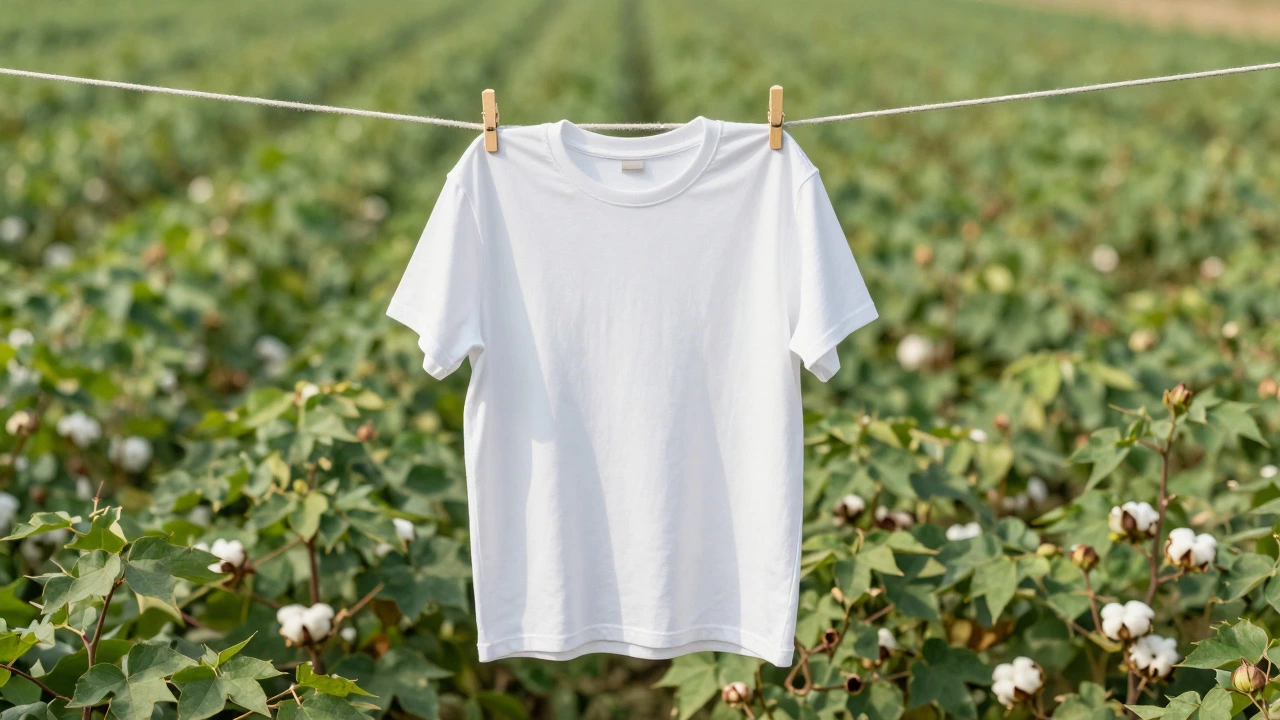
Quality isn’t just about how something feels; it’s also about how it’s made. Organic cotton cotton grown without synthetic pesticides or fertilizers, certified by standards like GOTS is grown using methods that protect soil health and water quality. It avoids harsh chemicals that can irritate sensitive skin. For many buyers, organic cotton is non-negotiable.
Historically, organic cotton had a reputation for being rougher because the farming methods were less intensive. However, technology has improved dramatically. Today, you can find organic Pima and organic Supima options. Look for certifications like Global Organic Textile Standard (GOTS). This certifies that not only was the cotton grown organically, but the entire manufacturing process-from spinning to sewing-met strict environmental and labor criteria. If you have sensitive skin or care about sustainability, organic cotton is the top choice. Just remember to check the fiber length too; organic doesn’t automatically mean long-staple.
| Cotton Type | Fiber Length | Softness Level | Durability | Best For |
|---|---|---|---|---|
| Standard Upland | Short (~1 inch) | Low | Low | Budget basics, promotional wear |
| Pima | Extra-Long (>1.4 inches) | High | High | Luxury everyday wear |
| Supima | Extra-Long (>1.4 inches) | Very High | Very High | Certified quality assurance |
| Ring-Spun | Varies | Medium-High | Medium-High | Improved comfort over standard |
| Organic | Varies | Medium | Medium | Eco-conscious buyers, sensitive skin |
How to Spot Low-Quality Cotton Before You Buy
Not every store will clearly label their fabrics. Sometimes, marketing language hides behind vague terms like "premium cotton" or "soft touch." Here is how to tell if you are getting ripped off before you even leave the store or click buy online.
- Check the weight: Look for grams per square meter (GSM). A high-quality t-shirt usually weighs between 180 and 220 GSM. Anything below 150 GSM is likely thin and see-through. Anything above 250 GSM might be too heavy for summer but great for winter layers.
- Feel the weave: Run your fingers across the fabric. If it feels fuzzy or rough, it’s probably low-grade. High-quality cotton should feel smooth and dense.
- Look at the seams: Cheap shirts often have loose stitching and uneven hems. Quality construction complements quality fabric. If the tags are glued on or the stitching is crooked, the fabric is likely poor too.
- Read the fine print: Avoid phrases like "cotton blend" unless you specifically want polyester for stretch. Blends often reduce breathability and increase static cling. Stick to 100% cotton if you want natural performance.
Maintenance Tips to Keep Your Cotton Looking New
Even the best cotton will degrade if you treat it poorly. Washing habits play a huge role in longevity. Hot water shrinks cotton fibers. Dryers kill elasticity and cause fading. To keep your Pima or Supima shirts looking fresh for years, follow these simple rules.
- Wash cold: Always use cold water. It preserves the dye and prevents shrinkage.
- Turn inside out: This protects the outer surface from friction against other clothes in the machine.
- Avoid bleach: Bleach weakens cotton fibers over time, leading to holes and tears.
- Air dry when possible: Hanging your shirt to dry extends its life significantly. If you must use a dryer, use low heat.
- Iron carefully: Cotton wrinkles easily. Use a medium-to-high heat setting with steam. Ironing while slightly damp works best.
Taking care of your clothes doesn’t take much effort, but it pays off. A $50 shirt washed properly will last longer than a $100 shirt thrown in the hot dryer every week. Quality fabric deserves respect.
Is Pima cotton better than Egyptian cotton?
Both are excellent extra-long staple cottons. However, Pima cotton is easier to verify because it is strictly regulated in the US and Australia. Egyptian cotton lacks a universal certification standard, meaning many products labeled "Egyptian" may actually be lower-quality blends. For guaranteed quality, Pima or Supima is often the safer choice for t-shirts.
Does ring-spun cotton shrink less?
Ring-spun cotton is pre-shrunk during the manufacturing process more effectively than open-end yarns. While all cotton can shrink slightly with heat, ring-spun fabrics tend to maintain their shape and size better over time due to the tighter twist of the fibers.
What is the difference between Supima and regular Pima?
Supima is a trademarked brand of Pima cotton grown in the USA. All Supima is Pima, but not all Pima is Supima. Supima guarantees that the fiber is 100% American-grown extra-long staple cotton, providing a higher level of traceability and quality assurance than generic Pima labels.
Are organic cotton t-shirts less durable?
Not necessarily. Older organic cottons were sometimes weaker, but modern organic farming and processing techniques have closed the gap. If you choose organic extra-long staple cotton, such as organic Pima, you get both eco-friendly benefits and high durability comparable to conventional premium cottons.
How do I know if a t-shirt is made of high-quality cotton?
Look for specific keywords on the label: "Pima," "Supima," "Ring-Spun," or "Combed." Check the weight (GSM) for density, and feel the fabric for smoothness. Avoid vague terms like "premium" without backing details. High-quality cotton should feel substantial yet soft, not thin or scratchy.