Evening Dress Code Checker
Your Recommended Attire
Ever shown up to an evening event and felt like you were either overdressed or underdressed? You’re not alone. Evening dress codes can be confusing-even more so when you’re not sure what’s expected. The good news? It’s not as complicated as it looks. Once you know the basics, picking the right outfit becomes easy.
What Does "Evening" Actually Mean?
"Evening" isn’t just a time of day. It’s a style category. In fashion, "evening" refers to events that happen after 6 p.m. and usually involve some level of formality. Think dinner parties, galas, theater openings, weddings after sunset, or upscale restaurant nights.
The key is to match your outfit to the event’s tone. A backyard barbecue at 7 p.m. is not the same as a black-tie gala. The difference isn’t just in the clothes-it’s in the expectations.
Evening Dress Code Levels: From Smart to Black Tie
There are four main levels of evening dress codes you’ll run into. Knowing them helps you avoid awkward moments.
- Casual Evening: Jeans, a nice top, and flats or loafers. Perfect for a casual dinner with friends or a relaxed cocktail party.
- Cocktail Attire: A knee-length dress, a tailored jumpsuit, or a smart separates look. This is the most common evening dress code today. Think work dinners, holiday parties, or museum openings.
- Formal Evening: A long gown, a sophisticated suit, or a tuxedo. Reserved for weddings, opera nights, or charity balls.
- Black Tie: The strictest level. Men wear tuxedos with bow ties. Women wear floor-length gowns. No exceptions. This is for high-end galas, award ceremonies, or formal weddings.
When in doubt, check the invitation. If it says "black tie optional," you can wear a cocktail dress. If it says "black tie only," don’t show up in a short dress-even if it’s sparkly.
What to Wear: Women’s Evening Outfits
For women, evening wear is mostly about silhouette, fabric, and fit.
For cocktail events, a dress that hits above or just below the knee works best. Choose structured fabrics like silk, satin, or wool crepe. Avoid anything too casual-no cotton T-shirts, leggings, or flip-flops. A pair of elegant heels or ankle boots completes the look.
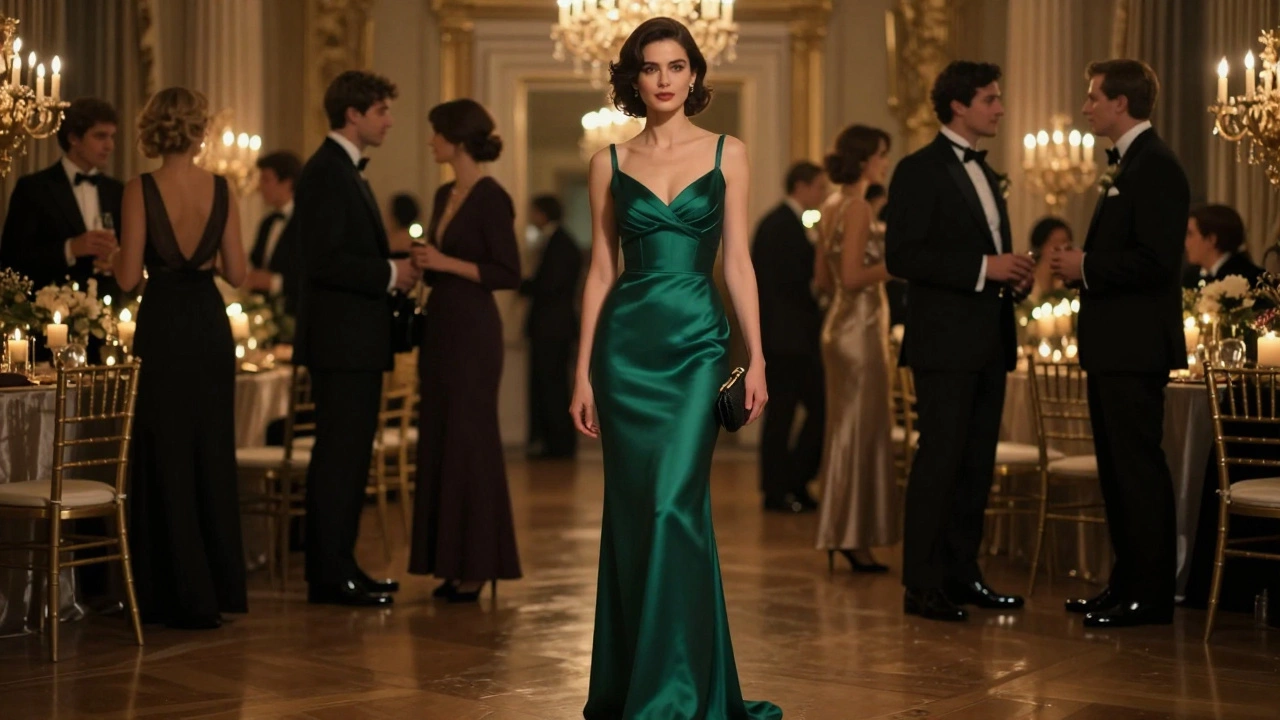
For formal or black tie, go for floor-length. A-line, sheath, or mermaid silhouettes are all appropriate. Color matters less than quality. Deep jewel tones-emerald, burgundy, navy-look richer than pastels under low lighting. Metallics like gold or silver are fine too, but skip the neon.
Accessories? Less is more. A clutch, simple earrings, and a delicate bracelet are enough. Too many sparkles? You’ll look like a disco ball.
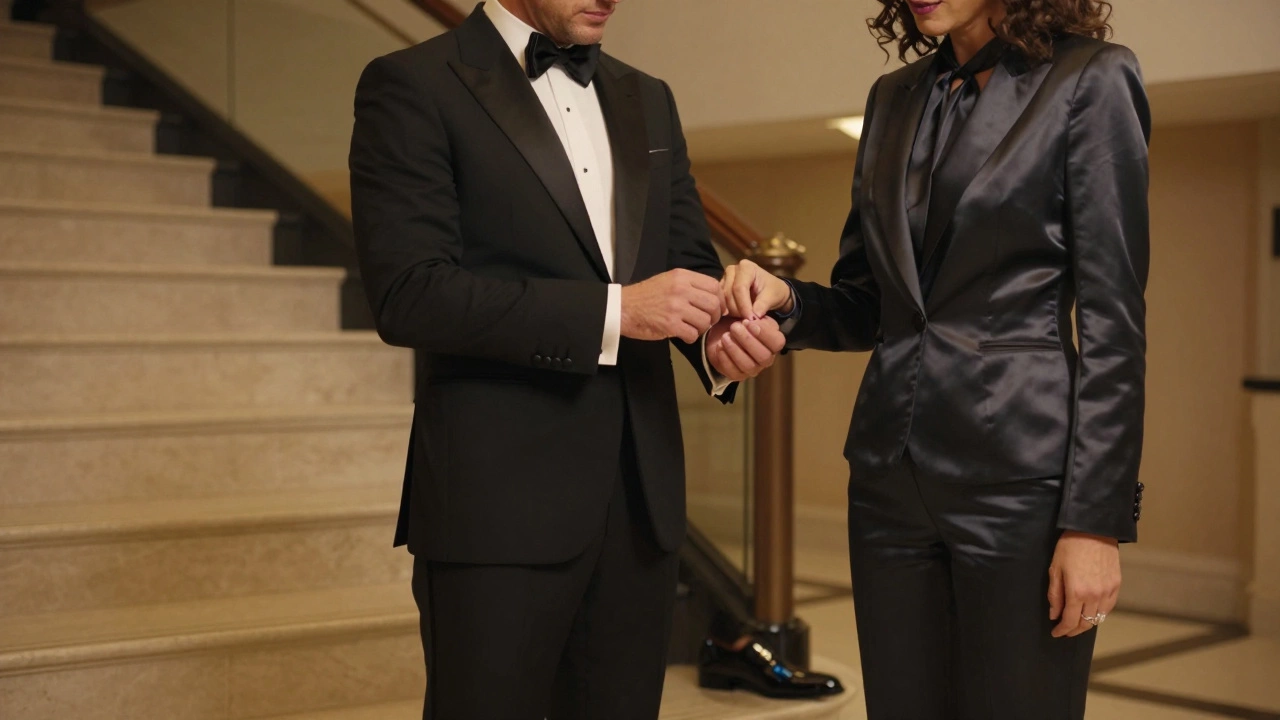
And yes, you can wear pants. A tailored satin palazzo pant set with a silk blouse is just as valid as a gown-especially if you’re more comfortable in separates. The rule isn’t about gender-it’s about polish.
What to Wear: Men’s Evening Outfits
Men’s evening wear is simpler, but the expectations are higher.
For cocktail events, a dark suit-navy, charcoal, or black-with a button-down shirt and tie works. No need for a tuxedo. A pocket square adds polish. Shoes? Oxfords or loafers, no sneakers.
For formal or black tie, a tuxedo is required. That means: black jacket with satin lapels, matching trousers, white dress shirt, and a bow tie. White or black patent leather shoes are standard. A cummerbund or waistcoat is optional but recommended.
Don’t confuse a tuxedo with a suit. A suit has matte lapels and no satin trim. A tuxedo has satin details and is designed for evening. Wearing a dark suit to a black-tie event? You’ll stand out-and not in a good way.
Seasonal and Climate Considerations
Evening dress codes don’t change with the weather, but your choices should.
In winter, layer up. A tailored wool coat, a cashmere shawl, or a faux fur wrap keeps you warm without ruining the look. In summer, choose lighter fabrics-linen blends, chiffon, or lightweight silk. Avoid heavy velvet or thick brocade unless it’s a winter gala.
Here in Wellington, evenings can turn chilly fast, even in summer. Always bring a wrap or jacket, even if you’re wearing a short dress. No one wants to shiver through dessert.
Common Mistakes to Avoid
People mess up evening dress codes more often than you think. Here are the top blunders:
- Wearing white to a wedding-unless you’re the bride. Even off-white can look like you’re trying to steal the spotlight.
- Showing up in athletic wear. No yoga pants, no running shoes. Ever.
- Over-accessorizing. Too much jewelry, too many bags, too many scents. You’re not a Christmas tree.
- Ignoring the venue. A rooftop bar in the city? Cocktail dress. A country estate? Go formal.
- Thinking "elegant" means expensive. A well-fitted dress from a high-street brand looks better than a cheap designer knockoff.
How to Decide What to Wear
Ask yourself three questions before you pack:
- Where is the event? (A five-star hotel? A friend’s living room?)
- What time does it start? (After 7 p.m.? Then it’s evening.)
- What’s the dress code on the invite? (If it says "evening attire," assume cocktail unless told otherwise.)
If you’re still unsure, call the host. Most people appreciate you asking-it shows you care about getting it right.
Evening Wear Isn’t About Rules-It’s About Respect
At the end of the day, evening dress codes aren’t about restricting you. They’re about showing up with intention. Wearing something appropriate signals that you value the occasion and the people you’re with.
You don’t need to spend hundreds of dollars. You don’t need to own a tuxedo. You just need to match your effort to the event. A well-chosen dress, a clean suit, and confidence are all it takes.
So next time you’re invited out for the evening, skip the stress. Know the level. Pick something that fits. Wear it with ease. And enjoy the night.
Can I wear a short dress to a black-tie event?
No. Black-tie events require floor-length gowns for women. A short dress, even if it’s elegant, breaks the dress code. If the invitation says "black tie optional," then a cocktail dress is acceptable. But if it says "black tie only," stick to the long gown.
Is a pantsuit appropriate for evening events?
Yes, absolutely. A tailored pantsuit in silk, velvet, or satin is perfectly acceptable for cocktail and formal evening events. Many women choose pantsuits for comfort and style. Just make sure the fit is sharp and the fabric feels luxurious.
Do I need to wear heels to an evening event?
Not necessarily. Heels are traditional, but elegant flats, loafers, or even stylish ankle boots work if they match the formality. Avoid sneakers, sandals, or flip-flops. The goal is to look polished, not to punish your feet.
What’s the difference between formal and black tie?
Formal evening usually means a long gown or tuxedo, but it’s slightly more flexible. Black tie is stricter: it requires a tuxedo for men and a floor-length gown for women. Black tie is a subset of formal evening-it’s the highest level.
Can I wear a suit to a wedding in the evening?
It depends. If it’s a formal evening wedding, a dark suit with a tie is fine for men if it’s not black tie. For women, a dress or elegant pantsuit works. But if the invitation says "black tie," then a suit isn’t enough. Always check the wording on the invite.