Boot Fit & Sizing Calculator
Input Your Data
Your Results
Enter your details and click calculate to see your recommended sizing.
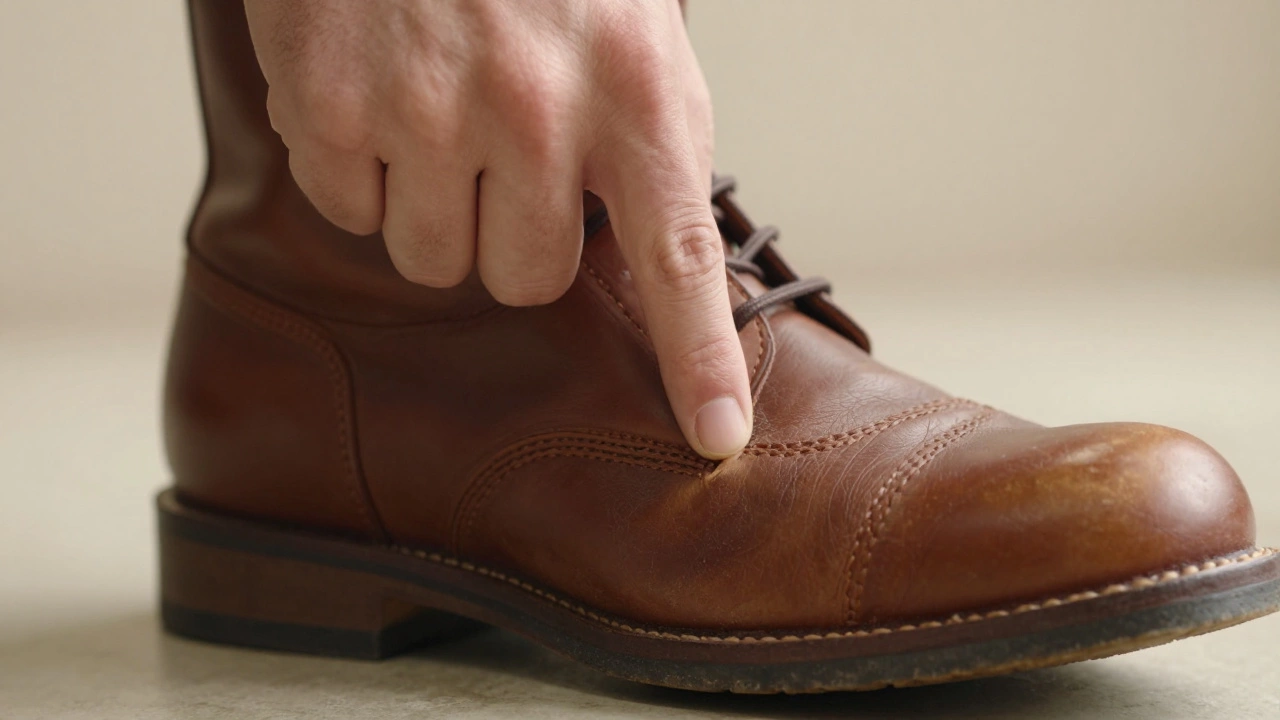
Have you ever bought a pair of boots that looked perfect in the mirror but felt like torture by noon? You’re not alone. The biggest culprit is usually getting the size wrong. While shoe boxes give you a number, your feet have their own geometry. This is where the old-fashioned thumb rule boots come into play. It’s not just a catchy phrase; it’s a practical method used by cobblers and savvy shoppers for decades to ensure a proper fit without needing expensive tools.
The concept is simple: there should be about a thumb’s width of space between your longest toe and the end of the boot. But as with most things in fashion and comfort, the devil is in the details. Let’s break down exactly how this works, why it matters, and how to apply it to different types of footwear so you never have to return a pair again.
Understanding the Thumb Rule Concept
At its core, the thumb rule is a quick, visual check for length. When you stand up in your boots, press your heel back against the heel counter (the stiff part at the back). Then, look at or feel the space between your longest toe and the front tip of the boot. That gap should roughly equal the width of your adult thumb-about half an inch or 1.3 centimeters.
Why this specific amount? Your feet swell throughout the day. If your toes are touching the end when you try them on in the morning, they will be jammed against the leather by evening. This causes blisters, black toenails, and general misery. Conversely, if there’s too much space, your foot slides forward with every step, causing friction and instability. The thumb width hits the sweet spot: enough room for swelling and natural movement, but tight enough to keep your foot secure.
This rule applies primarily to closed-toe shoes and boots. For open-toed sandals, the logic changes completely, but for winter boots, ankle boots, and knee-highs, this half-inch buffer is non-negotiable for comfort.
How to Measure Your Feet Correctly
You can’t use the thumb rule if you don’t know where your foot actually ends. Many people assume their big toe is the longest, but for many, the second toe extends further. This condition, often called Morton’s toe, affects about 10-15% of the population. Ignoring it leads to buying boots that are too short.
Here is the step-by-step process to get an accurate baseline:
- Do it late in the day: Your feet are largest in the afternoon or evening after hours of walking and standing. Measuring in the morning gives you false confidence.
- Stand up: Foot length increases when weight is applied. Sitting down compresses the arch and shortens the foot.
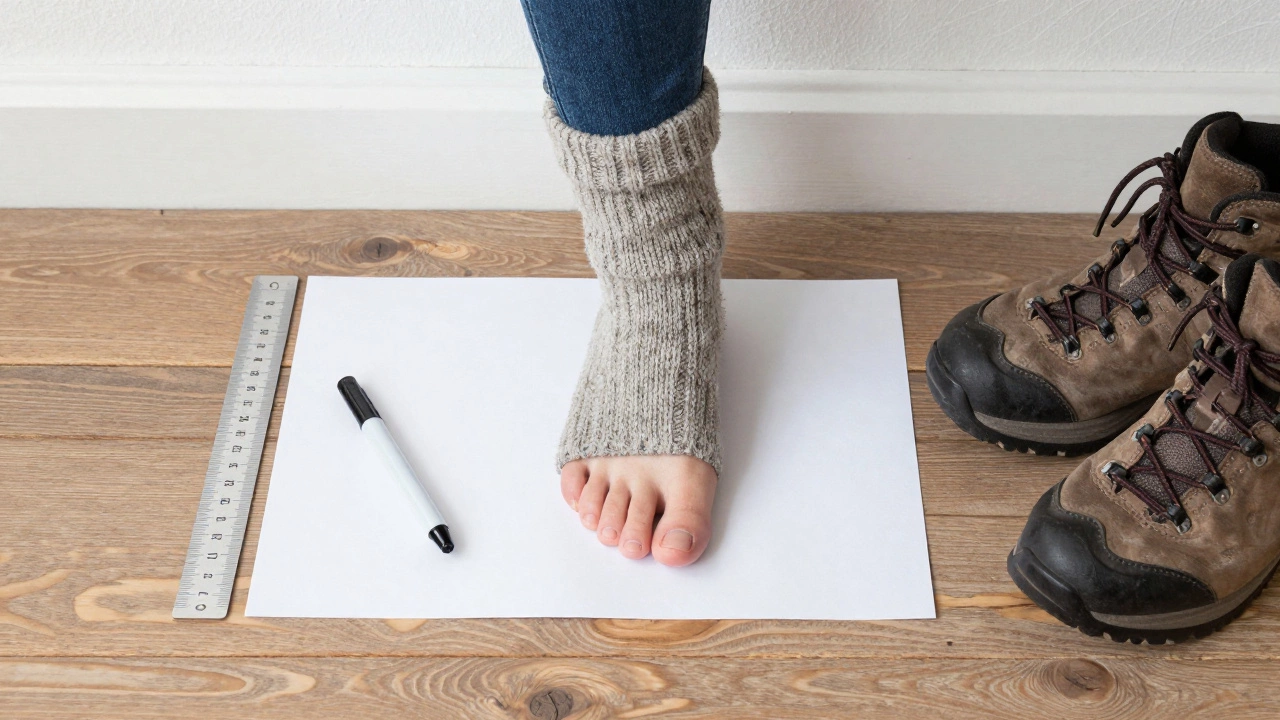
- Use paper and a wall: Place a sheet of paper against a wall. Stand on it with your heel touching the wall. Mark the tip of your longest toe.
- Measure both feet: Most people have one foot slightly larger than the other. Always measure the larger foot. The difference can be up to half a size.
- Add the thumb width: Take that measurement and add 1.3 cm (half an inch) to it. This is your ideal internal boot length.
Once you have this number, you can compare it to the brand’s size chart. Remember, sizes vary wildly between brands. A US 8 in one brand might be a US 7.5 in another. The physical measurement is the only constant truth.
Applying the Rule to Different Boot Styles
Not all boots are created equal. The material, shape, and intended use change how strictly you need to follow the thumb rule.
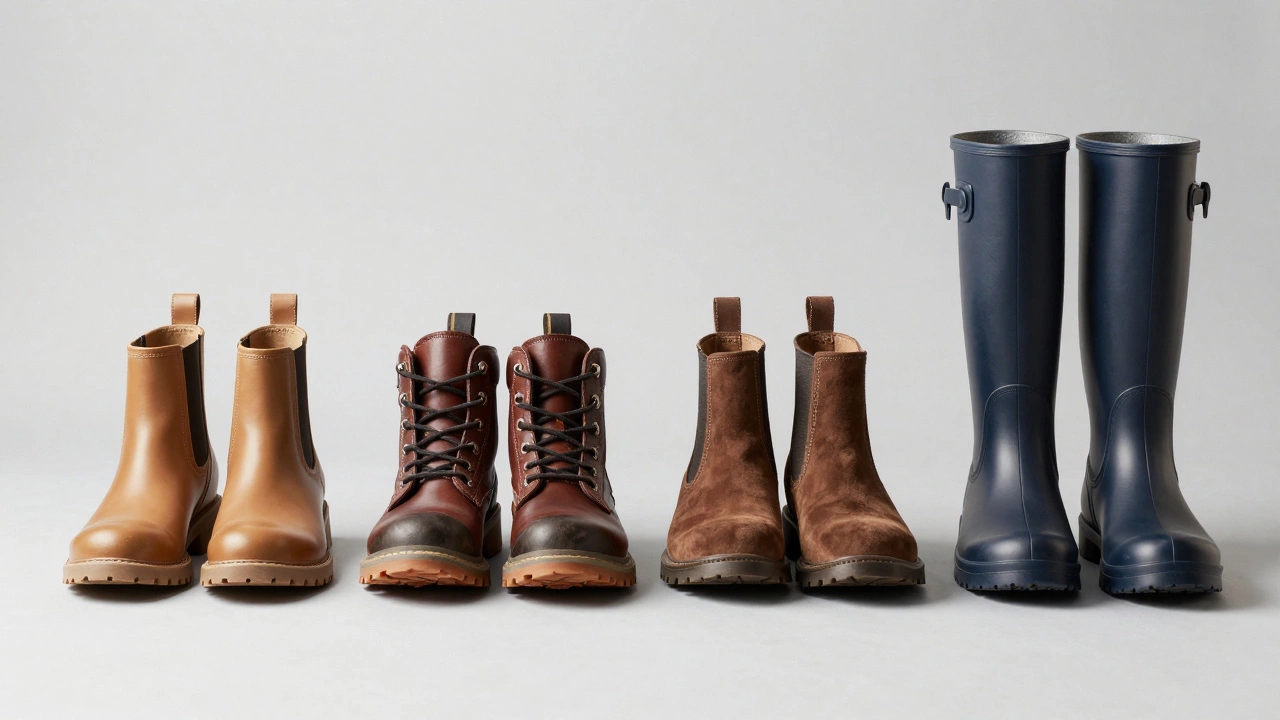
| Boot Type | Fit Recommendation | Reasoning |
|---|---|---|
| Ankle Boots | Strict adherence (0.5 inch) | Tight upper means less stretch; sliding causes blisters on the heel. |
| Leather Hiking Boots | Slightly more (0.6 - 0.75 inch) | Thick socks and downhill walking push toes forward. |
| Suede/Soft Leather | Snugger (0.3 - 0.4 inch) | Material stretches significantly over time. |
| Rubber Rain Boots | More room (1 inch) | No stretch, plus you wear thick socks inside. |
For hiking boots, gravity is your enemy. When you walk downhill, your foot slides forward. If you only have a thumb’s width of space, your toes will slam into the front with every step. In this case, you might want to aim for a full finger’s width or even slightly more. However, for sleek fashion ankle boots made of stiff leather, sticking to the strict half-inch rule prevents the boot from looking sloppy while ensuring comfort.
The Width Factor: Why Length Isn't Everything
The thumb rule addresses length, but width is equally critical. A boot can have the perfect length but still hurt if it’s too narrow or too wide. Here’s how to check width without a Brannock device:
- The Pinch Test: With the boot unlaced or unzipped, pull the sides together. If you can easily pinch excess material on the sides, the boot is too wide. Your foot will slide around, causing friction.
- The Bulge Check: Zip or lace the boot up. Look at the sides. If the material is stretching tightly across the widest part of your foot (the ball), creating a bulge, the boot is too narrow. This restricts blood flow and causes pain.
- The Heel Slip:** If your heel lifts more than a quarter-inch when you walk, the boot is likely too wide in the heel area, regardless of the length.
If you have wide feet, don’t just go up a size to accommodate width. This leaves too much length, violating the thumb rule and making the boot unstable. Instead, look for brands that offer wide (W) or extra-wide (WW) widths. This maintains the correct length while providing the necessary girth.
Material Matters: Stretch and Break-In
The thumb rule assumes a static fit, but materials change. Understanding how your boot will behave over time is crucial.
Full-grain leather is a durable material that molds to the foot over time but has limited stretch in length. It might feel snug initially, but it won’t grow significantly in length. Stick to the thumb rule here.
Suede and nubuck are softer leathers that stretch more easily. These might feel tight at first, but they will expand. You can afford to be slightly tighter initially, perhaps reducing the thumb gap to three-quarters of an inch.
Synthetic materials and rubber generally do not stretch. What you see is what you get. If it fits perfectly now, it will fit perfectly later. Do not expect a break-in period to fix length issues with rubber rain boots or synthetic sneakers.
Common Mistakes to Avoid
Even with the best intentions, people make errors when sizing boots. Here are the most frequent pitfalls:
- Ignoring sock thickness: Always try on boots with the socks you plan to wear with them. Thick wool socks take up significant space. Trying on boots in bare feet or thin cotton socks will lead to buying a size too small.
- Sitting down during the test: As mentioned, standing shifts your weight and spreads your toes. Sitting gives a false sense of roominess.
- Trusting the label size: Your foot size is not a universal constant. A size 9 in Brand A might fit like a 9.5 in Brand B. Always measure the actual interior or use the thumb rule physically.
- Assuming both feet are identical: If one foot is larger, buy for the larger foot. Use an insole or thicker sock in the smaller foot if needed. Never buy for the smaller foot and hope the larger one fits.
When to Size Up or Down
There are exceptions to the thumb rule. Knowing when to bend the rules can save you money and discomfort.
Size up if:
- You have high arches. High arches often mean a longer foot structure relative to height.
- You are pregnant or prone to significant foot swelling.
- You are buying insulated winter boots and plan to wear very thick thermal socks.
Size down if:
- The boot is made of extremely soft, stretchy fabric (like some knit booties).
- You have low arches and flat feet, which sometimes result in shorter foot lengths.
- The boot has a removable insole that adds bulk, and you plan to remove it.
Final Tips for Online Shopping
Buying boots online is risky because you can’t try them on. To mitigate this, always check the brand’s return policy first. Then, read reviews specifically mentioning fit. Phrases like “runs large” or “true to size” are gold. If a review says “I had to size down,” trust that over the size chart. Combine this social proof with your own measured foot length plus the thumb width, and you’ll drastically increase your chances of a successful purchase.
Is the thumb rule the same for men and women?
Yes, the principle is the same. However, because average male thumbs are wider than female thumbs, the actual millimeter measurement might vary slightly. For women, a half-inch (1.3 cm) is standard. For men, you might aim for closer to 1.5 cm depending on thumb size, but the goal remains: a small buffer for toe movement and swelling.
Should I use my own thumb or someone else's?
Use your own thumb. It’s a convenient, personalized measuring tool that travels with you everywhere. Since the rule is an approximation, using your own body part ensures consistency. Just remember to measure the width of the thumb at the base, not the tip.
What if my foot is between two sizes?
If you’re between sizes, err on the side of the larger size, especially for leather boots that might stretch slightly in width but not length. It’s easier to add an insole to a boot that’s slightly long than to stretch a boot that’s too short.
Does the thumb rule apply to high heels?
The logic is similar, but the execution differs. In high heels, your foot slides forward more due to the angle. You still need space, but the focus shifts to ensuring the ball of your foot sits comfortably on the platform. The thumb rule helps prevent toe cramping, but width and arch support become more critical.
How do I know if my boots are too big?
If you have more than a thumb’s width of space, your foot will slide forward, causing blisters on your toes and heels. You’ll also notice excessive creasing in the leather above the toes. Additionally, if you can wiggle your toes excessively without resistance, the boot is likely too long.