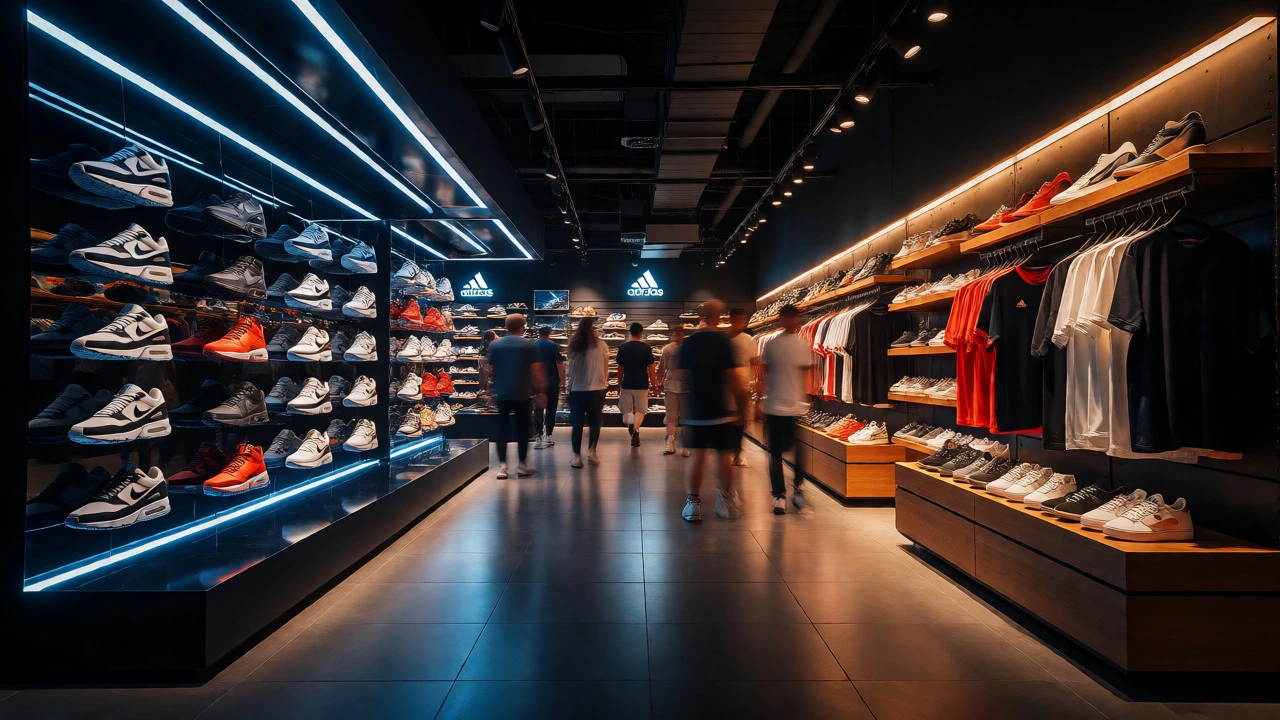
Sportswear Market Share Simulator
Select two brands below to compare their estimated annual revenues and primary market strengths based on recent data.
You walk into a mall or scroll through an online store, and two names dominate the racks: Nike and Adidas. But if you had to bet your last dollar on which brand sells more sneakers, jerseys, and training gear globally, who would you pick? It’s not just about brand recognition; it’s about cold, hard cash flow. As of late 2025 and early 2026 data, Nike remains the largest sportswear seller in the world by revenue, holding a significant lead over its German rival, Adidas. But the gap is narrowing, and the landscape is shifting faster than a sprinter off the blocks.
The Current Market Leader: Nike
Nike, headquartered in Beaverton, Oregon, has held the title of the world's largest sportswear company for decades. Their dominance isn't accidental; it's built on a massive distribution network, aggressive marketing, and product innovation that keeps athletes coming back. In fiscal year 2024, Nike reported revenues exceeding $51 billion, with global footwear sales accounting for nearly 70% of that total. This isn't just about selling shoes; it's about selling a lifestyle. When you buy a pair of Air Jordans, you aren't just buying cushioning; you're buying into a cultural phenomenon that started in 1984 and hasn't slowed down since.
What makes Nike so effective at staying on top? They masterfully blend performance technology with streetwear appeal. The introduction of technologies like Air Max and Flyknit didn't just improve running efficiency; they created visual icons that people wear even when they aren't running. This dual appeal allows Nike to capture both the serious athlete and the fashion-conscious consumer, doubling their potential customer base compared to brands that focus strictly on one niche.
The Strong Contender: Adidas
Right behind Nike sits Adidas, the Herzogenaurach-based giant that has been Nike's primary competitor since the 1970s. While Adidas trails in total revenue, often reporting figures around $23-25 billion in recent years, they hold a unique position in the market. Adidas dominates specific sectors where Nike struggles, particularly in soccer (football) and European street culture. Their partnership with major football clubs and national teams gives them an emotional connection with billions of fans worldwide that pure basketball or American football cannot match.
Adidas also leverages high-profile collaborations differently. The Yeezy line with Kanye West (Ye), despite its turbulent end, proved how much influence celebrity design could have on sales volumes. Similarly, their long-standing collaboration with Pharrell Williams and other artists keeps the brand relevant in music and fashion circles. However, without the sheer volume of North American sales that Nike enjoys, Adidas finds it harder to close the revenue gap entirely.
Emerging Challengers: Puma, Under Armour, and New Balance
While Nike and Adidas fight for the throne, other brands are carving out significant slices of the pie. Puma, owned by France's Kering group, has seen steady growth by focusing on motorsport, dance, and casual lifestyle segments. They don't try to beat Nike head-on in every category; instead, they win in niches like F1 merchandise and women's fitness apparel.
Under Armour faced significant challenges in the mid-2020s due to retail bankruptcies and inventory issues but remains a strong player in performance training gear. Meanwhile, New Balance has experienced a renaissance, particularly in Asia and among older demographics who value comfort and retro styling. Their "Made in USA" and "Made in UK" lines command premium prices and loyal followings, proving that heritage can compete with hype.

Regional Differences in Sales Volume
It's crucial to understand that "largest seller" can mean different things depending on where you look. In North America, Nike is undisputed king, controlling over 30% of the athletic footwear market. In Europe, the competition is tighter. Adidas often matches or exceeds Nike in countries like Germany, France, and Italy, largely due to their deep roots in local sports cultures and soccer fandom.
In Asia, specifically China, the dynamics are even more complex. Local brands like Anta and Li-Ning have surged in popularity, driven by national pride and competitive pricing. Anta, for instance, has grown rapidly by acquiring international brands like Fila in China and Amer Sports (which owns Arc'teryx). For a global investor, this means the "largest seller" title is increasingly contested by Asian conglomerates that may soon challenge Western giants in total unit volume, even if their per-unit revenue is lower.
How Revenue Compares: A Quick Breakdown
To make sense of the numbers, let's look at approximate annual revenues for the top players as of the most recent full-year reports available in 2025/2026. Note that these figures fluctuate based on exchange rates and regional economic conditions.
| Brand | Headquarters | Approx. Annual Revenue | Primary Strength |
|---|---|---|---|
| Nike | USA | $51B+ | Global Distribution & Innovation |
| Adidas | Germany | $24B | Soccer & Lifestyle Collabs |
| Puma | Germany | $9B | Motorsport & Casual Wear |
| Under Armour | USA | $6B | Performance Training Gear |
| New Balance | USA | $7B+ (Private) | Retro Style & Comfort |
| Anta Group | China | $8B+ (Global Portfolio) | Asian Market Dominance |
Why Unit Sales Might Differ from Revenue
Revenue tells you how much money came in, but it doesn't always tell you how many pairs of shoes were sold. If Brand A sells 10 million shoes at $50 each, they make $500 million. If Brand B sells 5 million shoes at $150 each, they also make $750 million. Brand B is the larger seller by revenue, but Brand A moved more units. Nike tends to have higher average selling prices due to limited editions and tech-heavy models, while some competitors might move higher volumes of cheaper basics. For retailers, unit volume matters for shelf space; for investors, revenue and profit margins matter more.
This distinction is vital when analyzing companies like Decathlon, a French sporting goods retailer. Decathlon sells under its own private labels (like Kalenji and Quechua) and often moves massive quantities of affordable gear. While they might sell more individual items than Nike in certain regions, their lower price points mean their total revenue lags behind the big branded giants. Yet, for the everyday person looking for value, Decathlon is often the "largest seller" in terms of what actually ends up in their gym bag.
The Future of the Sportswear Race
The battle for supremacy isn't static. Sustainability is becoming a major driver of purchase decisions. Brands that can prove ethical sourcing and use recycled materials-like Nike's Move to Zero initiative-are gaining favor with Gen Z consumers. Additionally, the rise of athleisure continues to blur the line between workout clothes and daily wear, expanding the addressable market for all major players.
Technology integration is another frontier. Smart fabrics and wearable tech partnerships could shift loyalty. If one brand integrates seamlessly with popular health apps or offers superior biometric tracking in their apparel, they could steal market share quickly. Right now, Nike leads in digital ecosystem strength through their SNKRS app and membership programs, creating a direct-to-consumer channel that bypasses traditional retail bottlenecks.
Is Nike the biggest sportswear company in the world?
Yes, by total revenue, Nike is currently the largest sportswear company globally. They consistently report higher annual revenues than Adidas, Puma, and other competitors, driven by strong sales in North America, Greater China, and emerging markets.
Which sportswear brand sells the most shoes?
Nike sells the highest volume of athletic footwear globally. Their combination of mass-market models like the Air Force 1 and high-demand releases like the Dunk and Jordan series ensures they maintain the top spot in unit sales across most regions.
Does Adidas sell more than Nike in Europe?
In specific European countries, particularly in Central and Southern Europe, Adidas often rivals or surpasses Nike in market share due to its strong heritage in soccer and local brand loyalty. However, Nike still maintains a strong presence across the continent.
What is the fastest-growing sportswear brand?
Growth rates vary by year, but Chinese brands like Anta and Li-Ning have shown rapid expansion recently, fueled by domestic consumption in Asia. Among Western brands, On Running and Hoka have seen significant percentage growth in recent years, though from a smaller base.
Why is Nike bigger than Adidas?
Nike's size advantage stems from its earlier entry into the global market, stronger presence in the lucrative US market, superior supply chain logistics, and highly effective marketing campaigns that resonate with diverse demographic groups beyond just athletes.